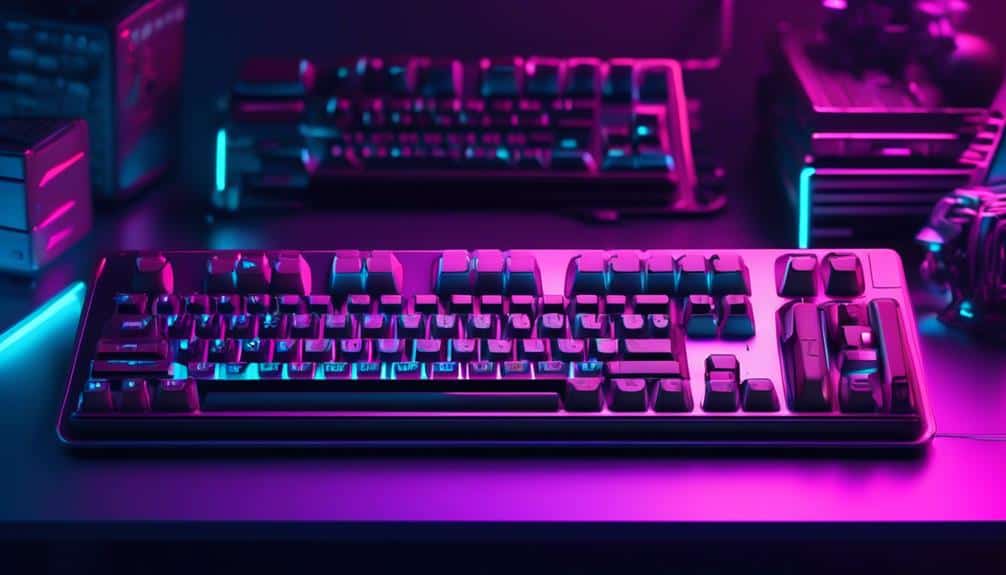
Have you ever considered whether the widespread belief that ‘bigger is better’ holds any weight when it comes to choosing a mechanical keyboard?
As you sit back and glance at your desk, you might notice how much real estate your current keyboard occupies, or perhaps, how it might not have enough keys to streamline your workflow.
While full-size keyboards offer the comfort of a number pad, they may not be the best fit for your typing lifestyle.
On the other end of the spectrum, compact keyboards promise a minimalist footprint and portability, but at what cost to functionality?
To find the perfect balance between space, function, and comfort, you’ll need to weigh the pros and cons of each size based on how you work and play—after all, your choice could redefine your typing experience for years to come.
Key Takeaways
- Full-size keyboards are ideal for extensive numerical data entry and complex gaming commands.
- Tenkeyless (TKL) keyboards are space-saving and offer a more natural arm and shoulder position during typing.
- TKL keyboards have approximately 80% of a full-size keyboard’s width and free up valuable desk space.
- Compact layout keyboards condense the traditional keyboard footprint and are easier to pack for travel.
Understanding Keyboard Sizes
When choosing a mechanical keyboard, it’s crucial to understand the various sizes available, as they directly impact usability, comfort, and desk space.
Full-size keyboards, featuring 104 to 108 keys, include a separate numerical pad and navigational cluster. This layout is a go-to for tasks requiring frequent number entry or for gamers needing dedicated macro keys. However, this keyboard size requires more desk space, possibly affecting your ergonomic setup.
If you’re aiming for a compact keyboard that still preserves essential functionality, consider a Tenkeyless (TKL) option. By shedding the number pad, you gain back valuable desk real estate, allowing for a more centered typing position and the potential for a tighter mouse and keyboard layout. TKLs are about 80% of the width of their full-size counterparts, striking a balance between functionality and space.
For those of you who prioritize a minimalist environment, 60% keyboards shed even more keys without losing the character of a mechanical keyboard. They eliminate the number pad, F key row, and often the arrow keys, resulting in a keyboard that’s both lightweight and highly portable.
Lastly, the 1800-Compact keyboard layout offers a unique compromise. It provides full-size utility in a reduced form, though it might require a learning curve to adapt to the repositioned keys.
Full-Size Keyboards Explained
Understanding full-size keyboards is essential, as they offer a complete range of keys, including a separate number pad, ideal for extensive numerical data entry and complex gaming commands. These robust input devices often come with 104, 105, or even 108 keys, ensuring that every function you need is at your fingertips. With the number pad typically positioned on the right, you’re equipped for quick and efficient number crunching—a must for accountants, analysts, and gamers who rely on precise inputs.
The full-size keyboard layout also includes a dedicated function row, navigation keys, and an arrow cluster, which enhance your workflow and gaming experiences. These keyboards, such as the Filco Majestouch-2, Topre Realforce, and Ducky Shine 6 RGB, are celebrated for their tactile feedback and durability. They’re designed for multi-purpose use, making them a staple for both office settings and home use.
Should you desire the same functionality in a more space-saving design, there are alternative full-size layouts that condense the keys without sacrificing the number. However, it’s a trade-off that requires acclimatization to the rearranged keys. Embracing a full-size keyboard means joining a community that values productivity, versatility, and comprehensive control.
Tenkeyless (TKL) Keyboards

Shifting your focus to Tenkeyless (TKL) keyboards, you’ll notice their trimmed design eliminates the number pad, offering a space-saving benefit without sacrificing key functionality.
Comparing TKL to full-sized keyboards, you gain portability and an ergonomic advantage, crucial for users with limited desk space or those who travel frequently.
If an uncluttered setup and ease of movement are top priorities, a TKL keyboard is an ideal compromise between size and capability.
Space-Saving Design Benefits
Embracing the tenkeyless (TKL) design, you’ll unlock the ergonomic and space-efficient benefits essential for a clutter-free work area and comfortable typing posture.
Here’s how a TKL keyboard supports your need for a streamlined setup:
- Compact Size: With approximately 80% of a full-size keyboard’s width, TKL models omit the number pad, resulting in a compact form factor that frees up valuable desk space.
- Ergonomic Advantages: The smaller size allows for a more natural arm and shoulder position, reducing strain during long typing sessions.
- Portability: Lighter and easier to transport, these smaller keyboards fit snugly into most backpacks and laptop bags.
- Aesthetics: A cleaner desk setup enhances focus and aligns with a minimalist aesthetic, a preference held by many in your community.
TKL Versus Full-sized
While TKL keyboards offer a space-efficient solution, full-sized keyboards provide additional keys that cater to those requiring a dedicated number pad for data entry or gaming. Delving into keyboard sizes, you’ll find the TKL keyboard shaves off the number pad, hosting 87 or 88 keys, which includes the essential arrow keys. This reduction in the number of keys facilitates an ergonomic posture and enhances portability, making the TKL an excellent choice for a desk with limited space or for those who are on the move.
Conversely, full-sized keyboards, boasting 104 to 108 keys, support your productivity if your work involves numerical data or complex gaming commands. Identifying with the keyboard community, you recognize that each style has its place based on personal needs and desk real estate.
Ideal for Travel
Tenkeyless (TKL) keyboards, shedding the number pad, offer an optimal balance of functionality and portability for travelers who demand a more compact input device. These keyboards give you more space on your desk and easily fit into your travel bag, making them the perfect complement to your mobile lifestyle.
Here’s what you’ll appreciate about TKL keyboards:
- Low Profile: Sleek design that doesn’t sacrifice comfort or function.
- Portability: Light and compact, fitting snugly in your luggage.
- Functionality: Retains essential keys, including the arrow cluster.
- Ergonomics: Encourages a more natural typing posture, reducing strain.
With a TKL keyboard, you’re part of a community that values both efficiency and belonging, understanding that the tools you carry can impact your productivity and comfort on the go.
Compact Layout Keyboards
Compact layout keyboards condense the traditional keyboard footprint, offering you essential functionality without the bulk of a full-size board. If you’re seeking a mechanical keyboard that enhances your typing experience while saving space, these compact options could be your match.
Typically, a 60% or 75% keyboard eliminates the number pad and function keys, but don’t worry—you won’t lose those capabilities. The clever use of a Function (Fn) key allows access to different layers, effectively replacing those missing keys.
The smaller form factor of compact layout keyboards isn’t just about aesthetics; it’s practical too. They free up desk space and are easier to pack for travel. But, there’s a trade-off. You’ll need to get used to the repositioned keys—like Insert, Delete, and Home—which might be a little disorienting at first. It’s like joining a new community; there’s a period of adjustment before everything feels like home.
Remember that customization might require extra effort, as finding replacement keycaps that fit the unique size and layout could be a challenge. But once you’re settled in, you’ll find that compact layout keyboards offer a streamlined and efficient typing experience that feels like it’s tailored just for you.
Assessing Key Count Variations
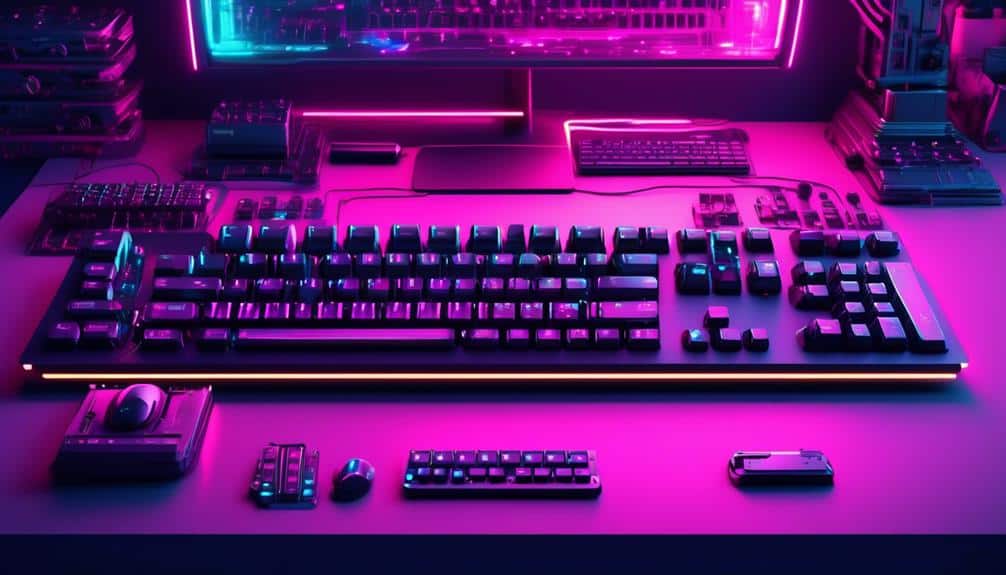
Having explored the space-saving perks of compact keyboards, let’s now examine how variations in key count affect functionality and user experience. As you delve deeper into the world of mechanical keyboards, you’ll notice that the number of keys at your disposal can vary widely, shaping how you interact with your device.
Here’s a breakdown of the different key counts:
- Full-size keyboards typically boast 104 to 108 keys, providing a full range, including a number pad and function keys.
- Tenkeyless (TKL) keyboards omit the number pad, slimming down to about 80% of a full-size, yet maintain most of the essential keys.
- 75% keyboards offer a compact form while retaining the F key row, covering 70 to 75% of the full-size width.
- 60% keyboards cut down further, removing both the number pad and F key row, relying on a Function (Fn) key to access those missing functions.
Assessing key count variations is crucial in finding a mechanical keyboard that fits your typing lifestyle. Whether you require the efficiency of fewer keys or the versatility of a full set, understanding these differences ensures you’ll feel right at home with your choice.
Desk Space Considerations

When selecting a mechanical keyboard, you must consider your desk space to ensure a balance between comfort and functionality. If you’re blessed with ample desk space, a full-size keyboard may be your go-to. It’s a staple in the market for mechanical keyboards, offering a separate number pad which is indispensable for many users, especially in professions like accounting or data entry.
However, not everyone has the luxury of a large desk. For those with more modest space, compact keyboards such as TKL (Tenkeyless), 75%, or 60% models are far more suitable. These sizes not only free up desk space but also enhance portability, making them a favorite among mechanical gaming enthusiasts and professionals alike.
But what if you’re torn between size and functionality? Compact full-size and 1800-Compact keyboards strike a balance, offering a condensed layout without sacrificing the number pad. Although, you should be prepared to adjust to alternative layouts like the 75% and 1800-Compact, as they may require a bit of relearning due to the different key placements.
Desk space considerations are crucial. As you deliberate your options, remember that your comfort and the keyboard’s functionality should harmonize with the space you have available.
Portability and Travel Use

For frequent travelers, 60% and 65% mechanical keyboards offer unmatched portability due to their reduced size and weight. These compact designs eliminate unnecessary keys, providing a lightweight solution that doesn’t compromise on functionality. When you’re always on the move, every inch and ounce matters, and these keyboards are built to fit snugly in your bag without adding bulk.
Here’s why a smaller mechanical keyboard is perfect for portability and travel use:
- Compact Design: Saves precious space in your luggage, allowing for more efficient packing.
- Lightweight: Easy to carry around, reducing strain on your shoulders and back during transit.
- USB Connection: Offers universal compatibility with a simple plug-and-play setup on virtually any device.
- Durable Construction: Withstands the rigors of travel, ensuring your keyboard survives the bumps and knocks on the road.
A community of mobile typists like yourself understands the value of space and mobility. A keyboard that’s both durable and lightweight can be a game-changer, ensuring you’re ready to type whenever inspiration strikes or duty calls.
With a compact mechanical keyboard, you’re part of a savvy group that values efficiency and practicality in their tech gear.
Personal Layout Preferences
Often, your typing experience hinges on selecting a mechanical keyboard layout that resonates with your personal preferences and ergonomic needs. You’re not just choosing a tool; you’re deciding on a partner that must align with your daily rhythm.
Whether you’re a writer, a programmer, or a gamer, the layout you choose can significantly affect your productivity and comfort.
Full-size keyboards, complete with function keys and a number pad, cater to those who value versatility and are accustomed to traditional layouts. If your work involves data entry or you’re fond of having dedicated macro keys at your disposal, this familiar setup won’t disappoint.
In contrast, if desk space is a premium or you’re often on the move, you might gravitate towards a Tenkeyless (TKL) or 60% layout. These compact options forsake the number pad, and sometimes even the function row, for portability. Adapting to these layouts might mean relearning some key placements, but the trade-off is a clutter-free desk and a lighter load.
What Size Mechanical Keyboard Works Best with Your Preferred Switches?
When choosing a mechanical keyboard, consider that the best typing experience switches will vary depending on the size of the keyboard. For a full-size keyboard, the tactile or linear switches may work best, while a smaller keyboard may be better suited for clicky switches. Choose the size that complements your preferred switches.
Conclusion
In conclusion, finding the perfect mechanical keyboard hinges on how you balance desk space, portability, and functionality. Full-sizes suit extensive numeric work, while TKLs offer a middle ground. Compact versions excel in minimalism and mobility.
Consider how the key count impacts your tasks, and remember that personal comfort trumps all. Make an informed choice that complements your typing lifestyle, ensuring productivity and satisfaction with every keystroke.