Cat 8 Ethernet cable is overkill for most home networks. While it offers impressive speeds up to 40 Gbps and frequencies up to 2000 MHz, your home internet likely maxes out at 1 Gbps. You’ll pay 3-5 times more than Cat 6 or 6a cables, with no noticeable performance benefits for typical home use. Cat 6 supports speeds up to 10 Gbps, more than sufficient for current and near-future residential needs. The following analysis reveals when Cat 8 might actually become worthwhile.
Understanding Cat 8 Specifications and Capabilities
While Cat 8 ethernet cables represent the cutting edge of networking technology, understanding their specifications helps determine if they’re appropriate for your home setup.
Cat 8 cables are designed to support speeds up to 40 Gbps (gigabits per second), far exceeding the 10 Gbps capability of Cat 7 cables. They operate at frequencies up to 2000 MHz, compared to Cat 7’s 600 MHz limit.
These high-performance cables feature improved shielding to prevent electromagnetic interference and maintain signal integrity. They’re also backward compatible with existing ethernet standards.
Cat 8 cables have a maximum recommended length of 30 meters for high-speed connections, shorter than previous generations. They typically use the standard RJ45 connectors you’re familiar with, though some specialized versions may use GG45 or TERA connectors.
Current Home Network Needs vs. Cat 8 Performance
How much network speed does your home actually need compared to what Cat 8 ethernet cables offer?
Most residential internet connections provide speeds between 100 Mbps and 1 Gbps, with premium fiber services occasionally reaching up to 2 Gbps. Cat 8 cables, which support up to 40 Gbps, exceed these speeds by a substantial margin.
The average household typically runs multiple devices simultaneously, including smart TVs streaming 4K content (25 Mbps), video conferencing (5 Mbps), gaming (10 Mbps), and general browsing.
Even with several family members engaged in bandwidth-intensive activities, the combined requirements rarely surpass 1 Gbps.
For perspective, downloading a 4K movie (100 GB) would take about 13 minutes with a 1 Gbps connection.
With Cat 8’s theoretical maximum, it would take just 20 seconds – a difference most users wouldn’t notice during daily activities.
Cost Analysis: Price Premium of Cat 8 Over Alternatives
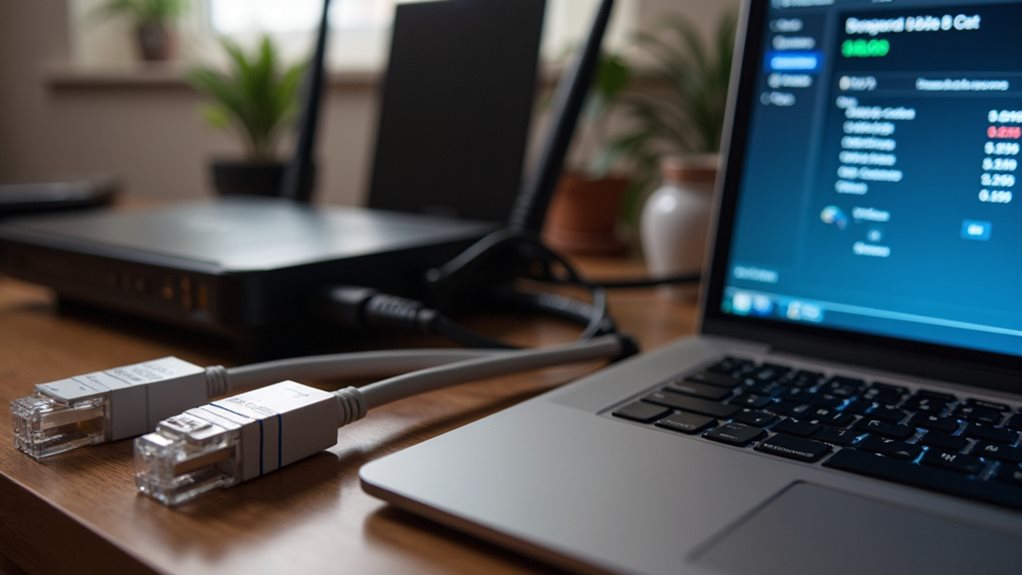
Beyond performance considerations, the notable cost difference between Cat 8 and other Ethernet cable options deserves careful attention.
When comparing market prices, Cat 8 cables typically cost 3-5 times more than Cat 6 or Cat 6a alternatives for the same length.
This price premium translates to real budget impacts for home network setups:
- A standard 25-foot Cat 8 cable averages $25-35, while equivalent Cat 6 cables cost $7-12
- For whole-home installations requiring multiple cable runs, the difference can exceed hundreds of dollars
- Installation costs may increase as Cat 8’s thickness and rigidity make it more challenging to route through walls
For most households, this substantial price difference isn’t justified by the minimal performance gains you’ll experience in typical home applications.
The budget allocated to Cat 8 cabling might be better invested in other networking components.
Future-Proofing: When Might Cat 8 Become Necessary?
Although Cat 8 cabling seems excessive for current home networking needs, understanding when it might become necessary can help you make informed long-term decisions.
Industry experts predict that mainstream home internet speeds above 10 Gbps won’t become common for at least 5-7 years. Even as fiber deployment expands across residential areas, most ISPs currently max out at 2-5 Gbps for premium residential packages.
Cat 8 might become relevant in homes when applications like 8K video streaming, cloud-based gaming platforms, and virtual reality environments become bandwidth-intensive household standards.
Additionally, if you’re running a home server farm or professional media production studio, you might benefit from Cat 8 earlier.
For most homeowners, Cat 6a or Cat 7 cabling provides sufficient future-proofing at a more reasonable price point until the late 2020s.
Practical Alternatives for Home Networking Solutions
While Cat 8 offers impressive specifications, most homeowners can achieve excellent network performance with more cost-effective alternatives.
For typical home usage, consider these practical networking options:
- Cat 6 cable: Supports speeds up to 10 Gbps at distances of 55 meters and costs considerably less than Cat 8 while meeting the needs of most streaming, gaming, and work-from-home activities.
- Wi-Fi 6 or 6E: Provides wireless convenience with speeds up to 9.6 Gbps, eliminating the need for extensive cabling throughout your home.
- Mesh networking systems: Extend reliable coverage to every corner of your home by placing multiple access points that work together seamlessly.
These solutions deliver robust performance for everyday applications without the high price of Cat 8, which is designed primarily for data centers and specialized commercial environments.
Frequently Asked Questions
Does Cat 8 Cable Generate More Heat Than Other Ethernet Cables?
No, Cat 8 cable doesn’t generate more heat than other Ethernet cables. You won’t notice any temperature difference when using it. Its improved shielding and construction actually help maintain signal integrity without additional heat production.
Can Cat 8 Cables Be Damaged by Bending or Tight Installations?
Yes, Cat 8 cables can be damaged by excessive bending or tight installations. They’re less flexible than lower-category cables due to their thicker shielding. You’ll want to avoid sharp bends to maintain peak performance.
Are Cat 8 Cables More Susceptible to Electromagnetic Interference?
No, Cat 8 cables aren’t more susceptible to electromagnetic interference. In fact, they’re better shielded than lower categories, offering superior protection against EMI with their improved shielding and tighter twists in wire pairs.
How Does Cat 8 Compare to Fiber Optic for Home Use?
For home use, Cat 8 is overkill and costlier than you need. Fiber optic offers superior speed and immunity to interference, but it’s more expensive and complicated to install than the ethernet cables most homes require.
Do Cat 8 Cables Require Special Wall Outlets or Patch Panels?
Yes, Cat 8 cables require special Cat 8 compatible outlets and patch panels to achieve full performance. You’ll need shielded components rated for higher frequencies, which aren’t typically found in standard home networking installations.
Final Thoughts
Cat 8 is overkill for most home networks today. You’ll pay a notable premium for speeds your current devices can’t utilize, as few homes need bandwidth beyond what Cat 6 or 6a delivers. Consider Cat 6a if you’re future-proofing, as it supports up to 10 Gbps at a lower cost. For typical home use, investing in quality Cat 6 cables provides the best balance of performance and value.