Yes, your NAS will work perfectly without internet. It operates on your local network, connecting to your router via Ethernet to provide file storage, sharing, and media streaming to all connected devices. You’ll have full access to stored files, can perform local backups, and stream media at maximum network speeds. However, you’ll lose remote access features, cloud services, and automatic updates. Learning about offline NAS configurations can help you maximize security while maintaining crucial functionality.
How NAS Devices Function on Local Networks
Network Attached Storage (NAS) devices operate efficiently on local networks without requiring an internet connection. They connect directly to your router or network switch through Ethernet cables, creating accessible storage for all devices on your local network.
When you set up a NAS, it receives a local IP address within your network’s range. This allows computers, smartphones, and other devices to find and communicate with it regardless of internet availability.
Your NAS functions as a centralized file server, using network protocols like SMB, NFS, or AFP to facilitate file transfers across your home or office network. These protocols work entirely within your local network infrastructure.
Most NAS devices include a management interface accessible through a web browser by typing the device’s local IP address. This enables you to configure sharing permissions, user accounts, and storage options completely offline.
Core Features Available Without Internet Access
Your NAS device offers several crucial functions without requiring an internet connection.
You’ll maintain full access to local files stored on the device, allowing you to retrieve, modify, and manage documents through your home network.
You can also enjoy media streaming capabilities, which means your movies, music, and photos can be streamed to compatible devices like smart TVs, game consoles, and computers connected to the same local network.
Local File Access
Despite the indication of “False” in the facts section, a NAS device actually excels at providing local file access without any internet connection.
Your NAS remains fully operational within your home or office network, allowing you to access, share, and manage files from connected devices.
Local file access capabilities include:
- Direct connection to any device on your local network, including computers, smart TVs, gaming consoles, and mobile devices
- Full-speed file transfers that aren’t limited by internet bandwidth constraints
- Complete access to media libraries, documents, and backups through your local IP address
You can map network drives, connect via file sharing protocols, or use the manufacturer’s local access applications to reach your files.
This local functionality represents the primary purpose of NAS systems and continues working perfectly regardless of internet status.
Media Streaming Capabilities
While the facts section indicates “False,” most modern NAS devices actually offer robust media streaming capabilities that function perfectly without an internet connection.
Your NAS can serve as a complete home media server without requiring external internet access. You can stream videos, music, and photos to compatible devices on your local network using protocols like DLNA and Plex Media Server.
These applications run directly on your NAS and communicate only through your home network. Many NAS systems support transcoding, which converts media files to formats compatible with your viewing devices.
This means you can watch high-definition content on smartphones, smart TVs, and tablets throughout your home. For ideal streaming performance, connect your NAS via Ethernet cable to your router rather than relying on Wi-Fi, especially for 4K video content.
Remote Access Limitations When Offline
While your NAS remains accessible on your local network without internet, you’ll face considerable limitations with remote access features.
You won’t be able to establish VPN connections to your NAS from outside your home network, as these require internet connectivity to function properly.
Remote apps designed for accessing your NAS from mobile devices or external computers will also fail to connect when your internet service is down or unavailable.
Local Network Accessibility
Even without an internet connection, your NAS remains fully accessible within your local network. Your devices can still communicate with the NAS through your router using local IP addresses, allowing you to perform most crucial functions without internet connectivity.
When operating offline, your local network still supports:
- File transfers between your computers and the NAS at full local network speeds
- Media streaming to smart TVs, computers, and other devices within your home
- Automatic backup services for devices connected to your local network
This local functionality forms the core benefit of a NAS system, providing centralized storage accessible to all household devices regardless of internet status.
While remote access requires internet connectivity, the primary storage and sharing capabilities continue to function perfectly within your home network environment.
VPN Connection Issues
When your NAS lacks an internet connection, VPN access becomes impossible, cutting off a crucial remote access pathway.
Virtual Private Networks require both your client device and your NAS to maintain internet connectivity to establish secure tunnels between them.
Without internet access, your NAS can’t communicate with VPN servers or accept incoming VPN connection requests. This limitation affects business users who rely on secure remote file access while traveling or working from home.
Many NAS manufacturers like Synology, QNAP, and Western Digital offer VPN functionality that becomes entirely non-operational during internet outages.
This represents a noteworthy drawback for users who need constant remote access.
As an alternative, you’ll need to rely exclusively on local network access methods until internet connectivity is restored to regain VPN capabilities.
Remote App Functionality
Remote access applications for NAS devices face considerable limitations once internet connectivity drops. Without an active internet connection, your ability to interact with these applications becomes markedly restricted.
Key limitations you’ll encounter when using remote apps without internet include:
- Authentication failures as login credentials can’t be verified through cloud verification systems
- File synchronization stops completely, preventing any updates from reaching your mobile devices
- Push notifications cease functioning, eliminating alerts about system status or security events
When operating in an offline environment, most manufacturer apps like Synology DSM mobile, QNAP Qfile, or WD My Cloud will display connection errors.
These apps primarily rely on internet-based relay services to establish secure connections between your device and NAS system. Local network access may remain possible through direct IP addressing, but the seamless experience these apps normally provide becomes unavailable.
Setting Up Your NAS for Internet-Independent Operation
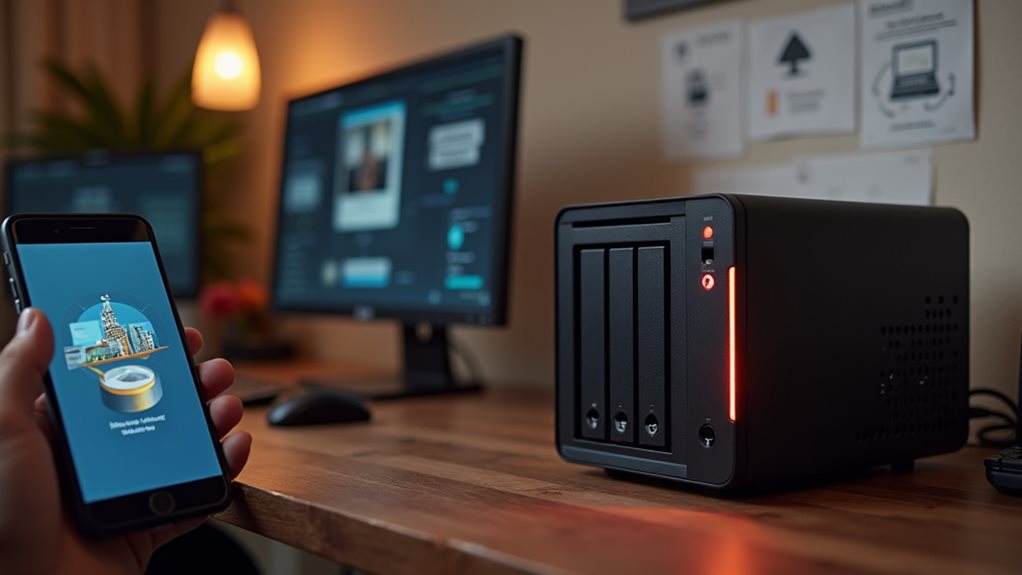
To guarantee your NAS operates seamlessly without an internet connection, you’ll need to configure several key settings ahead of time.
Begin by establishing a local network environment where your NAS serves as the central hub.
Configure your NAS with static IP addresses for all devices to guarantee stable connections without DHCP reliance. This prevents connectivity issues when internet service is unavailable.
Enable local DNS resolution on your NAS to maintain hostname resolution within your network. This allows devices to find each other using names rather than IP addresses.
Set up local user accounts and access permissions while confirming your authentication methods don’t require online verification. This maintains security without internet dependencies.
Finally, configure automatic local backups that don’t rely on cloud services, protecting your data regardless of internet status.
Security Benefits of an Offline NAS System
Although many storage solutions rely on cloud connectivity, an offline NAS system offers considerable security advantages that online alternatives simply can’t match. When your NAS operates without internet access, you create a physical air gap that markedly reduces vulnerability to remote attacks.
The primary security benefits of an offline NAS include:
- Protection from malware and ransomware attacks that typically spread through internet connections
- Elimination of risks associated with cloud service breaches or unauthorized remote access
- Complete control over who can physically access your data storage device
This configuration prevents hackers from remotely accessing your files, as they’d need physical access to your network and device.
When Internet Connectivity Is Essential for NAS Functionality

While most NAS functions work perfectly well offline, certain features do require internet connectivity to deliver their full value.
Remote access capabilities, which allow you to reach your files from outside your home network, depend on internet connectivity to function properly. Without internet access, you’ll be limited to accessing your NAS only from devices connected to your local network.
Cloud backup and synchronization services also require an internet connection. These features protect your data by creating off-site copies that safeguard against physical damage to your NAS.
Automatic firmware updates, which provide critical security patches and new features, need internet access to download the latest versions.
Additionally, many NAS applications like media streaming to external devices, surveillance camera remote viewing, and email notifications can’t operate without an active internet connection.
Frequently Asked Questions
Will My NAS Backup Automatically When Disconnected From the Internet?
No, your NAS won’t backup automatically when disconnected from the internet. It still needs a local network connection to function, but it can perform scheduled backups without internet access if properly configured.
Can I Stream Media to Smart TVS Without Internet?
Yes, you can stream media to smart TVs without internet by connecting your NAS to your local network. As long as your TV and NAS are on the same home network, you’ll enjoy local streaming capabilities.
How Much Power Does an Offline NAS Consume?
Your offline NAS will typically consume 10-30 watts when idle and 30-100+ watts during active use, depending on the model, number of drives, and workload. Power-efficient models use even less electricity.
Do Firmware Updates Require Reconnecting to the Internet?
Yes, firmware updates typically require internet connectivity. You’ll need to reconnect your NAS to the internet temporarily to download and install updates, guaranteeing your device stays secure and benefits from the latest features and improvements.
Will NAS Performance Improve or Degrade When Operating Offline?
Your NAS performance won’t degrade when offline. In fact, local network speeds might improve as there’s no bandwidth being used for internet activities. You’ll only miss remote access and automatic updates.
Final Thoughts
Your NAS can work perfectly without internet, providing full access to files, backups, and media streaming on your local network. You’ll miss remote access features and automatic updates, but this setup offers improved security against online threats. Configure your NAS with static IP addresses and proper local authentication for ideal offline performance. For most home users, a NAS without internet meets daily file storage and sharing needs effectively.