You want pro-quality photos without the fuss of studio gear. With cameras like the D7500 or Rebel T7, you get solid autofocus, useful blur control, and RAW flexibility that grows with you. These kits simplify setup, offer reliable performance in varied light, and pair with versatile lenses. But choosing the right body and kit matters—there’s more to contemplate before you commit, and your next shot awaits.
| Nikon D5100 DSLR with 18-55mm Nikkor Lens | 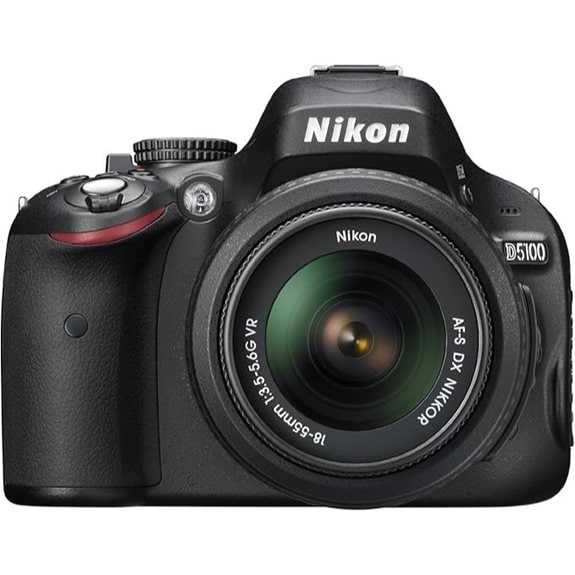 | Beginner Friendly | Sensor format: APS-C | Kit lens: 18-55mm | Video: 1080p | VIEW LATEST PRICE | Read Our Analysis |
| Canon EOS 2000D Rebel T7 DSLR Essential Bundle | 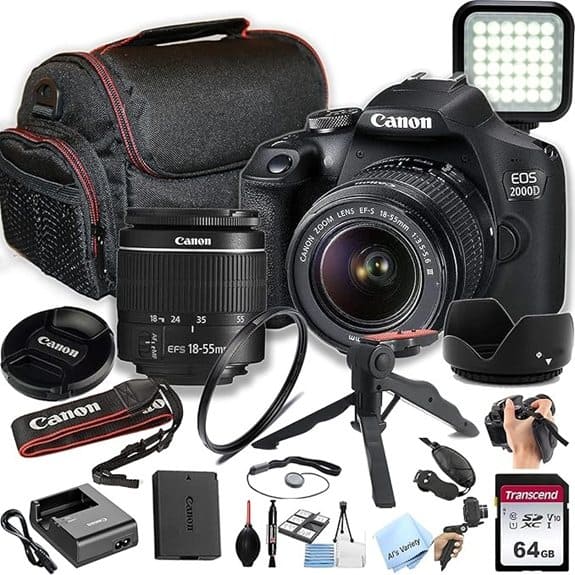 | Starter Bundle Value | Sensor format: APS-C | Kit lens: 18-55mm | Video: 1080p | VIEW LATEST PRICE | Read Our Analysis |
| Nikon D7500 DSLR with 18-140mm VR Lens Black | 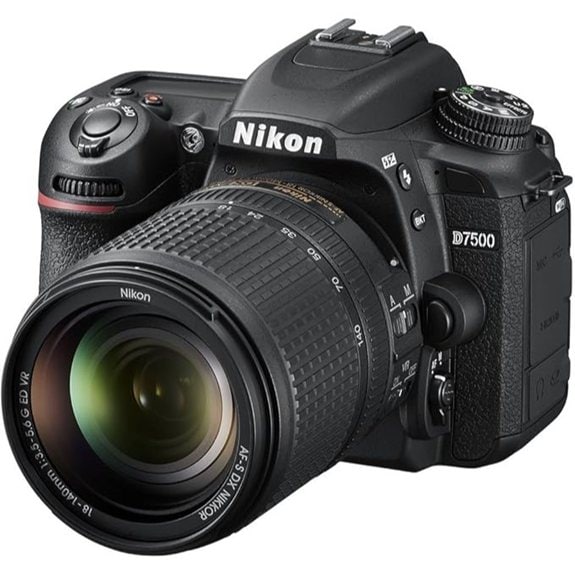 | Advanced Enthusiast | Sensor format: APS-C | Kit lens: 18-140mm | Video: 4K/1080p | VIEW LATEST PRICE | Read Our Analysis |
| Canon EOS Rebel T7 DSLR Camera with 18-55mm Lens (Black) (Renewed) | 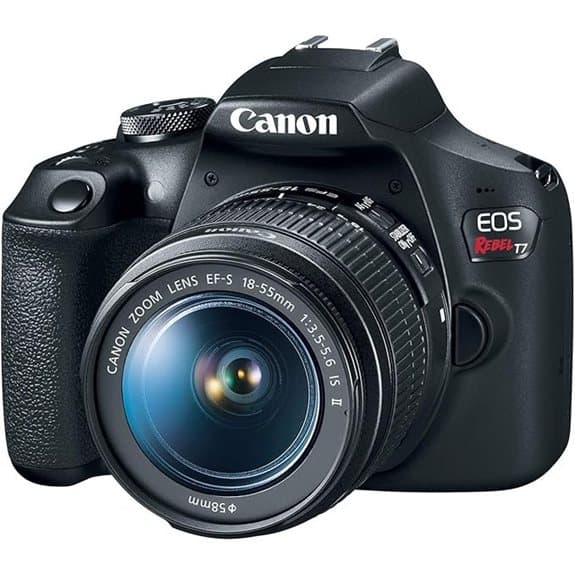 | Renewed Bargain | Sensor format: APS-C | Kit lens: 18-55mm | Video: 1080p | VIEW LATEST PRICE | Read Our Analysis |
| Canon EOS Rebel T7 DSLR Kit with Bag | 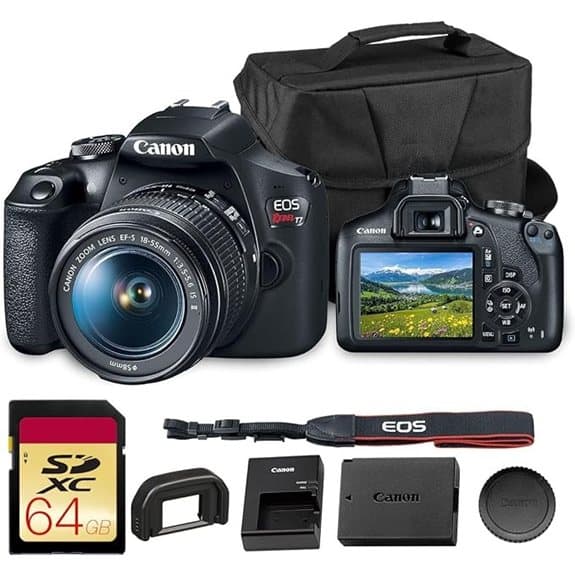 | Starter Kit Value | Sensor format: APS-C | Kit lens: 18-55mm | Video: 1080p | VIEW LATEST PRICE | Read Our Analysis |
More Details on Our Top Picks
Nikon D5100 DSLR with 18-55mm Nikkor Lens
If you’re after a solid, pro-like shooting experience right out of box, Nikon D5100 with 18-55mm Nikkor fits the bill, especially for enthusiasts ready to move beyond auto modes. It delivers CMOS sensor, with RAW for seamless tonal gradations. Track subjects with 11-point AF and 3D tracking, while live view keeps AF at your command. Capture video in 1080p, frame your shots on a 3.0-inch side-articulated LCD with 920,000 dots. ISO 100–6400, expandable to 25600, helps you adapt to changing light, you’ll shoot at 4 fps. The package includes an 18-55mm f/3.5-5.6 AF-S Nikkor for versatile framing.
- Sensor format:APS-C
- Kit lens:18-55mm
- Video:1080p
- Viewfinder:Optical
- Auto focus system (AF):11-point AF
- Target user:Beginners
- Additional Feature:14-bit RAW shooting
- Additional Feature:Side-articulated LCD
- Additional Feature:High ISO expandability
Canon EOS 2000D Rebel T7 DSLR Essential Bundle
This Canon EOS 2000D Rebel T7 DSLR Fundamental Bundle stands out for aspiring pro photographers who want a capable entry point without breaking the bank, thanks to its solid 24.1MP APS-C sensor and a bundled kit that covers the basics right out of the box. You get Full HD 1080p at 30 fps for dependable video, plus built-in Wi‑Fi with NFC to share images. The 3.0″ LCD helps you frame shots, and 9-point AF keeps subjects in focus as you learn. The included EF-S 18-55mm kit lens suits shooting, while the 64GB card and light keep your projects moving.
- Sensor format:APS-C
- Kit lens:18-55mm
- Video:1080p
- Viewfinder:Optical
- Auto focus system (AF):9-point AF
- Target user:Beginners
- Additional Feature:USB webcam capability
- Additional Feature:64GB memory card included
- Additional Feature:LED video light
Nikon D7500 DSLR with 18-140mm VR Lens Black
Designed for enthusiasts who demand fast handling and solid image quality, the Nikon D7500 with 18-140mm VR is a compelling choice for anyone chasing pro-level results in a versatile all-in-one kit.
Its 20.9MP APS-C sensor delivers clean detail, with ISO up to 51,200 and a 1.5x crop factor that keeps subjects framed for 35mm workflows. AF is precise with 51 points and 15 cross-type sensors, while 8fps keeps action crisp. Record 4K or Full HD with stereo sound, plus time-lapse, and trust the tilting 3.2-inch touchscreen. The kit arrives with the AF-S DX 18-140mm VR lens for everyday versatility.
- Sensor format:APS-C
- Kit lens:18-140mm
- Video:4K/1080p
- Viewfinder:Optical
- Auto focus system (AF):51-point AF
- Target user:Beginners
- Additional Feature:4K UHD video
- Additional Feature:Tilting touch LCD
- Additional Feature:18-140mm VR lens included
Canon EOS Rebel T7 DSLR Camera with 18-55mm Lens (Black) (Renewed)
For shooters chasing pro-style results without the premium price tag, the Canon EOS Rebel T7 DSLR with 18-55mm kit (Renewed) delivers a compelling balance of resolution and practicality. You’ll appreciate its 24.1 megapixel CMOS sensor, which yields detailed photos with solid clarity, even in dim light. Its ISO range spans 100–6400, expandable to 12800, helping you adapt to various scenes. The 9-point AF system with AI Servo supports fast, accurate focusing for stills and action. Built-in Wi‑Fi/NFC lets you share instantly, while a 3.0-inch LCD and Scene Intelligent Auto keep operation approachable for beginners. It suits growing photographers well.
- Sensor format:APS-C
- Kit lens:18-55mm
- Video:1080p
- Viewfinder:Optical
- Auto focus system (AF):9-point AF
- Target user:Beginners
- Additional Feature:Renewed condition
- Additional Feature:AI Servo AF
- Additional Feature:Scene Intelligent Auto mode
Canon EOS Rebel T7 DSLR Kit with Bag
If you’re new to DSLR photography and want a solid entry point, the Canon EOS Rebel T7 DSLR Kit with Bag shines as value option. You’ll capture 24.1MP APS-C images with a DIGIC 4+ processor, delivering vibrant colors, sharp detail, and low-light performance. It uses an optical viewfinder and a 3.0-inch LCD for reviews. Compatible with Canon EF and EF-S lenses, it grows with your skills for portraits, vistas, or action shots. Built-in Wi-Fi and NFC let you transfer and remote shoot via the Canon Camera Connect app. The kit includes 18-55mm, LP-E10, battery, charger, bag, and 64GB card.
- Sensor format:APS-C
- Kit lens:18-55mm
- Video:1080p
- Viewfinder:Optical
- Auto focus system (AF):9-point AF
- Target user:Beginners
- Additional Feature:64GB memory card included
- Additional Feature:Shoulder bag included
- Additional Feature:EF/EF-S lens compatibility
Factors to Consider When Choosing a DSLR Camera
You’ll want to weigh sensor size because it affects depth, noise, and dynamic range, so a larger sensor often yields richer images. Resolution and pixel count matter for cropping and detail, but balance them against file size and how ISO performance holds up in real-world shooting. Your autofocus system type and video capabilities should match your subject matter and projects, since fast tracking and solid video options can substantially expand your pro potential.
Sensor Size Matters
Larger sensors capture more light, which translates to cleaner images, better dynamic range, and improved performance in low-light conditions. With a bigger surface area, you’ll see detail in shadows and highlights, and you’ll have greater latitude to push exposure without sacrificing quality. This also means you get control over depth of field, so separate subjects pop against a softer background when you want it. Keep in mind the crop factor: smaller sensors narrow your field of view compared to full-frame, which can affect framing and lens choices. Pixel size matters here—larger sensors tend to host bigger photosites, reducing noise and preserving clarity at higher ISOs. Sensor size directly influences low-light performance and the ability to render sharp, detailed images as you work across genres.
Resolution And Pixel Count
Resolution and pixel count shape how you plan to use your shots. Higher resolution, measured in megapixels, lets you make larger prints and capture more detail, with sensors commonly ranging from 16 to 24 MP in consumer DSLRs. A greater pixel count enables tighter post-processing cropping while preserving usable quality, which is especially handy for wildlife or sports. Remember that resolution drives file size, so higher megapixel counts mean bigger files that demand more storage space and processing power. While higher pixel counts improve detail, they don’t automatically boost performance in low light; sensor size and pixel density matter more there. For everyday use, including web sharing and standard prints, beyond about 20 MP you’ll see diminishing returns for most shooters, not every situation.
ISO Performance Range
How well a DSLR handles low light hinges on its ISO performance range. Your light plans, from bright studios to dim venues, hinge on where you can push ISO without sacrificing detail. Lower values like ISO 100 deliver clean files, while higher values such as ISO 12,800 or more enable shooting in dim environments without flash. Expanding the ISO range increases sensor sensitivity but may introduce image noise, reducing overall quality and detail clarity. Cameras with wider native ranges, especially up to 51,200 or higher, offer flexibility in challenging lighting without extra lighting gear. Higher bit-depth processing helps maintain dynamic range and color fidelity at raised ISOs, and effective noise reduction preserves detail, making the difference between usable and unusable images for your work.
Autofocus System Type
Autofocus system type can feel like a make-or-break feature when you’re selecting a DSLR, because it directly shapes how reliably you’ll lock onto subjects in real time. A higher number of autofocus points, such as 51-point systems, gives greater coverage across the frame and improves subject tracking, so you’re less likely to miss a fleeting moment. Cross-type AF points detect contrast in both directions, offering increased accuracy vs standard linear points, which matters when light is challenging. Phase-detection AF provides faster focusing during viewfinder shooting, making it ideal for fast-moving subjects. Full-time servo AF continuously adjusts focus during continuous shooting, keeping moving subjects sharp. Group-area AF modes help track subjects in complex scenes by using multiple points together. This approach balances speed with precision.
Video Capabilities
If you’re upgrading or choosing for the long haul, the video capabilities a DSLR offers can make or break your filmmaking experience. In practical terms, 4K Ultra HD recording gives you four times the resolution of Full HD, yielding sharper, more detailed footage for clients or projects that demand clarity. If 1080p at 30 fps fits your everyday shoots, that option remains reliable for fluid motion without taxing processing power. Time-lapse modes let you automate frame capture and compile dynamic sequences without extra effort. Stereo sound support adds dimensionality, so your audio feels lived-in and real. Power aperture control keeps exposure consistent while you adjust depth of field on the fly, preserving cinematic quality throughout changing light. This balance suits both documentary and work.
Lens Compatibility
When you’re selecting a DSLR, lens compatibility often dictates your practical options and future growth. The mount type decides which lenses physically fit, so your choices hinge on the system you pick. If you shoot with a crop sensor, remember the smaller image circle favors lighter, compact lenses designed for that format, while full-frame lenses may be bulkier. Adapters let you use lenses from other mounts, but they can slow autofocus or cut electronic communication. Lenses with built-in image stabilization help curb camera shake, especially on bodies without in-body stabilization. Finally, consider the aperture range; wider maximum openings improve low-light performance and give you better control over depth of field. This simple framework keeps your kit flexible without locking you into one path forever.
Battery Life Longevity
How long will your DSLR last between charges? You’ll typically get about 800 to 1,200 shots per charge under standard tests, depending on model and usage. Cameras with bigger batteries, rated in mAh, tend to stretch those sessions longer. Enable power-saving features like auto sensor shutdown, lower LCD brightness, and occasional power-off timers to squeeze extra life out of a day’s shoot. When you’re framing through the optical viewfinder, power drains slower than live view or video. Cold temperatures can curb performance, so carry a spare charged battery for chilly outings. With smart habits, you balance performance and endurance, guaranteeing pro-grade results without interruptions. Test your setup in your typical conditions to know when to recharge and which model best suits your workflow overall.
Portability And Weight
Portability isn’t just about a camera’s size—it’s a balance of body, grip, and lenses that fits how you shoot. When you weigh cameras, consider that the body alone runs roughly 15 to 30 ounces, but lenses and accessories add considerable heft. Compact DSLRs with smaller grips and leaner button layouts feel lighter, easing handling during long shoots. If you prefer built‑in grips, expect extra bulk that taxes comfort on travel days. Weather‑sealed magnesium bodies tend to tip the scales compared with polycarbonate shells, so think about how often you’ll be on the move. Zoom lenses clock in heavier than primes, influencing total transportability. Prioritize a setup that matches your typical locations and endurance. This approach keeps you prepared without carrying more than you need.
Final Thoughts
You’ve seen options that balance affordability with fundamental pro features. Pick a DSLR that gives you reliable autofocus, solid image quality, and easy upgrades as your skills grow. If you shoot action, aim for higher FPS and better burst performance; for portraits, prioritize a comfortable grip and good low-light performance. Don’t overlook lens versatility and future compatibility. With the right kit, you’ll enjoy consistent, professional results without breaking your workflow or budget, and your confidence.