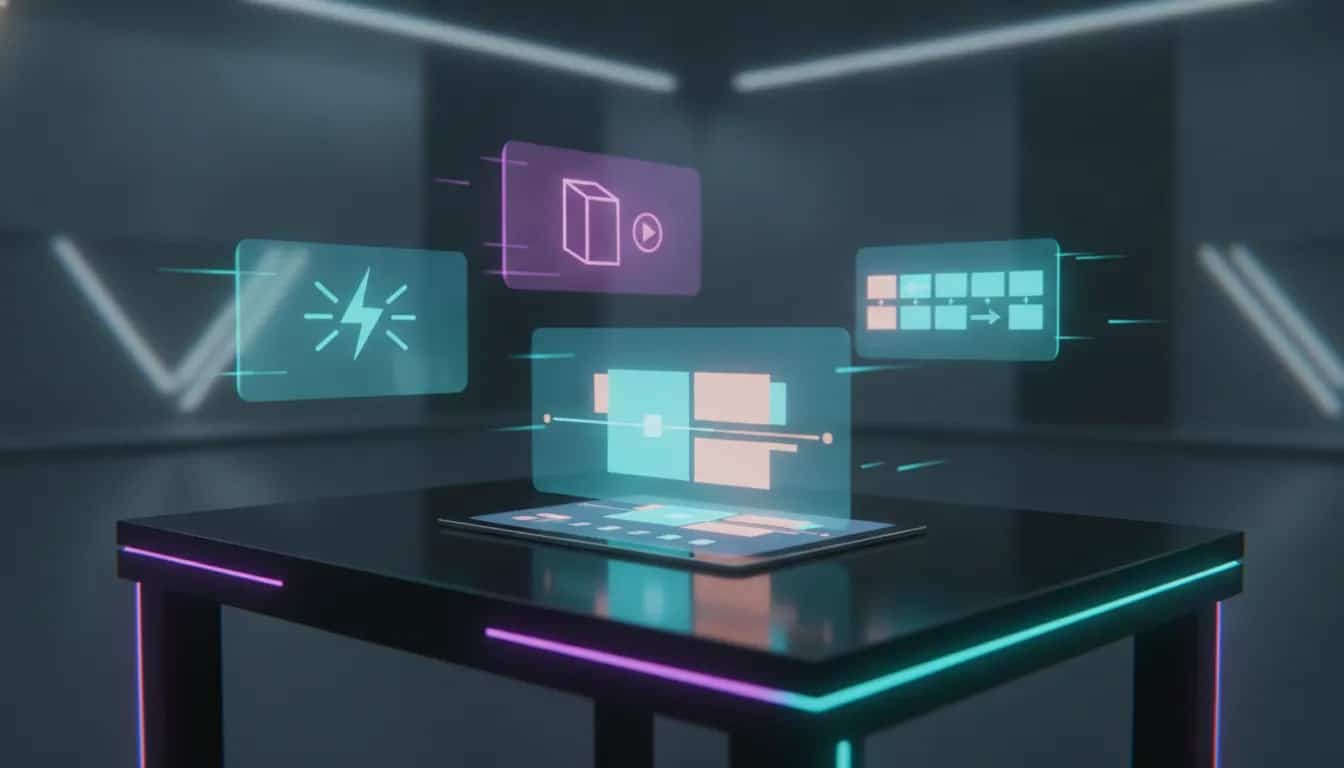
Buzzhooks is an AI-powered creative platform for producing short marketing videos, attention-grabbing hooks, product promotions, and cinematic scenes without starting from an empty editing timeline. It combines ready-made scene templates with prompt-based generators, allowing marketers to add their own assets, describe an idea, and generate a downloadable MP4.
It is most useful for creators, small businesses, agencies, and marketers who need fast social media content but still want choices around visual format, length, quality, product placement, scripts, and creative direction.
What Is Buzzhooks?
Buzzhooks is an AI content creation platform centered on short-form video generation. Rather than relying on one creation method, it offers several ways to make a clip:
- Viral Scenes for adapting prebuilt cinematic scenarios
- Ad Director for turning a product description into multiple ad concepts
- Freestyle Creator for transforming an open-ended prompt into a multi-scene storyboard
- Cinematic Studio for building a production through characters, scenes, assets, and storyline choices
- Video apps, including Magic Try-On and product-focused tools
- UGC presets for product promotion formats
- Image apps, including a thumbnail generator
- Industry and seasonal hook presets to narrow ideas by category or campaign theme
The central benefit is structure. A marketer can begin with a proven-style scene, a product brief, or a rough creative concept instead of needing to plan every shot manually.
How the Buzzhooks Credit System Works
Buzzhooks uses credits for generations. Before creating a clip, the interface shows the expected credit cost, making it possible to adjust settings before spending credits.
Cost can vary based on the chosen quality, aspect ratio, and duration. In one short cinematic scene example, lower and higher quality settings showed costs ranging from 280 to 600 credits. Other higher-quality, landscape generations were typically in the 400 to 600 credit range.
This makes planning important. A longer clip or higher-quality output may be appropriate for a polished campaign asset, while a lower-cost test can be useful when experimenting with concepts.
Use credits more efficiently
- Start with a clear one-sentence objective before generating.
- Choose the channel format first, such as portrait for vertical social content or landscape for wider placements.
- Test a core concept before creating several variants.
- Use templates for faster iterations when the format already fits your message.
- Review generation settings carefully, especially duration and quality.
- Reserve multi-scene concepts for messages that need a visual progression.
Use Viral Scenes for Fast Attention-Grabbing Hooks
The Viral Scenes library provides a large collection of prebuilt scenarios in different styles. These are designed as short, high-impact setups that can be customized with a brand message, uploaded asset, image, prop, setting, and spoken text.
For example, a time-travel themed scene can be adapted by defining:
- The appearance of a person or character
- An uploaded image or an AI-generated image to guide the look
- A product or prop to include in the shot
- The arrival location or scene setting
- The exact speech or message to deliver
This approach is useful when the creative challenge is not technical editing but finding an opening that makes people stop scrolling. The preset supplies the visual premise, while the customization fields connect it to the offer.
When to choose a template instead of prompting from scratch
Choose a Viral Scene when you need a quick hook, already know the type of mood you want, or want inspiration from existing scene examples. Use a more open-ended creation tool when the campaign idea depends on a unique sequence, character, or product metaphor that a preset does not cover.
How to Create an AI Ad With Ad Director
Ad Director is designed for marketers who have a product and a basic description but need help developing the creative concept. It can incorporate a logo and product details, then produce several potential ad directions to choose from.
A practical Ad Director workflow
- Upload your logo. Identify it as the primary brand asset.
- Describe the product. Explain what it is, who it is for, and the core value or offer.
- Select an ad type. An automatic option can be used when you want the platform to choose the direction.
- Set duration and format. Choose the intended length and portrait or landscape orientation.
- Set quality. Check the displayed credit cost before moving forward.
- Review the generated concepts. Buzzhooks can provide six concepts, each with a title and a detailed generation prompt.
- Select and generate. Pick the concept that best matches the campaign goal.
- Download the MP4. Use the exported file in an editor, social publishing workflow, or ad campaign.
The concept-selection step is valuable because it separates creative strategy from generation. Instead of accepting the first idea, you can compare several angles, such as a selfie-style promotion or a more visual product metaphor.
What to include in an effective ad brief
Keep the brief focused. Include the product category, the main benefit, the target customer problem, brand asset, and desired tone. Avoid trying to communicate every feature in one short clip.
A strong short ad usually follows this pattern:
- Hook: Identify a familiar problem or surprising contrast.
- Benefit: Show how the product helps.
- Proof or visual reinforcement: Use the logo, product, or a simple product-focused scene.
- Call to action: Give one clear next step.
For example, a campaign for a software marketplace could focus on avoiding full-price subscriptions, then position discounted or one-time software deals as the alternative. That is more direct than attempting to explain every category available in the marketplace.
Freestyle Creator for AI Multi-Scene Storyboards
Freestyle Creator is the better option when a template is too limiting. You provide a rough creative prompt, and Buzzhooks turns the concept into a storyboard made of separate scenes.
The interface can create up to six shots, with each shot running for as long as 10 seconds and a minimum duration of 1.5 seconds. The generated scenes can then be reviewed, edited, or expanded before the final generation.
This matters because a multi-scene sequence can communicate more than a single static composition. It can introduce a character, show the problem, reveal a product or metaphor, and finish with a branded call to action.
How to write better Freestyle Creator prompts
Describe the sequence, not just the object. A prompt such as “show our logo” is vague. A more useful prompt explains what appears first, what action happens, what the result should look like, and how the final brand message is presented.
Use this simple prompt framework:
- Subject: Who or what is featured?
- Setting: Where does the action take place?
- Conflict or movement: What changes during the clip?
- Brand connection: How does the product or logo enter naturally?
- End frame: What should the audience see or do at the end?
A concept built around a brand character entering a room of subscription icons and crushing them, for instance, creates a clear visual metaphor. The storyboard can turn that initial idea into several connected shots rather than one unchanging image.
Other Buzzhooks Tools for Product Marketing
Magic Try-On
Magic Try-On is a video app that uses an image and clothing input to generate a person wearing the selected outfit. This can be relevant for apparel concepts, visual merchandising, and creative product demonstrations.
UGC Presets
UGC presets provide product-promotion starting points. They are useful when you want a more creator-style or product-demonstration direction rather than a fully cinematic concept.
Image Apps and Thumbnails
Buzzhooks also includes image-focused tools, including thumbnail creation. This is useful for maintaining continuity between a generated campaign clip and the visual asset used to promote it.
Cinematic Studio
Cinematic Studio provides a more guided process for creating a video through character, scene, asset, and storyline decisions. It is suited to campaigns where continuity and deliberate story construction matter more than rapid template customization.
Find Seasonal and Industry-Specific AI Video Ideas
The hook preset area allows filtering by industry and campaign context. For example, selecting a category such as pet and animal alongside a seasonal theme such as Halloween can surface more relevant template options.
This can reduce idea-generation time for promotional calendars. Instead of adapting a generic concept for every holiday or niche, marketers can start with scenes aligned to the audience and season, then customize the message and brand elements.
Common Buzzhooks Mistakes to Avoid
Expecting perfect text inside generated visuals
AI-generated scenes may not reproduce on-screen text perfectly. If the exact spelling of a slogan, URL, offer, or legal statement is essential, check the output closely and consider adding critical text later in a conventional editor.
Using a vague prompt
Broad prompts often leave too much room for interpretation. Specify the visual action, setting, product role, and desired ending. The more clearly the story is described, the easier it is to assess and refine the generated scene plan.
Choosing the wrong aspect ratio
Portrait and landscape should be selected based on the intended placement. Deciding this only after generation can waste credits and create an awkward crop.
Spending credits before reviewing the concept
Where multiple ad concepts or editable storyboard scenes are available, review them first. The strongest outcome often begins with choosing the best creative angle, not with making the first available output.
Trying to say too much in a short clip
Short-form marketing works best with one message. Use the hook to frame one problem, make one promise, and lead to one call to action. Save detailed feature explanations for a landing page, longer ad, or follow-up content.
Is Buzzhooks Right for Your Marketing Workflow?
Buzzhooks is a practical fit if you need frequent short promotional content, want alternatives to a blank editing timeline, or need visual variations for ads and social media campaigns. The blend of preset scenes, ad concepts, customizable prompts, and storyboard generation supports both quick experiments and more ambitious creative ideas.
It may be especially helpful when a campaign needs a strong opening scene, an entertaining product metaphor, a seasonal variation, or a short spoken-word promotional clip.
Before choosing a plan, review the current Buzzhooks deal details on AppSumo, including available credits and terms. This is an affiliate link.
Final Takeaway
The best way to use Buzzhooks is to match the tool to the job: start with Viral Scenes for fast hooks, use Ad Director when you need campaign concepts from a product brief, choose Freestyle Creator for multi-scene storytelling, and use specialized apps for product visuals or image assets.
Start with a focused message, choose the correct format before generating, protect credits by reviewing concepts carefully, and always quality-check visible text, brand assets, and the final call to action before publishing.