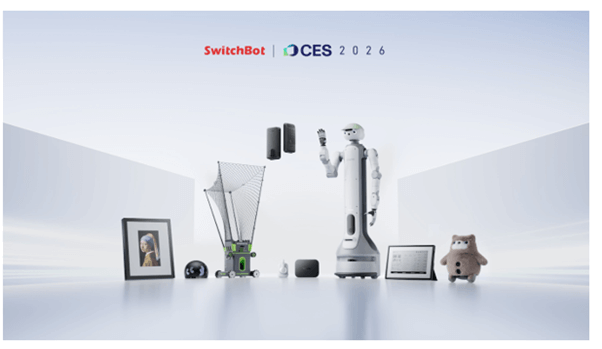
If CES is the crystal ball for consumer tech, SwitchBot’s 2026 showcase offers a clear view: the smart home is graduating from app-tapping convenience to embodied intelligence that senses, understands, and acts. At the Venetian Expo (Halls A–D Smart Home, booth #52655), SwitchBot is rolling out an integrated lineup that blends robotics, AI, and everyday design—aimed squarely at making the home not just connected, but capable.
A Headliner Robot Built for Real Homes: onero H1
The star is onero H1, an accessible household robot designed to do more than any single-function bot. With 22 degrees of freedom and an on-device OmniSense VLA model, onero H1 brings together visual perception, depth awareness, and tactile feedback to handle contact-heavy tasks—think grasping, pushing, opening, and organizing—with greater reliability.
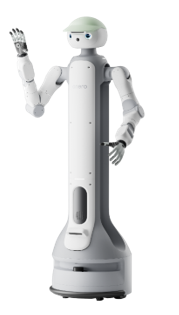
Instead of being pigeonholed into one chore, onero H1 coordinates with SwitchBot’s existing task-specific devices and adapts to changing contexts around the home. This is the sort of embodied AI shift that moves robotics from “cool demo” to “helpful roommate.” SwitchBot says both onero H1 and its A1 robotic arms will be available for pre-order on its website soon.
Why it matters: Most home robots excel at isolated jobs; onero H1 is built to navigate the messy in-between—where objects, surfaces, and states vary constantly. If it works as described, it could meaningfully reduce the cognitive overhead of everyday tidying and task switching.
Security That Knows You—Literally: Lock Vista Series
SwitchBot’s Lock Vista Series marks a category first: a deadbolt smart lock with 3D structured-light face unlock. It projects over 2,000 infrared points to generate a precise facial map, enabling millimeter-level accuracy and near-instant access. Importantly, it includes 3D liveness detection to block spoofing via photos or video, and stores user data locally for privacy.
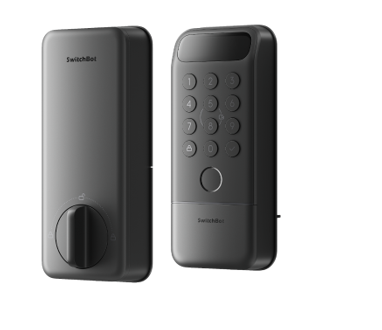
Practicality is front and center. DualPower and DualBackup pair a high-capacity rechargeable battery with a long-life backup and emergency power options. Matter-over-Wi‑Fi provides hub-free integration with Apple Home, so you can monitor and control access remotely or via voice.
For tougher scenarios, the Lock Vista Pro adds contactless palm-vein recognition. By reading internal vascular patterns with near-infrared sensing, it offers a secure, hygienic alternative when hands are slightly wet or dirty.
Why it matters: Biometrics in the foyer can streamline daily comings-and-goings without sacrificing security. With local data storage, robust power redundancy, and Matter-over-Wi‑Fi, this feels like a thoughtfully engineered step toward “works every time” access control.
Comfort Tech That Reduces Friction in Daily Life
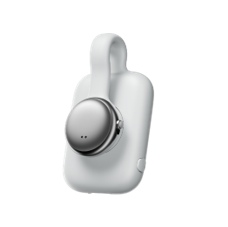
- AI MindClip: Think of this 18-gram wearable as a voice-centered “second brain.” It continuously captures conversations and meetings, then converts them into structured summaries, to-dos, and a searchable personal knowledge base (via subscribed cloud AI). With support for 100+ languages, it’s a compelling pitch to knowledge workers and busy families alike: offload memory, retrieve anything on demand, and reduce cognitive load.
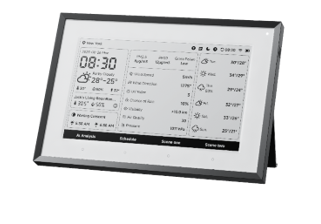
- Weather Station: A 7.5-inch E-Ink display aggregates what you need at a glance—time, date, sunrise/sunset, indoor temp/humidity, air quality, and a six-day forecast. It syncs calendars across platforms and can trigger auto-scenes for smarter routines. AI-powered daily briefings and curated weather-related quotes add both utility and delight.
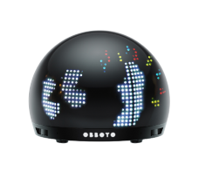
- OBBOTO: This expressive globe light packs more than 2,900 RGB LEDs, motion sensing, music visualization, and AI-driven mood animations. It can display time and weather in light patterns, transform into interactive pixel art, and shift into curated modes for sleep, focus, or relaxation. It’s ambient computing with personality.
Why it matters: These products trim everyday friction—remembering, planning, deciding, and setting the mood—without demanding more screen time. They make the environment itself smarter and more supportive.
A Sports Tech Surprise: Acemate Tennis Robot
Beyond the home, SwitchBot is incubating Acemate Tennis Robot, touted as the world’s first AI tennis robot built for real rally practice. For athletes and coaches, it hints at a future where AI-driven training partners can replicate human-like rhythms and adapt to your play in real time.
The Bigger Picture: Embodied AI as the Smart Home’s Next Era
SwitchBot’s Smart Home 2.0 narrative centers on an ecosystem where perception, reasoning, and action converge. From the adaptable onero H1 to biometric-first access control and ambient devices that cut cognitive clutter, the company is aiming to turn “smart” from reactive to proactive.
For smart home enthusiasts and early adopters, the appeal is clear. The lineup is less about dazzling novelties and more about layered practicality—reliability in physical tasks, security that anticipates needs, displays that inform without interrupting, and lights that communicate mood and information subtly.
CES often shows us the future in fragments. SwitchBot’s 2026 showcase stitches those fragments into a cohesive home experience—one that acts with you, not just for you. If the products deliver as promised, Smart Home 2.0 won’t be a spec sheet; it’ll be how your home behaves.