Grammarly rebranded as Superhuman to tackle the fragmentation and context-switching problems users face with isolated AI tools. By unifying Grammarly, Coda, and Superhuman Mail under one platform, the company aims to create a seamless AI-native productivity ecosystem. This bold move addresses the reality that over half of workers use AI but struggle with app switching. The integrated approach promises to make technology invisible while amplifying users’ capabilities across various digital tasks. The transformation reveals a strategic vision for productivity’s future.
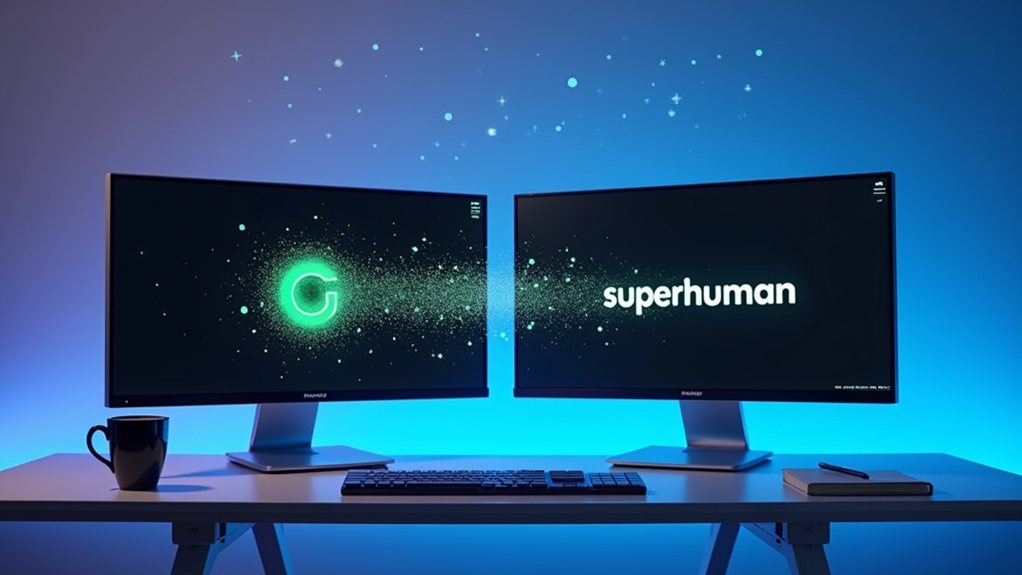
As Grammarly evolves to meet the growing demands of AI productivity, the company has officially rebranded itself as Superhuman. This transformation combines Grammarly, Coda, and Superhuman Mail under a single unified brand, creating an AI-native platform that focuses on making you more productive.
You’re likely familiar with the challenge of using AI tools that work in isolation. Over half of today’s workers use AI, but they struggle with constantly switching between apps and manually providing context. Superhuman aims to solve this problem by embedding AI directly into your workflow.
The fragmentation of AI tools creates friction instead of flow. Superhuman’s seamless integration eliminates context-switching to make technology truly invisible.
The new Superhuman suite includes four key products: the original Grammarly writing assistant, Coda workspace, Mail intelligent inbox, and Superhuman Go AI assistant. These tools work together to understand your work context across applications. Superhuman Go provides assistance in all applications simultaneously, differentiating it from single-agent tools that only work in one place at a time.
When you use Superhuman Mail, the system proactively organizes your inbox and generates replies that match your writing style. Soon, these replies will incorporate details from your CRM and other tools, creating accurate, context-rich messages that require minimal editing before sending.
CEO Shishir Mehrotra emphasizes that AI should amplify your capabilities, not replace them. The platform’s mission is to unlock superhuman potential in everyone by transforming AI from something you actively manage into a natural extension of your work environment that functions invisibly in the background.
This shift means you’ll experience increased cognitive speed, reduced errors, and more time for creative, strategic work. Unlike traditional AI that requires explicit prompting, Superhuman’s AI responds to your needs without interrupting your workflow.
You won’t pay extra for these new capabilities initially. Superhuman Go features are available at no additional cost through February 1, 2026, giving you plenty of time to experience the benefits before any price changes.
The company is building on Grammarly’s established infrastructure to deliver these seamless AI experiences. By transforming from a writing assistant to an integrated AI productivity platform, Superhuman positions itself to help you work better and faster across all your digital tasks.