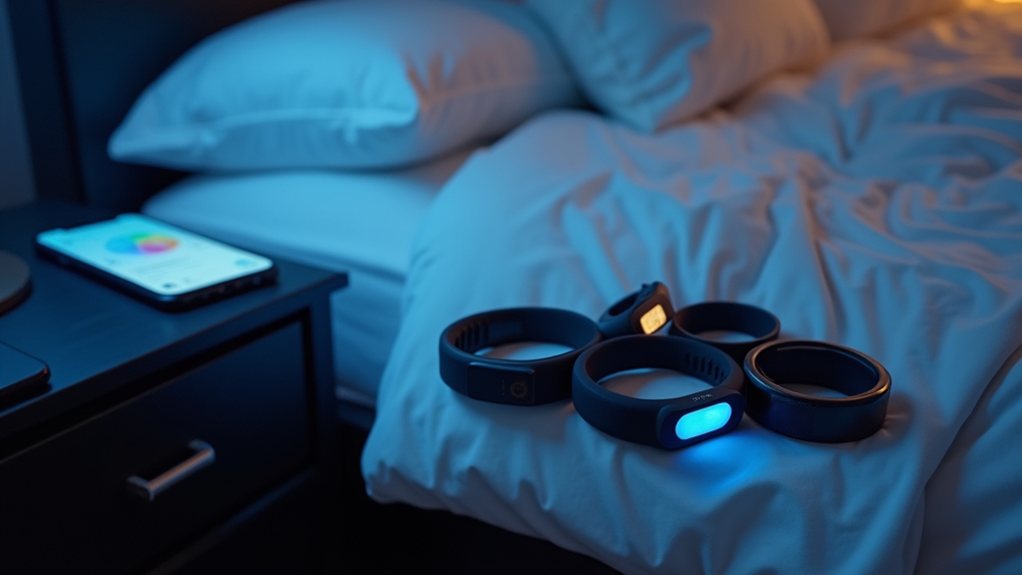
You’ve likely wondered if you’re getting enough quality sleep, and in 2025, technology offers impressive solutions. The latest sleep trackers don’t just count hours—they analyze sleep stages, heart rate patterns, and even breathing disturbances with remarkable accuracy. From the versatile Fitbit Inspire 3 to the innovative Smart Health Ring, these devices transform sleep data into actionable insights. Ready to discover which tracker might finally help you understand why you’re still tired after eight hours in bed?
Fitbit Inspire 3 Health & Fitness Tracker with Heart Rate Monitoring


The Fitbit Inspire 3 stands as an exceptional choice for wellness enthusiasts seeking extensive sleep insights without sacrificing battery life. You’ll receive a personalized Sleep Profile and daily Sleep Score through automatic sleep tracking that monitors your patterns throughout the night. The smart wake feature gently vibrates to rouse you at the ideal point in your sleep cycle.
Beyond sleep metrics, you’ll benefit from the device’s stress management capabilities, continuous heart rate monitoring, and SpO2 tracking. With its water-resistant design, 10-day battery life, and included 6-month Premium membership, you’re investing in thorough health tracking that extends well beyond bedtime.
Best For: Health-conscious individuals who want comprehensive sleep tracking along with all-day fitness monitoring in a lightweight, long-lasting device.
Pros:
- Extensive sleep analysis with personalized Sleep Profile, daily Sleep Score, and smart wake vibrating alarm
- Impressive 10-day battery life despite continuous heart rate monitoring and color touchscreen
- Comprehensive wellness tracking including stress management, SpO2 monitoring, and over 20 exercise modes
Cons:
- Requires 6-month Premium membership (included) for access to advanced insights and detailed analytics
- Smaller screen size may make reading notifications and data more difficult for some users
- Limited functionality compared to smartwatches – primarily focused on health tracking rather than app integration
Fitbit Inspire 3 Fitness Tracker with Health Insights

Fitness enthusiasts seeking thorough sleep analysis will find their match in the Fitbit Inspire 3, which stands out with its detailed breakdown of light, deep, and REM sleep stages. You’ll receive a complete sleep score that helps you track progress toward your wellness goals while monitoring your heart rate around the clock.
What makes this tracker particularly valuable is its 10-day battery life, guaranteeing you won’t miss capturing important sleep data. When you’re awake, you’ll benefit from stress management tools and Active Zone Minutes that encourage ideal exercise intensity. The device’s water resistance up to 50 meters means you can wear it continuously—from shower to swimming pool—without worry.
Best For: Health-conscious individuals who prioritize sleep tracking and want a durable fitness tracker with long battery life for continuous monitoring.
Pros:
- Comprehensive sleep analysis with detailed breakdown of light, deep, and REM stages
- Impressive 10-day battery life eliminates frequent charging interruptions
- Water-resistant up to 50 meters, making it suitable for swimming and shower wear
Cons:
- Lacks GPS functionality that more advanced fitness trackers offer
- Screen size may be too small for some users to easily view workout metrics
- Limited app ecosystem compared to smartwatch alternatives
Fitbit Inspire 3 Health & Fitness Tracker with Heart Rate Monitoring

Designed for wellness enthusiasts seeking extensive health insights, the Fitbit Inspire 3 stands out with its impressive Daily Readiness Score that personalizes your fitness experience. You’ll appreciate how it monitors your sleep patterns with automatic tracking, delivering a thorough Sleep Profile and daily Sleep Score to help you understand your rest quality.
The device’s 24/7 heart rate monitoring works alongside stress management features to give you a complete picture of your well-being. With up to 10 days of battery life and water resistance to 50 meters, you won’t need to remove it for swimming or showering. It’s compatible with both iOS and Android devices, guaranteeing seamless connectivity.
Best For: Fitness and wellness enthusiasts who want comprehensive health tracking with sleep analysis, stress management, and workout monitoring in a slim, waterproof device with long battery life.
Pros:
- Extensive health tracking features including Daily Readiness Score, Sleep Profile, and stress management with up to 10 days of battery life
- Water resistant up to 50 meters, making it suitable for swimming and showering
- Includes 6-month Premium membership trial for advanced insights and personalized recommendations
Cons:
- Requires smartphone proximity for GPS tracking and notifications
- Limited 4GB memory storage capacity
- Requires subscription after 6-month trial period to access advanced analytics and personalized insights
Smart Health Ring Fitness Tracker, Waterproof for iOS and Android

Advanced health monitoring meets elegant design in this versatile smart ring that’s ideal for tech-savvy individuals seeking extensive health insights without sacrificing style. At just 2mm thick with a polished inner surface, you’ll barely notice you’re wearing it.
The ring’s 4.0 sensors continuously track your sleep patterns, monitoring deep and light sleep phases, eye movements, and periods of wakefulness. You’ll receive extensive health metrics every 30 minutes, including heart rate, blood oxygen, and blood pressure readings. With a 3-5 day battery life and compatibility with both iOS and Android devices, this waterproof tracker delivers reliable sleep data without requiring a subscription fee.
Best For: Health-conscious users who want comprehensive fitness and sleep tracking in a discreet, comfortable wearable that works with both iOS and Android without requiring a subscription.
Pros:
- Advanced 4.0 sensors provide extensive health metrics including heart rate, blood oxygen, and blood pressure every 30 minutes
- Ultra-slim 2mm design with a polished inner surface ensures comfortable all-day and night wear
- IP68 waterproof rating and 3-5 day battery life make it practical for continuous use across various activities
Cons:
- Limited to 8 sports modes, which may not cover all exercise types for serious athletes
- At 3.85 ounces, it’s relatively heavy for a ring-style fitness tracker
- No mention of stress tracking or guided breathing features that are common in competing fitness wearables
Garmin Index Sleep Monitor

The upper-arm design of Garmin’s Index Sleep Monitor offers a comfortable alternative for those who can’t stand wearing watches to bed. This lightweight (just 0.5 ounces) nylon band tracks your sleep score, stages, and heart rate variability while remaining unobtrusive throughout the night.
You’ll appreciate how it syncs seamlessly with the Garmin Connect App, whether you own a Garmin smartwatch or not. The smart wake alarm gently vibrates at your ideal wake time, making mornings less jarring. With up to seven nights of battery life, you won’t need to charge it daily. While it’s not a medical device, its breathing variation monitoring using Pulse Ox provides valuable sleep insights that can help improve your rest quality.
Best For: Those who dislike wearing wrist devices while sleeping but still want comprehensive sleep tracking metrics in a comfortable, lightweight upper-arm device.
Pros:
- Extremely lightweight (0.5 ounces) and unobtrusive nylon band design that’s comfortable for overnight wear
- Up to 7 nights of battery life means less frequent charging compared to daily-charge smartwatches
- Integrates seamlessly with Garmin’s ecosystem whether you own a Garmin smartwatch or not
Cons:
- Limited availability with a future release date (July 28, 2025)
- Moderate customer satisfaction with only 3.4/5 stars from 54 ratings
- Not a medical device, so breathing variation monitoring and women’s health tracking have limitations for clinical use
Factors to Consider When Choosing Sleep Trackers
When you’re exploring the terrain of 2025’s sleep trackers, you’ll need to weigh several essential factors before making your investment. Consider whether you prefer a wristband, ring, or mattress-based system, along with battery performance that won’t leave you constantly recharging. Your decision should also account for accuracy in sleep stage detection, your budget constraints, and the range of health metrics beyond sleep that you’d like to monitor.
Form Factor Options
Choosing the right form factor stands as perhaps the most critical decision you’ll make when selecting a sleep tracker in 2025. Today’s options include wristbands, rings, and smart bands—each with distinct advantages for different sleep habits.
Wristbands offer versatility with fitness tracking and notifications, making them ideal if you’re seeking an all-in-one solution. Meanwhile, rings provide a lightweight, unobtrusive alternative that won’t catch on bedding during your nightly movements. Smart bands, with their advanced sensor arrays, deliver extensive health metrics but may feel bulkier.
Consider battery life in your decision: wristbands typically last up to 10 days between charges, while rings might need recharging every 3-5 days. Remember, the most accurate sleep tracker is the one you’ll actually wear consistently, so prioritize comfort above all else.
Battery Life Duration
Beyond form factor considerations, battery life emerges as a vital aspect that’ll shape your sleep tracking experience. When evaluating options, prioritize devices offering seven or more nights of continuous tracking—this sweet spot guarantees you’ll capture full sleep cycles without the interruption of frequent charging.
The market’s top performers now boast impressive 10-day battery capacities, freeing you from the daily charging routine that plagues lesser devices. Consider how frustrating it would be to discover your tracker died midway through the night, leaving gaps in your sleep data. Also worth noting is the charging time required; some models with excellent battery life ironically demand extended recharge periods, potentially disrupting your usage patterns. Your ideal choice balances longevity with practical recharging requirements for seamless sleep monitoring.
Sleep Stage Monitoring
Although many trackers claim to monitor sleep, sophisticated sleep stage analysis sets premium devices apart from basic alternatives. The best 2025 models utilize advanced sensors that track your heart rate variability and breathing patterns to accurately differentiate between light, deep, and REM sleep phases.
You’ll want a device that provides a thorough sleep score based on both duration and quality of each stage. This gives you actionable insights into your sleep health rather than merely raw numbers. Look for trackers that correlate your sleep stages with daily activities and stress levels, allowing you to identify patterns affecting your rest quality. With this information, you can make informed adjustments to your sleep environment and habits. The most effective monitors serve as wellness tools, helping you optimize not only your sleep but your overall health.
Price Point Considerations
The investment you make in sleep tracking technology directly impacts the depth and usefulness of the insights you’ll receive. While basic trackers starting around $30 can monitor simple metrics like movement and duration, higher-end devices ($200+) offer sophisticated analysis of heart rate variability and detailed sleep stage breakdowns that provide more actionable health data.
Don’t overlook the hidden costs of ownership—many premium trackers require monthly subscriptions to access their full potential. Factor in warranty coverage and customer support quality, as more expensive models typically offer better protection and assistance when issues arise. Before committing to any price point, research customer reviews thoroughly to determine if the device delivers consistent, accurate results that justify its cost. The right tracker balances functionality with your budget constraints.
Health Metric Diversity
While budget considerations set the stage for your purchase, a tracker’s health metric capabilities ultimately determine its value to your sleep experience. The most thorough devices now track not only basic sleep duration but offer detailed breakdowns of your sleep stages—light, deep, and REM—alongside heart rate variability measurements that reflect your nervous system’s recovery.
Look for trackers that monitor breathing patterns and blood oxygen levels, especially if you’re concerned about sleep apnea or respiratory issues. Many newer models also integrate stress management tools, including guided mindfulness sessions that can greatly improve your sleep quality. For women, trackers with menstrual cycle insights provide valuable context for sleep fluctuations related to hormonal changes. Remember that daytime activity tracking features complement sleep data, creating a well-rounded picture of how your movement affects your rest.
Water Resistance Rating
Surprisingly, many consumers overlook water resistance ratings when selecting sleep trackers, yet this feature greatly impacts both durability and versatility. Look for designations like IP67 or IP68, which indicate protection against both dust and water immersion. The higher the rating, the more activities you’ll confidently wear your tracker during—from showering to swimming.
When examining specifications, you’ll notice manufacturers list specific depth and duration parameters. An IP67 device withstands 1 meter of water for 30 minutes, while IP68 offers protection beyond these limits. Don’t mistake water resistance for waterproofness, though; regular maintenance remains crucial.
Your lifestyle should dictate your choice—if you’re an active swimmer or shower-wearer, prioritize a higher rating. This consideration guarantees your investment continues tracking your sleep data regardless of your daily routine.
App Integration Capabilities
Effective app integration stands at the heart of any worthwhile sleep tracker, transforming raw data into actionable insights you’ll actually use. When evaluating devices, prioritize those offering extensive smartphone synchronization that seamlessly connects with your existing health ecosystem.
The best trackers of 2025 don’t just collect data—they interpret it through dedicated apps providing personalized sleep scores, historical trends, and practical improvement suggestions. Look for devices compatible with popular fitness platforms to maintain a unified view of your overall wellness metrics.
Smart notifications can revolutionize your sleep routine by delivering timely bedtime reminders and relaxation prompts based on your personal patterns. For maximum benefit, consider trackers that integrate with your smart home system, automatically adjusting your bedroom’s lighting and temperature for ideal sleep conditions.
Final Thoughts
You’ll find tremendous value in investing in a quality sleep tracker that aligns with your specific needs. Whether you prefer the wrist-based convenience of Fitbit Inspire 3, the discreet elegance of Smart Health Ring, or the thorough analysis of Garmin Index, these devices offer invaluable insights into your nightly rest. Consider your comfort preferences, budget, and desired metrics before making your choice—your path to better sleep and improved overall wellness begins with understanding your patterns.