
Respona is an outreach platform built to help marketers and SaaS teams find relevant websites, contact opportunities, and send email sequences from one place. If you are comparing link building tools or trying to decide whether Respona fits your workflow, the key question is simple: does it make outreach faster and more organized without sacrificing targeting quality?
Based on the available product walkthrough and interface details, Respona combines campaign templates, search-based prospecting, domain metrics, email sequencing, inbox management, and team collaboration. That makes it especially relevant for brands that want to build authority beyond their own site through mentions, reviews, lists, blogs, and podcasts.
What Respona is designed to do
Respona is an outreach and prospecting tool. Its main purpose is to help you:
Find relevant sites and pages that mention competitors or cover your niche
Build outreach campaigns using pre-made templates
Create multi-step email sequences with follow-ups
Qualify opportunities using SEO metrics like domain authority, spam score, and page authority
Manage replies through a built-in inbox
Collaborate with teammates inside shared workspaces
Rather than being just an email sender, it tries to cover the entire outreach workflow from prospecting to follow-up.
Who Respona is best for
Respona appears best suited to:
SaaS companies looking to earn mentions, reviews, and backlinks
SEO teams that need a repeatable outreach process
Marketers building off-site authority through list posts, blogs, and podcast appearances
Small teams that want shared access to campaigns and replies
It may be less useful if your brand is very new and no one is writing about your category or competitors yet. In that situation, even a strong tool cannot create opportunities that do not exist.
What kinds of outreach campaigns you can run
One of Respona’s strengths is its library of pre-built campaign types. These are designed to help you start faster instead of building every workflow from scratch.
Campaign options shown in the interface include:
Podcast outreach
Product alternatives
Product reviews
Competitor mentions
Listicle outreach
Blogger outreach
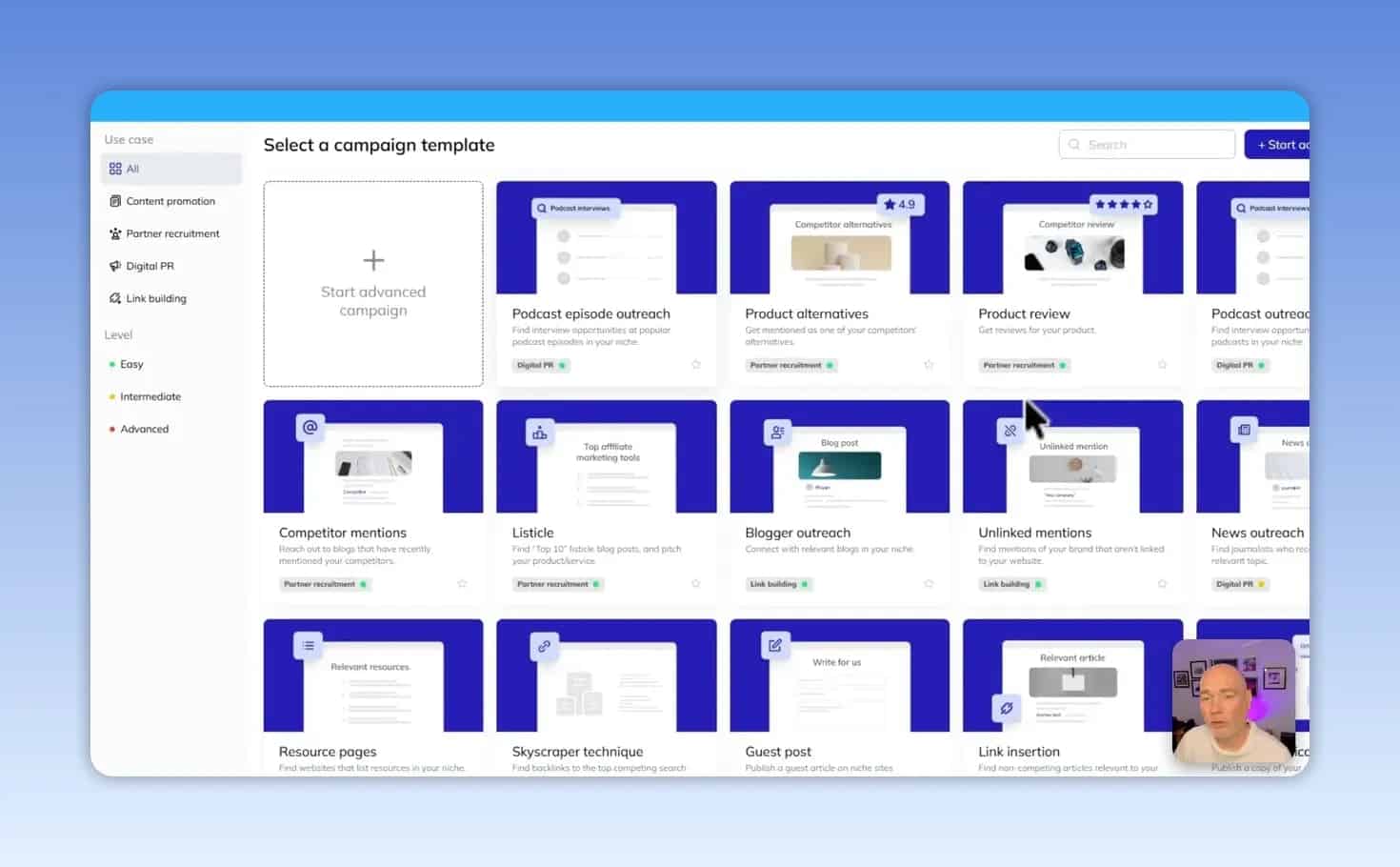
This variety matters because outreach is not one single tactic. A brand trying to get onto podcasts needs a different search pattern and email angle than a brand trying to be included in comparison articles.
How the campaign setup works
The setup flow is structured and guided. A typical campaign asks for:
Your product name
A competitor or market reference point
Keywords describing the category
A short explanation of what makes your product different
An incentive or offer for the site owner
That information is then used to build the first email draft and the campaign logic.
AI-assisted keyword generation
Respona can suggest keywords during setup. This is helpful when you know your niche broadly but want additional ways to describe the market or adjacent product categories.
That said, AI-generated keywords should still be reviewed manually. If the keyword set is too broad, you may surface unrelated opportunities that waste credits and time.
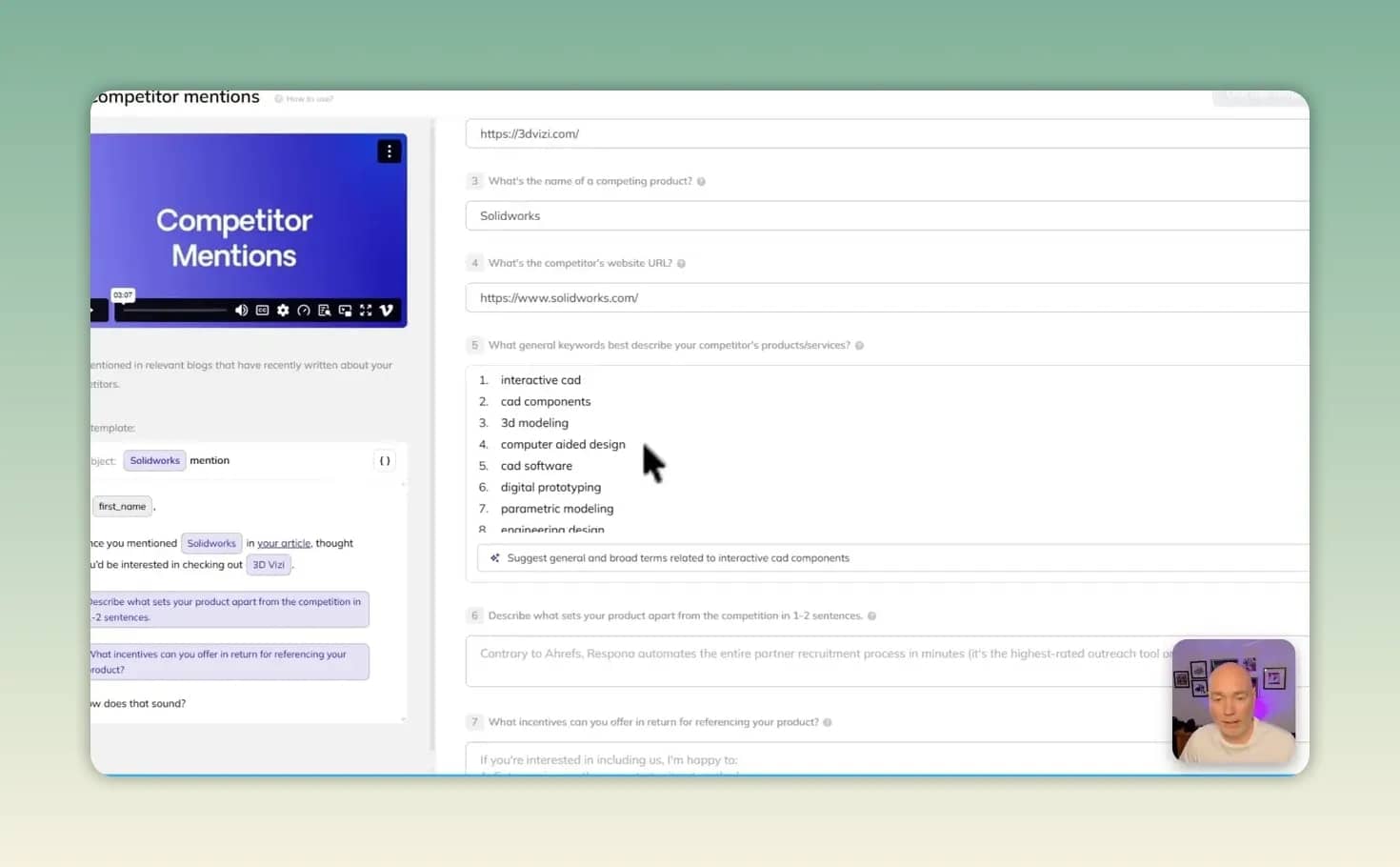
Email drafts update as you fill in the campaign
A useful detail in the interface is that the outreach email evolves as campaign fields are completed. This helps connect your positioning directly to the final message.
For example, if you describe how your product differs from a better-known tool, that distinction can be worked into the outreach copy. The practical benefit is speed, but quality still depends on the inputs you provide.
Why incentives matter in outreach
One of the most practical points in the workflow is the emphasis on giving people a reason to say yes.
Outreach tends to fail when the message only asks for a favor. Better results usually come when the pitch includes something useful, such as:
Free product access for a limited time
An affiliate opportunity
Ready-made assets or content materials
A strong angle that fits an article already published on the target site
This is especially important for SaaS outreach. If someone has already mentioned a known tool in your category, your message needs a clear value exchange. “Please mention us too” is rarely enough.
How Respona handles follow-ups
Respona can create multi-step sequences rather than a single cold email. In the demonstrated workflow, the system built an initial email plus a later reminder.
That matters because many outreach campaigns underperform simply due to lack of follow-up. A short, polite nudge after the first email can increase replies without forcing you to manage every reminder manually.
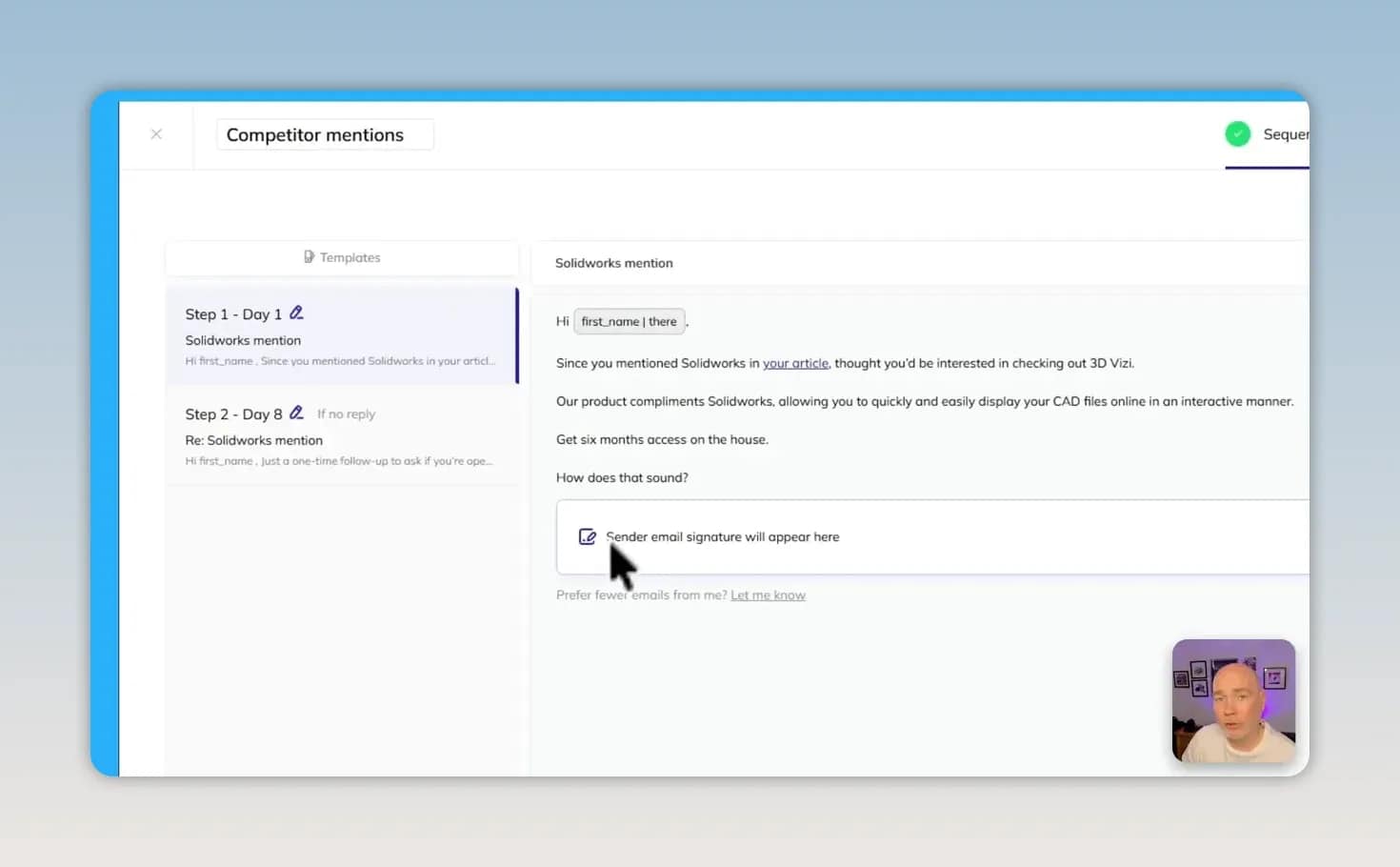
If you already have outreach copy that works, Respona also supports custom templates. That means you can keep your proven messaging and use the platform mainly for prospecting, contact finding, and sequence delivery.
How lead discovery works inside Respona
After the campaign logic is set, Respona helps you find relevant opportunities. The interface supports several lead sources:
Google Search
Google News
Backlink search via Moz
Podcast search
CSV import for existing prospect lists
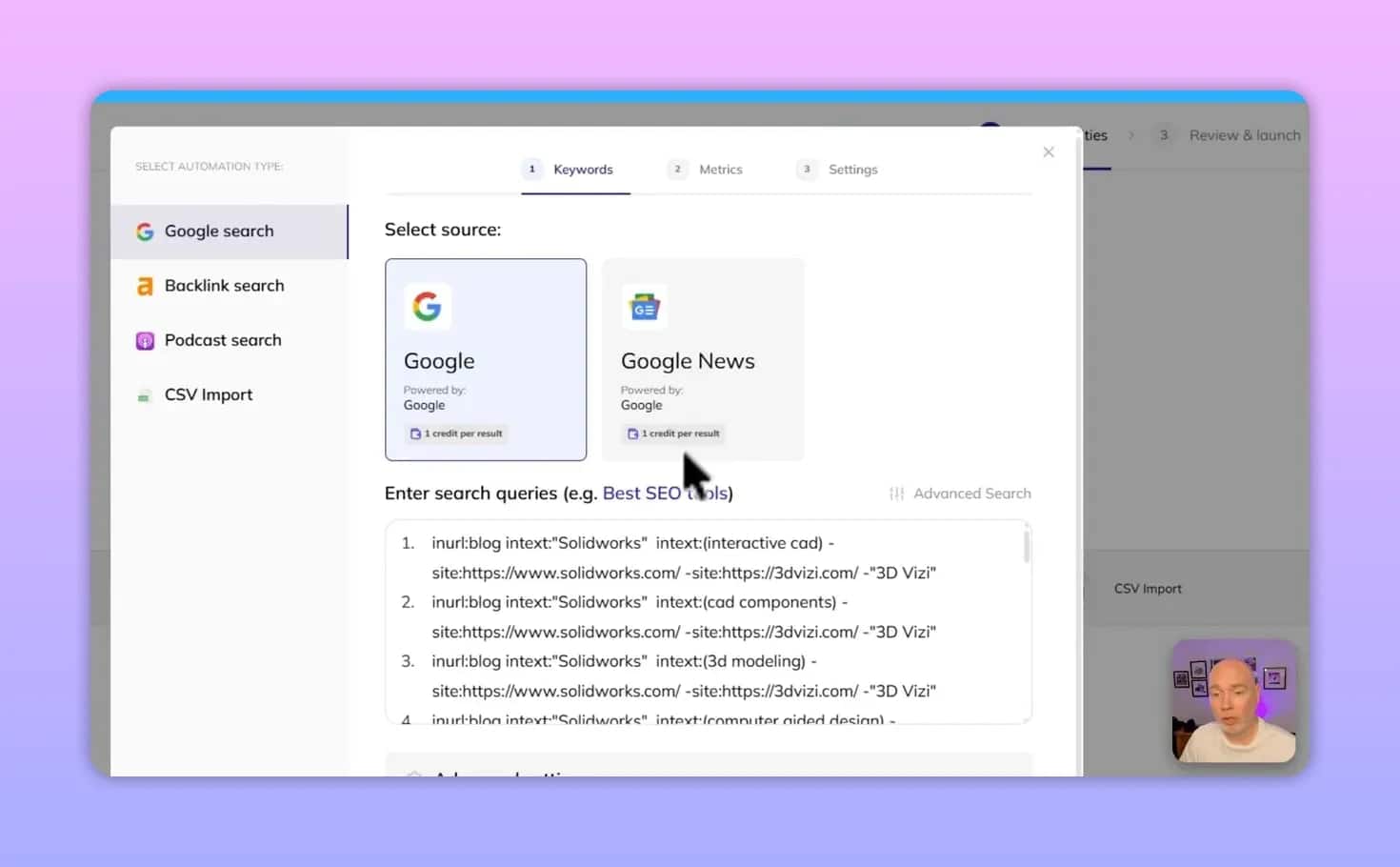
This is one of the stronger parts of the platform because it gives you multiple ways to build a prospect list depending on the campaign type.
Google-based search queries
For search-driven prospecting, Respona builds a query around the product or competitor name plus related modifiers. You can then analyze the top results and refine by country and other settings.
This approach is useful when you want to find:
Articles mentioning a competitor
News coverage
List posts and roundups
Blogs discussing a known product category
Backlink and SEO metric filtering
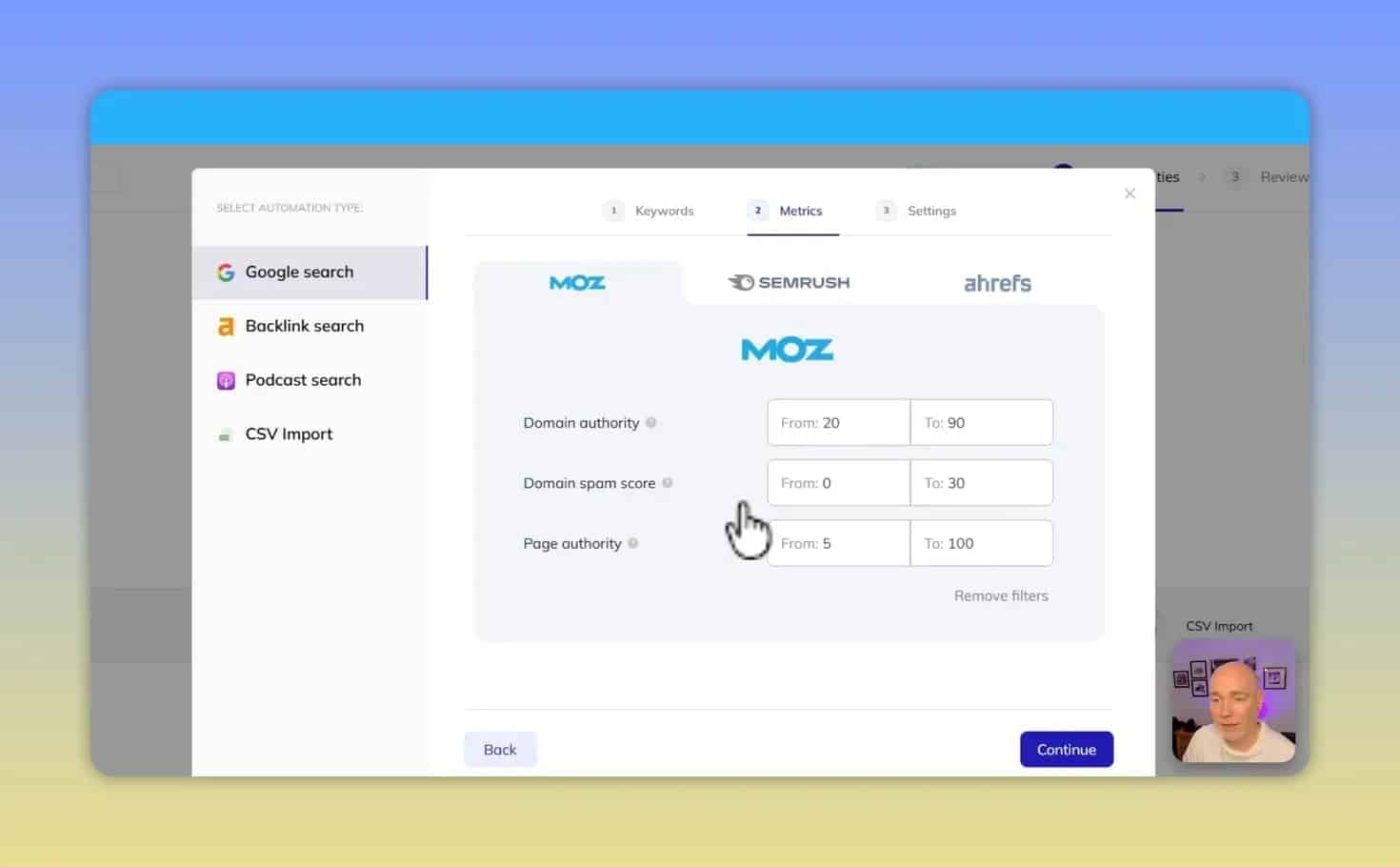
Respona includes filtering based on metrics such as:
Domain authority
Spam score
Page authority
It uses Moz by default in the shown workflow, and it also supports external data connections for Ahrefs and Semrush if you have your own accounts.
Those integrations are relevant if your team already relies on one of those platforms for SEO analysis and wants deeper evaluation of prospect quality.
For general reference on those metric providers, see Moz, Ahrefs, and Semrush.
What the opportunity review process looks like
Finding prospects is only the first step. Respona also presents the discovered opportunities in a review table, where you can inspect source pages and metrics before deciding what to keep.
The workflow shown includes columns for:
Source page
Opportunity type
Contact status
Domain metrics
Date added
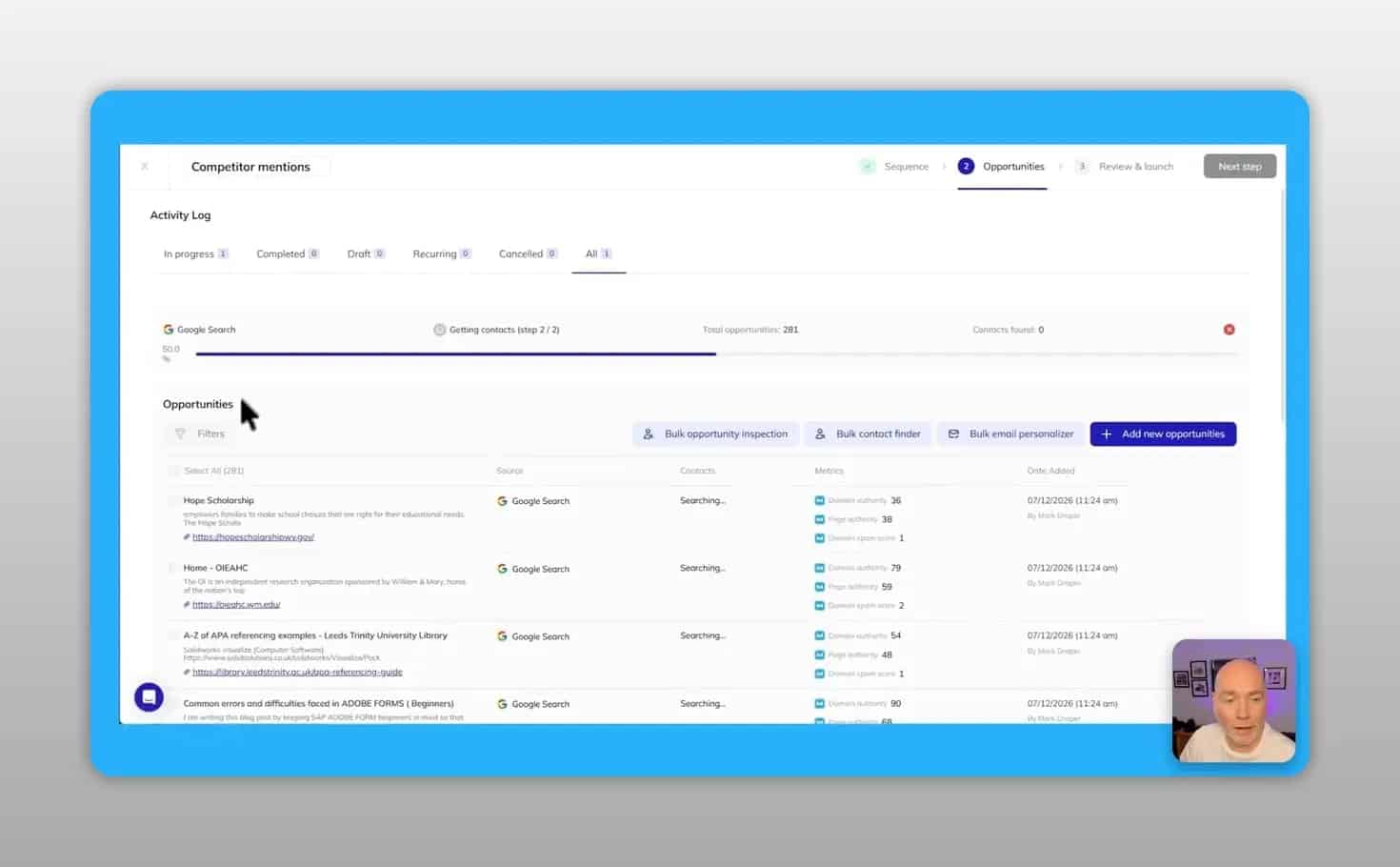
This review step is critical. Not every result will be relevant, even if the keyword match looks promising.
Why manual review still matters
An important example from the workflow shows a result that technically matched the topic area but was not the right fit for the actual product. That is a normal outreach problem.
Search tools can surface pages related to a broad concept, but they cannot fully understand your positioning. You still need to ask:
Is this site actually relevant to the audience I want?
Does the page discuss the kind of product I offer?
Would my pitch make sense in context?
This is why good outreach is never fully automated. Respona helps with speed and structure, but judgment still matters.
Email accounts, inbox, and team collaboration
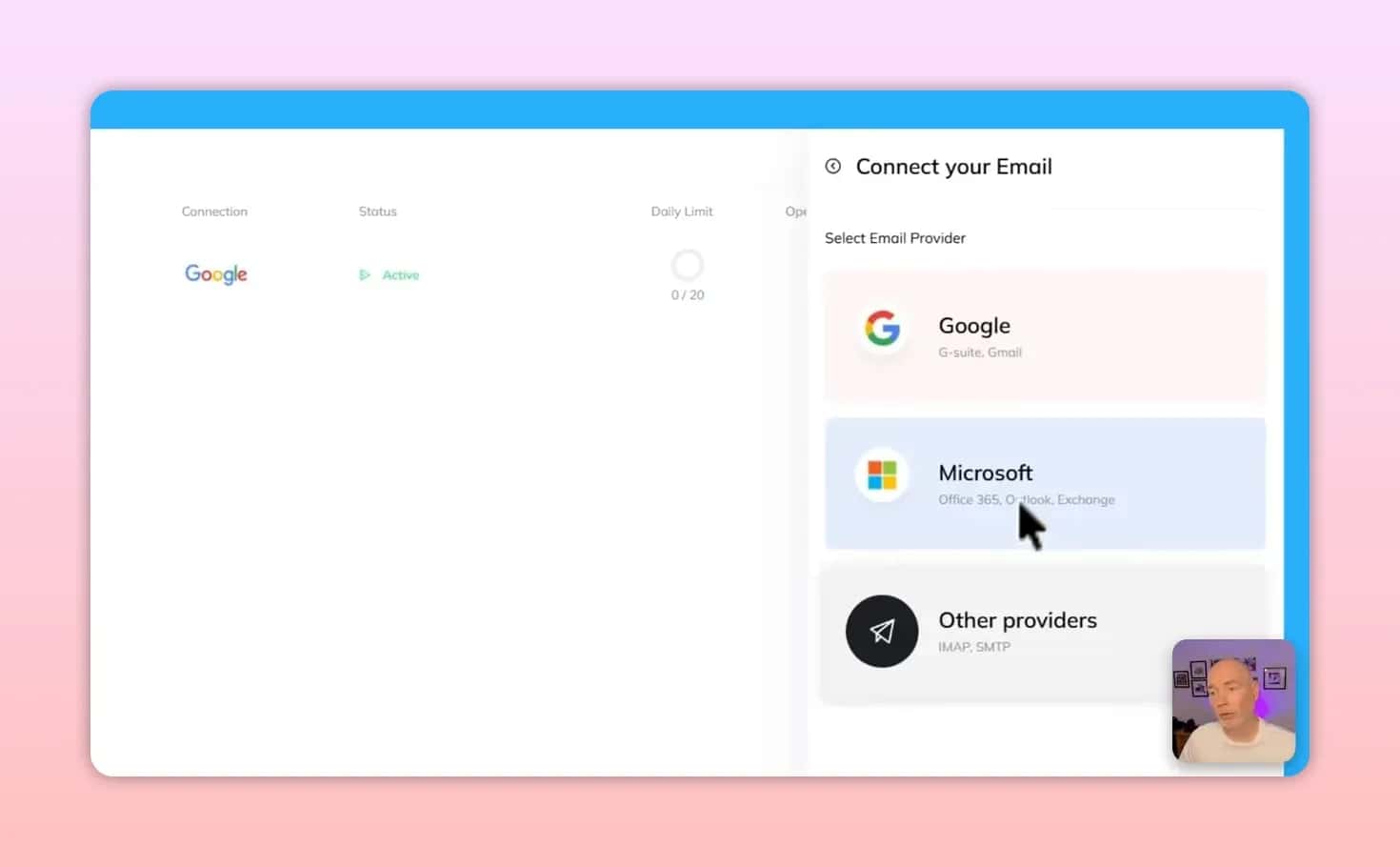
Respona requires you to connect an email account before launching outreach. The shown setup supports:
Google
Microsoft
Other providers
Google and Microsoft appear to be the simplest connection options in the demonstrated flow.
The platform also supports:
Multiple workspaces depending on plan
Multiple email accounts depending on plan
Team members who can help manage outreach and replies
A built-in inbox for monitoring responses
That makes it more practical for teams than a basic solo outreach tool. If one person handles setup and another handles replies, shared access becomes a real operational benefit.
Can you use your own templates?
Yes. If you already have a tested outreach framework, you are not limited to the built-in campaign copy.
The platform includes a templates section where you can create your own sequence steps and reuse them across campaigns. This is useful if:
You have a proven guest post pitch
You want a standard podcast outreach sequence
You prefer your own tone and structure over generated copy
For many teams, this is the ideal setup: use Respona for prospecting and workflow management, while keeping full control over outreach messaging.
What appears to be included in the pricing tiers
The shown pricing structure suggests that lower tiers unlock much of the core product, while higher tiers mainly increase usage limits and credits.
Highlights mentioned in the walkthrough include:
Differences in the number of connected email accounts
Differences in monthly credits
Bonus credits included at each level
Some advanced features, such as AI email personalization and recurring searches, not included at the lowest level
If you want to check the current offer, the relevant product page is available here: Respona AppSumo deal.
Strengths of Respona
Based on the demonstrated feature set, the main advantages are:
Pre-built campaign frameworks for common outreach goals
Prospecting and outreach in one tool
Support for Google, backlink, podcast, and CSV lead sources
SEO metric filtering to qualify sites
Shared workspaces and inbox access for teams
Custom templates for users with established outreach systems
Limitations and cautions to keep in mind
No outreach tool is a magic solution. A few realistic limitations stand out.
1. It depends on market visibility
If nobody is talking about your competitors or category, the opportunity pool may be thin. Search-based prospecting works best in established markets with existing coverage.
2. Automation does not replace positioning
If your offer is unclear, generic, or not relevant to the target site, better software will not fix the underlying pitch.
3. Prospect quality still needs human review
Keyword matches can produce false positives. You need to review pages before adding them to active outreach.
4. Some advanced capabilities may require external accounts or higher tiers
Ahrefs and Semrush integrations depend on having your own access. Certain AI and recurring features also appear to be tier-dependent.
5. Product update cadence is worth checking
One concern noted in the walkthrough is that the visible updates section did not show recent product updates at that moment. That does not automatically mean the platform is stagnant, but it is a fair question to verify before committing long term.
Best practices for getting better results with Respona
If you decide to use Respona, these practices should improve your outcomes:
Start with a proven campaign type such as competitor mentions or listicle outreach
Use precise keywords rather than broad category terms
Offer a real incentive like product access, an affiliate angle, or ready-made assets
Review every prospect manually before sending
Keep follow-ups short and respectful
Use custom templates once you learn what messaging gets replies
Share workspace access if another team member needs to monitor responses
Common questions about Respona
Is Respona only for link building?
No. It is also useful for podcast outreach, product reviews, alternative pages, and broader brand visibility campaigns.
Does Respona find contact opportunities automatically?
It can search for opportunities and contacts as part of the campaign workflow, but you should still review the results for relevance and fit.
Can Respona replace Ahrefs or Semrush?
No. It can use SEO metrics in outreach workflows, but it is not a full SEO research suite. It is better understood as an outreach platform with SEO data support.
Is Respona good for small teams?
Yes, especially if you want shared workspaces, connected email accounts, centralized templates, and a common inbox for replies.
Will Respona work for a brand-new niche product?
Possibly, but results may be limited if there is little existing coverage in your space. It works better when there are established competitors, publications, or relevant search patterns to mine.
Final verdict
Respona looks like a capable outreach tool for teams that want to find opportunities, qualify prospects, and run email campaigns from one interface. Its strongest use cases are link building, SaaS promotion, guest post style outreach, and podcast prospecting.
The biggest advantage is workflow consolidation. Instead of stitching together search, spreadsheets, metrics, templates, and follow-ups manually, Respona puts those pieces in one system.
The main caution is that outreach success still depends on relevance, offer quality, and human review. If you have a clear value proposition and a market with existing coverage, Respona appears well positioned to streamline the process.