If the halls of IFA Berlin have a theme in 2026, it is that the car is no longer just a car. It is a screen, a sensor suite, a service platform and increasingly, a remote control for the rest of your life. Into that conversation steps Xiaomi, best known in Europe for aggressively priced smartphones and increasingly capable smart home gear. At its IFA showcase, Xiaomi made its boldest European pitch yet. It wants its cars on European roads by 2027 and it wants those cars to be part of a single fabric that ties together your phone, your home and your daily commute.
The proposition has a name and a logic. Human x Car x Home is Xiaomi’s attempt to bind three environments into one coherent experience, with HyperOS and AI as the connective tissue. The announcement is not just ambition. Xiaomi paired it with early steps toward a European retail footprint, signing letters of intent with eight German dealer groups and laying out a multi-year R&D investment plan measured in tens of billions of euros. The message is clear. Xiaomi is done playing just in your pocket or your living room. It wants Europe’s driveways too.
What exactly did Xiaomi announce?
At IFA 2026, Xiaomi said it aims to launch its electric cars in Europe in 2027. The company did not lock down specific models or pricing, but it did outline the go-to-market scaffolding. Germany will be the beachhead, with letters of intent signed with eight well known automotive retail groups. The plan is to replicate those partnerships in other European markets as regulatory approvals and commercial arrangements fall into place.
Alongside the timeline came a strategic commitment. Between 2026 and 2030, Xiaomi plans to invest more than €24 billion globally in R&D, focusing on AI, operating systems, semiconductors, intelligent vehicles, robotics and smart manufacturing. That is more than a car programme. It is a platform bet.
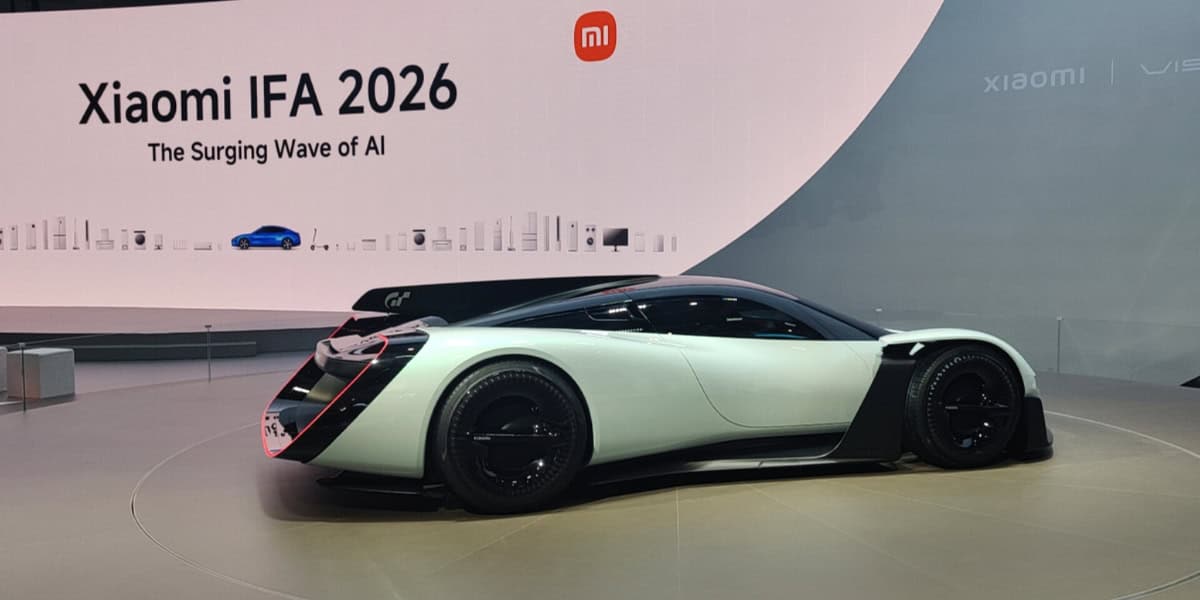
Xiaomi also spotlighted a Vision Gran Turismo design concept. It is a digital-first hypercar created for the Gran Turismo game franchise, meant to explore ideas in aerodynamics, interaction and design language. Xiaomi made clear it is a concept rather than a near-term production preview. The production focus in Europe is more pragmatic. Bring an EV to market, integrate it with a mature smart home portfolio and use software to differentiate.
Human x Car x Home in practice
Smart home marketing often promises a single pane of glass. Xiaomi wants the car to become another pane and at times, the primary one. At IFA, the company demonstrated car-based control of home devices. From the driver’s seat, users could open or close connected curtains, adjust air conditioning or interact with other Xiaomi-compatible home appliances. The point is not just control for control’s sake. It is convenience tied to context. Leave the office on a hot day and the AC spins up fifteen minutes before you arrive. Pull into the driveway and the lights set to your preferred evening scene.
HyperOS, Xiaomi’s operating system, is central to this. The company’s longer-term vision is less about tapping buttons and more about orchestration. AI could use location, calendar events, driving patterns and home occupancy data to choreograph phone, car and home devices together. It is a natural evolution of what smartphone assistants promised, but anchored in the vehicle as a daily hub rather than a passive endpoint.
For European consumers who already have Xiaomi smart home devices or use the Xiaomi Home app, the pitch is plausible. Integration is often the missing link in smart homes assembled piece by piece. By threading the car into that network, Xiaomi is betting it can offer an experience that feels coherent in a way that siloed gadgets and standalone cars do not.
The retail route: why dealers matter
Xiaomi’s letters of intent with eight German dealer groups mark a deliberate choice. Rather than a purely direct-sales model, the company is aligning with established auto retail infrastructure for sales and service. That matters in Europe, where aftersales support, warranty handling and parts logistics are still comfortingly tied to real-world dealerships for many buyers.
German partnerships also signal an expectation that the brand needs credibility in Europe’s most demanding car market. Launching in Germany means meeting expectations on vehicle safety, noise and emissions regulations, software reliability and support that are typically higher than in many other regions. It also positions Xiaomi to expand into neighbouring markets with similar regulatory regimes and consumer expectations, once the core machinery of sales and service is tested.
The 2027 clock: what has to happen next
A 2027 launch target is close enough to force specificity and far enough to accommodate the hurdles. Xiaomi will require European type approvals, compliance with evolving EU cyber and software regulations and alignment with national rules on data protection and over-the-air updates. The pricing question will be shaped by tariffs and trade conditions in flux. For a Chinese manufacturer, that risk is non-trivial. European authorities have been scrutinising imported EVs and adjusting trade measures that can materially affect margins and pricing.
On the technology side, Xiaomi needs to ensure that HyperOS in the car meets European expectations for stability and security. OTA update policies must be clear and auditable. Data handling will face GDPR scrutiny, particularly if the Human x Car x Home orchestration leverages location and behavioural data across devices. The pitch of convenience must be matched with opt-in transparency and granular user controls.
Then there is the charging context. Europe’s public charging buildout is uneven by country and region, and buyers increasingly expect compatibility with major networks, straightforward payment and reliable route planning. Xiaomi’s software ambition will be judged not just on home integration but also on how well the car navigates Europe’s charging realities with intelligent planning and partnerships.
Competitive landscape and differentiation
Entering Europe in 2027 puts Xiaomi into a maturing but still dynamic EV field. Tesla has entrenched software leadership and a European production base. European incumbents have broadened EV lineups with solid safety credentials and dealer networks. Chinese manufacturers have improved European brand awareness through aggressive value propositions and expanding showroom footprints.
So what is Xiaomi’s edge? Price-to-spec is part of it, but not the whole story. The differentiator Xiaomi is betting on is a unified ecosystem. If you already live in the Xiaomi universe with a phone, a watch, a robot vacuum and a handful of smart home devices, the idea of a car that natively understands and extends that context will be compelling. It reframes the vehicle as a super-device on wheels, participating in the same fabric as your other devices rather than standing apart.
This approach echoes strategies from Apple and Google, but with a twist. Xiaomi controls the hardware across multiple categories and the operating system that unifies them. That stack, if executed well, can yield tighter integration and lower friction. In practice, success will hinge on the quality of in-car interfaces, the smoothness of handoffs between phone and vehicle and the reliability of home control from the road. If it all feels seamless, Xiaomi has a story that is more than just another EV.
Risks and unknowns
There are material risks. Tariffs and policy shifts could compress Xiaomi’s pricing flexibility. Regulatory approvals can slip. Dealer partnerships, while comforting for support, also add cost and complexity compared to direct sales. Brand trust in cars is harder won than in gadgets. A misstep in software reliability or data privacy could set back momentum significantly.
The ecosystem bet also cuts both ways. Integration is attractive to those already inside Xiaomi’s orbit, but open-ecosystem buyers will ask how well the car plays with devices from other brands. Interoperability will matter in Europe, where households often mix ecosystems over time. Xiaomi’s adoption of common standards where possible, and its support for third-party integrations, will be an important signal to buyers who prize flexibility.
Finally, the concept car glamour of Vision Gran Turismo is good for headlines, but European buyers will judge Xiaomi on practical vehicles that meet daily needs, earn top safety ratings and maintain value. The company’s communications over the next year will need to translate ecosystem talk into concrete model details, range, charging speeds, warranties and total cost of ownership.
What to watch between now and 2027
- Model reveal and specifications: Which vehicle or vehicles will anchor the European launch and how they benchmark on range, charging, safety and software.
- Pricing and tariff outcomes: Final retail pricing will tell us how Xiaomi is absorbing or passing through trade frictions and localisation costs.
- Regulatory milestones: Type approvals, cyber and software compliance disclosures and how Xiaomi addresses GDPR across Human x Car x Home data flows.
- Dealer network buildout: The conversion of letters of intent into signed agreements, showroom openings and service coverage maps in Germany and beyond.
- Charging partnerships and software: Integration with European charging networks, route planning intelligence and payment simplicity.
- Interoperability: How well Xiaomi’s vehicles and HyperOS work with third-party devices and services, especially in mixed-brand homes.
Why this matters for European consumers
For buyers, the net effect of Xiaomi’s move could be positive. More competition typically pushes prices down or features up. A coherent ecosystem that reduces friction between daily devices and the car can make meaningful differences in convenience and perceived value. If Xiaomi delivers strong specs and user experience at a competitive price, it will nudge the market toward better integrated software and smarter home-vehicle interactions.
For the industry, Xiaomi’s strategy is another data point in a broader convergence. Consumer electronics companies are moving into mobility. Automakers are moving deeper into software ecosystems. The battleground is user experience, delivered through devices that used to be standalone but are now nodes on a network. Europe’s regulatory and market frameworks will shape how that plays out, but the direction of travel is clear.
Conclusion
Xiaomi’s IFA announcement is as much about software as it is about steel. A 2027 European launch target, German dealer partnerships and a multi-year R&D commitment frame a company with confidence beyond phones and TVs. The Human x Car x Home vision is not new in ambition, but Xiaomi’s control of both devices and operating system gives it a potentially powerful route to execution.
Success will depend on whether the promise of a truly unified experience holds up in the messy reality of European roads, diverse homes and exacting regulation. If Xiaomi can thread that needle, it will not just sell cars. It will sell the feeling that your tech finally works together the way it should, from the front door to the fast lane.