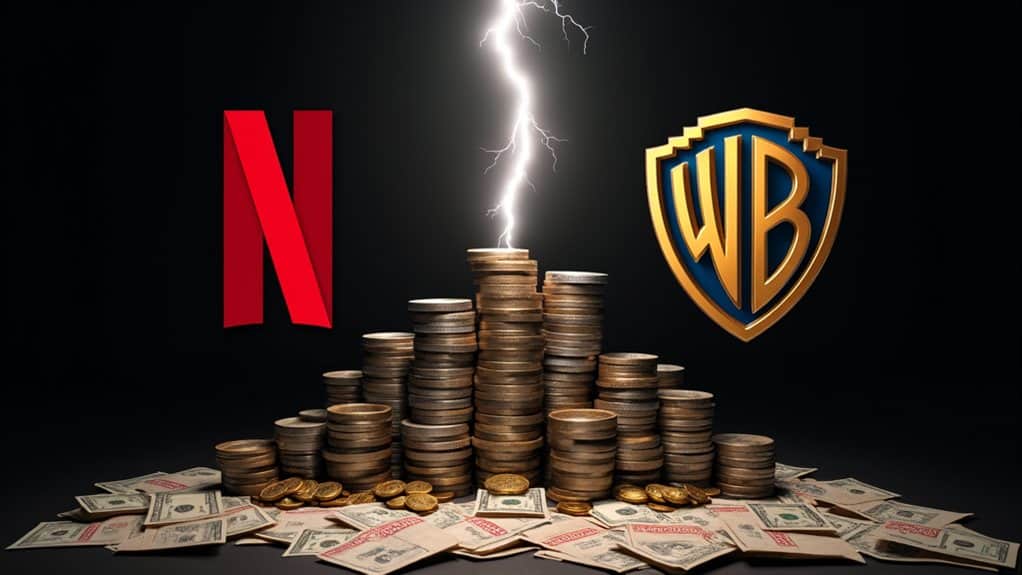
Netflix and Warner Bros.’ announced $72 billion merger faces immediate legal challenges amid monopoly concerns. The deal, which would combine massive content libraries and production capabilities, has prompted a hostile takeover bid from Paramount and drawn scrutiny from antitrust regulators. Critics worry the merger could reduce competition, affect consumer choice, and reshape content distribution channels. The proposed entertainment powerhouse must now steer through complex regulatory reviews that could demand considerable concessions before approval.

As the streaming industry faces a potential seismic shift, Netflix and Warner Bros. have announced a massive $72 billion merger that’s already drawing considerable legal scrutiny. This landmark deal aims to combine two entertainment giants, potentially reshaping how you consume movies and television shows.
The announcement has triggered immediate reactions across the media environment. Industry analysts predict substantial changes to content distribution and pricing models if regulators approve the merger. The combined entity would control an unprecedented library of intellectual property and production capabilities.
A seismic power shift promising vast IP control and reshaping how content reaches your screens.
Paramount wasted no time responding to the news. On Monday, they launched a hostile takeover bid directly targeting the proposed Netflix-Warner Bros. combination. This aggressive move has escalated competition in the streaming sector and introduced new uncertainty about the merger’s future.
You’ll likely notice impacts on your viewing options if this deal proceeds. Critics have raised considerable monopoly concerns, suggesting the merger could reduce competition among streaming platforms. Antitrust regulators are expected to closely examine whether this consolidation would harm consumer choice.
Stanford experts have provided valuable insights into the merger’s complexities. They’ve analyzed potential long-term effects on content creation, distribution channels, and subscriber costs. Their predictions include major shifts in market share and strategic advantages for the combined company.
The $72 billion valuation signals extraordinarily high stakes for all involved parties. Rival streaming services face mounting pressure to respond with their own strategic moves. You might see changes in how these companies approach subscriber acquisition and content licensing as a result.
Legal implications extend beyond the immediate business impact. The deal invites thorough regulatory reviews, and potential lawsuits concerning anticompetitive effects are already emerging. Previous streaming consolidation cases may provide precedents for how this situation unfolds.
The timeline for deal approval remains uncertain. Both companies face the possibility of forced divestitures or other concessions to gain regulatory approval. Meanwhile, stakeholders across the entertainment industry continue evaluating the viability of this potentially transformative partnership.