
UseArticle is an AI website builder for creating affiliate sites centered on product reviews, comparisons, and related product-led content. It combines a hosted website, product data collection, AI writing, publishing automation, and basic site configuration in one platform.
Its core appeal is straightforward: add products, connect your affiliate links, select content formats, and schedule posts to publish over time. It is best suited to marketers building software-focused niche sites, comparison sites, or affiliate content sections for an existing content strategy.
What Is UseArticle?
UseArticle is a specialized affiliate website generator rather than a general-purpose blogging platform. It creates sites designed around products and supports content formats such as product reviews and head-to-head comparisons.
Instead of beginning with a blank page, the workflow starts with the products you want to cover. The platform can retrieve details from a product page URL, then use that data to create product records and generate associated content.
UseArticle may be a good fit for:
- Affiliate marketers building niche websites around SaaS tools or digital products.
- Publishers who need repeatable product comparison and review content.
- Website owners who want to add product-led affiliate pages alongside original editorial content.
- Marketers who prefer scheduled content production over publishing every post manually.
It is less suited to:
- Sites that primarily need broad informational articles, tutorials, news, or opinion content.
- Anyone seeking fully hands-off publishing without reviewing AI output, product details, or affiliate compliance.
- Publishers who do not want to manage an OpenAI API key and its usage costs.
How UseArticle Creates an Affiliate Website
Creating a new site begins with a subdomain, a short site description, and a choice of visual style. A custom domain can be connected later. The generated site includes a homepage with product filtering and categories that can be built from the products added to the site.
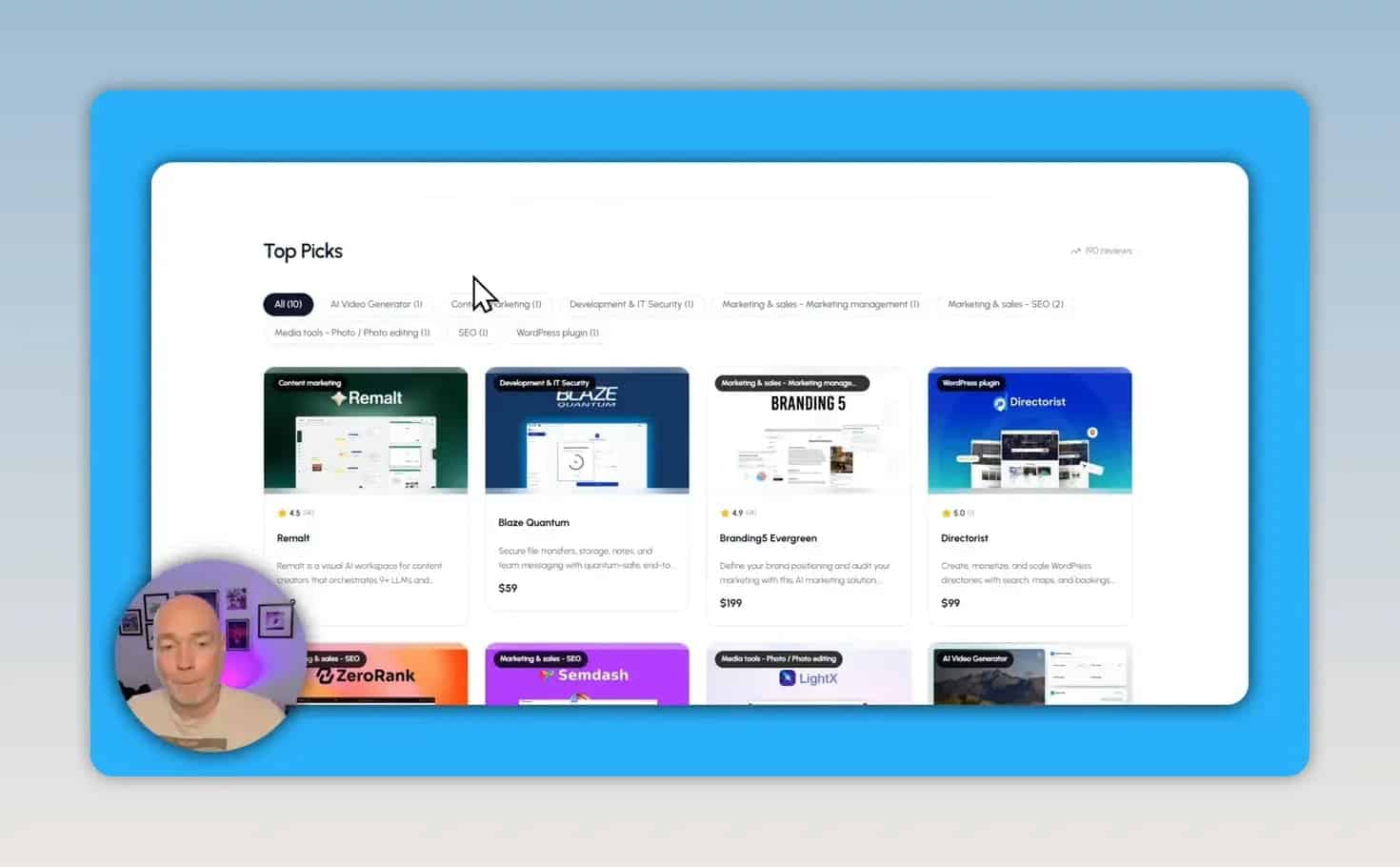
The product-oriented structure is useful for visitors who arrive with commercial intent. Rather than browsing a conventional blog archive, they can explore product cards, categories, reviews, and comparison pages.
Branding and site controls
Site settings include options for:
- Logo and font selection
- Custom domain connection
- Header and footer content
- Post footer content
- Language selection
- Site name and SEO description
- Sitemap access
- Custom scripts and Google Analytics
- Custom categories
These controls provide a foundation for launching a branded niche site, but brand consistency still requires careful setup. Replace default logos, write a focused site description, and make sure navigation, categories, and disclosures fit the audience you intend to serve.
Adding Products and Affiliate Links
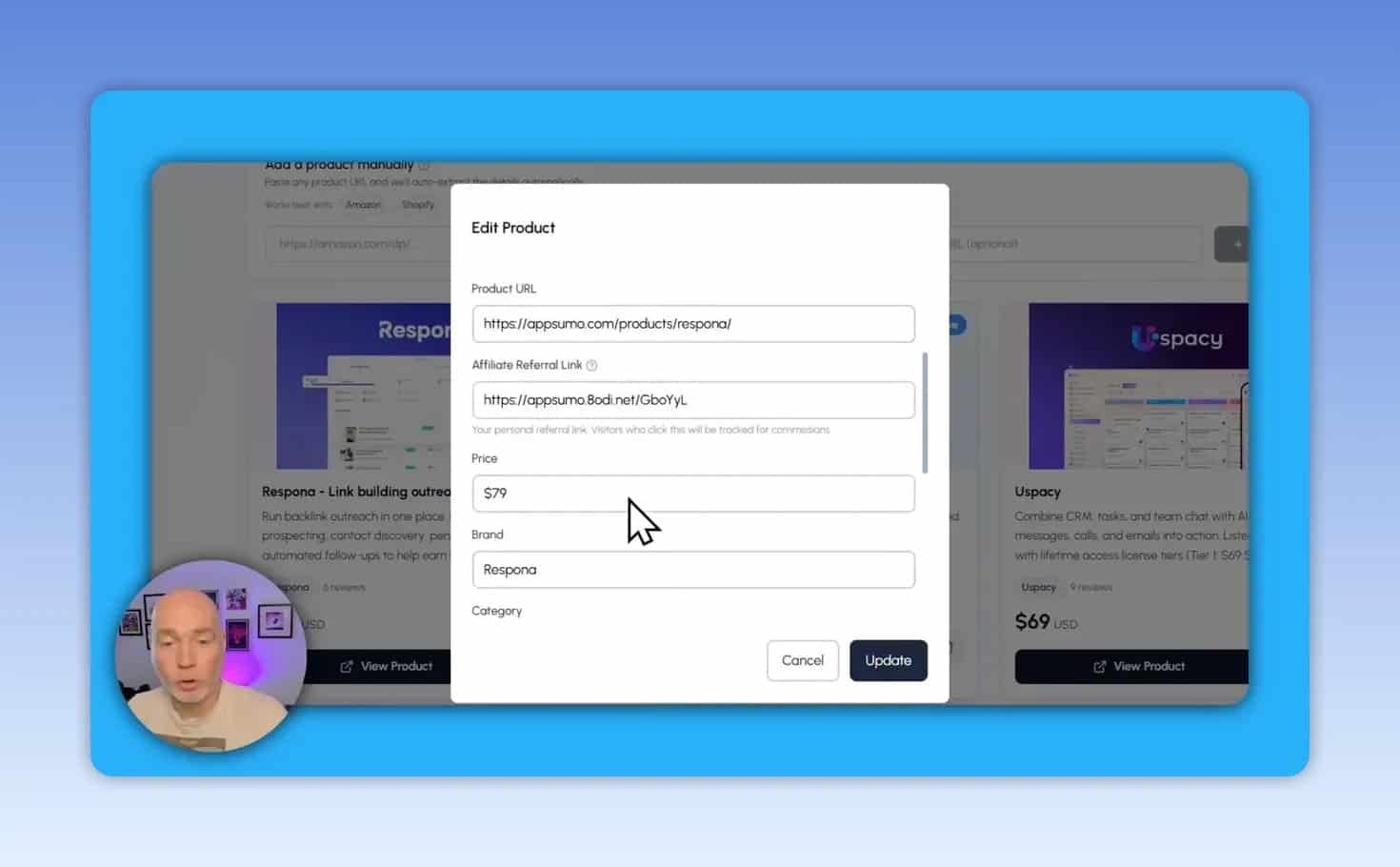
Products are the building blocks of a UseArticle site. To add one, enter the original product URL. The platform uses that page to gather available product information, such as the name, description, image, price, brand, and review-related details.
After the product is imported, you can edit the captured information. This matters because product pages, prices, offers, and descriptions change. A quick review is essential before using imported data in published affiliate content.
You can also enter an affiliate link for each product. This is optional, which is important for credible comparison content. A fair comparison may include a product that does not have an affiliate relationship.
Where to find affiliate programs
UseArticle includes a marketplace of suggested affiliate deals, with a noticeable focus on software products. These listings can be useful for inspiration, but you are not restricted to them.
To earn commissions, you still need to join each relevant affiliate program and receive approval where required. Affiliate networks such as impact.com can connect publishers with programs from many companies. Once approved, use the unique tracking link provided by the program in the corresponding product record.
Important: Do not assume a marketplace listing is current or that a program is available in every country. Check the merchant’s terms, commission rules, eligibility requirements, and promotional restrictions before publishing.
Bring Your Own OpenAI API Key: What It Means
UseArticle uses a bring-your-own-key model for AI generation. You connect your own OpenAI API key, and AI usage is billed through your OpenAI account rather than being consumed from a built-in UseArticle credit allowance.
This approach gives you more direct control over AI spending. It also means the platform subscription and your AI generation costs are separate considerations.
How to manage AI costs responsibly
- Start with a small batch of products and a limited publishing schedule.
- Choose article length deliberately rather than defaulting to the longest option.
- Review the first outputs before creating a large automation.
- Monitor API usage and costs in your OpenAI account.
- Do not schedule content faster than you can quality-check it.
The platform can produce content at scale, but lower friction does not eliminate editorial responsibility. AI-generated claims, pricing, feature descriptions, and recommendations should be checked against current sources.
Content Types and Publishing Automation
UseArticle is built for product-based articles. Its available content formats focus on topics such as individual product reviews and product-versus-product comparisons rather than general informational posts.
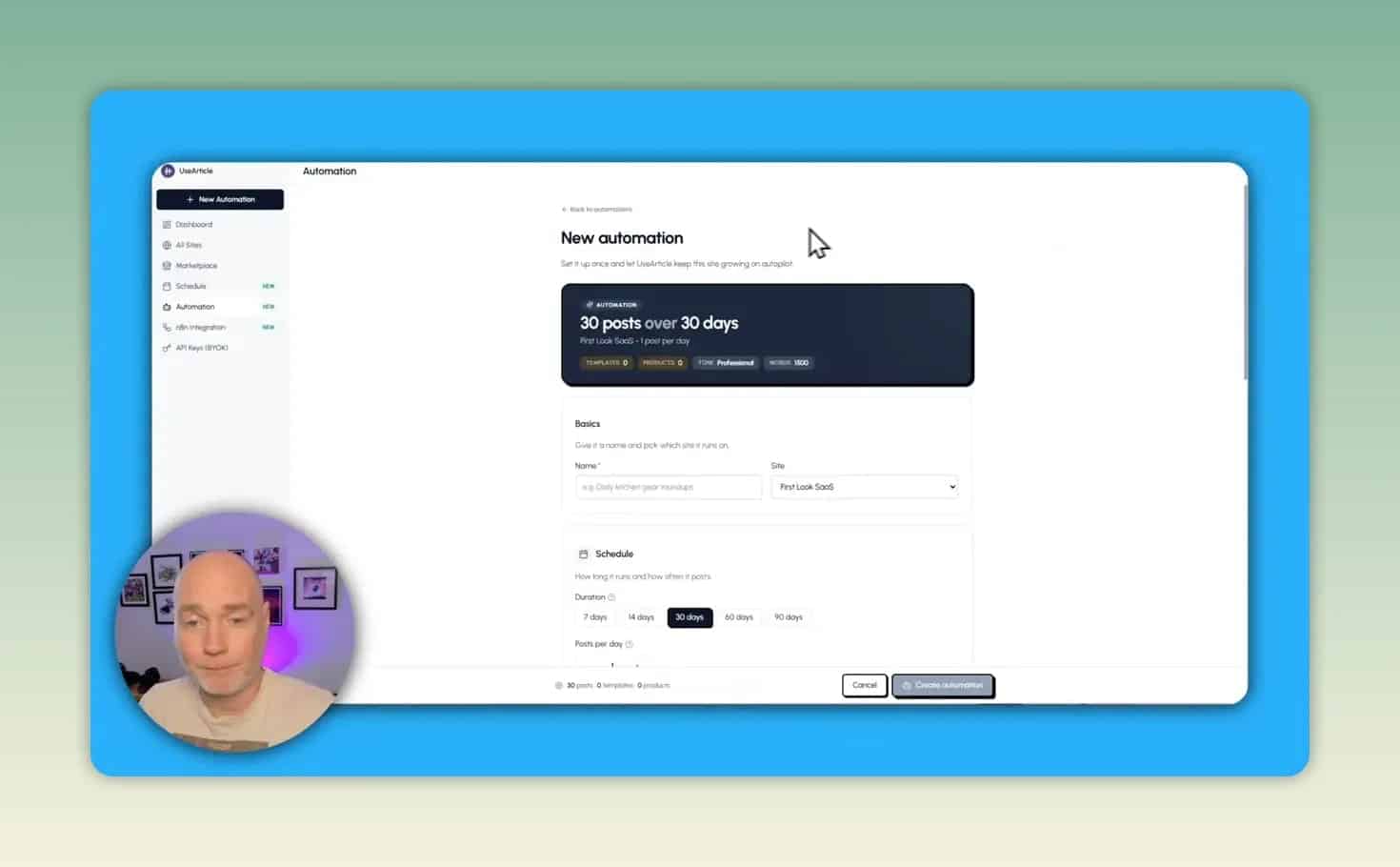
Posts can be created individually, or generated through an automation. An automation can be configured around a site, a duration, a publishing frequency, selected templates, and the products to include. You can also choose a writing style, word count, and whether to receive publication notifications.
A practical content schedule for a new affiliate site
A gradual schedule is generally more manageable than publishing a large batch all at once. For example:
- Add and verify 10 to 20 closely related products.
- Create several single-product reviews for high-priority offers.
- Create comparisons between products that solve the same problem.
- Schedule one post per day or another pace you can review consistently.
- Update older pages when products change, offers expire, or new alternatives become relevant.
The purpose of scheduling is not simply to fill a calendar. It is to create a sustainable editorial process that leaves time for checking accuracy, improving recommendations, and tracking performance.
What Generated Comparison Pages Include
A generated comparison page can include a product card near the top, a table of contents, a short summary, product explanations, side-by-side discussion, selection guidance, a final recommendation, product call-to-action cards, and related posts.
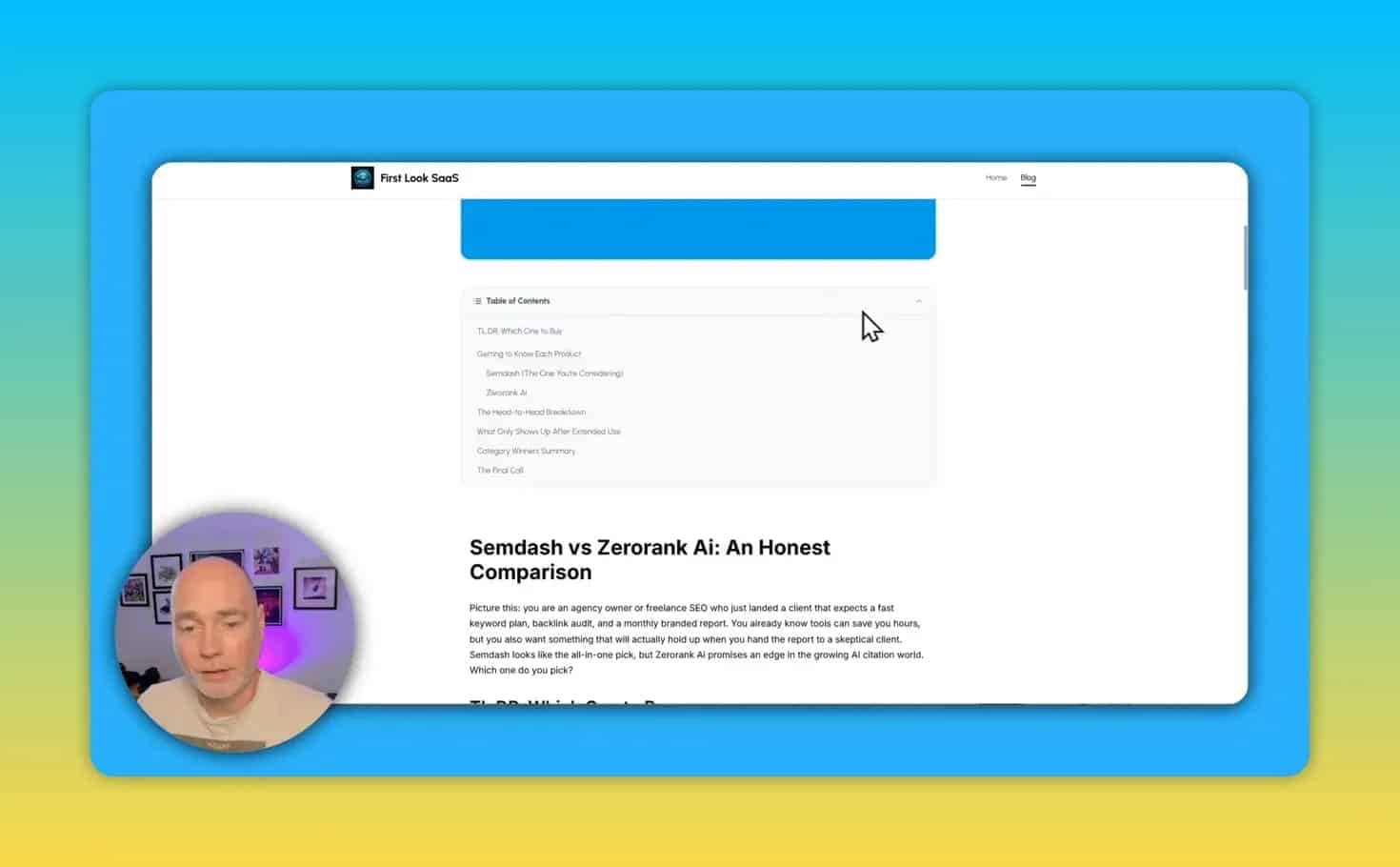
That structure can help readers evaluate choices quickly, but it should not be treated as automatically publish-ready. Affiliate content performs best when it gives a specific, honest answer to the question behind the search.
How to improve AI-generated affiliate content
- Verify every factual claim. Confirm features, pricing, integrations, availability, and policies on the product’s official website.
- Add real decision criteria. Explain who should choose each option, not merely which one has more features.
- Remove generic language. Replace broad statements with useful context tied to the product category.
- Be transparent about limitations. A comparison is more credible when it acknowledges trade-offs.
- Use affiliate links selectively. Place them where they help a reader take the next step, not in every sentence.
- Keep pages current. An old comparison with outdated pricing or discontinued products can damage trust.
Custom Prompts and Content Differentiation
One of UseArticle’s more useful controls is access to the prompts behind its content templates. You can inspect and edit a prompt for a specific content type, then reset it to the default if your changes do not produce the desired result.
Custom prompts are particularly valuable when building a site in a narrow niche. They allow you to specify the questions a good article should answer, the criteria that matter to your audience, and the tone that matches your brand.
Useful prompt customization ideas
- Require a clear “best for” and “avoid if” section for every reviewed product.
- Ask for comparison criteria that match the niche, such as ease of use, pricing model, support, or integrations.
- Require a neutral explanation of alternatives, including products without affiliate links.
- Ask the model to flag details that need manual verification rather than making unsupported assumptions.
- Set a consistent editorial tone across all site content.
Prompt editing can improve consistency, but it does not replace editing. It is a framework for the draft, not proof that the draft is accurate or unique.
SEO, Analytics, and Technical Setup
UseArticle includes basic SEO fields for the site name and description, along with sitemap access. It also supports Google Analytics and custom scripts, allowing site owners to measure traffic and add required tracking or tools.
For an affiliate site, technical setup should be followed by a search-focused content strategy:
- Choose a narrow topic with products people actively compare.
- Create pages around clear commercial-intent searches, such as “Product A vs Product B” and “best tools for [specific need].”
- Use precise titles that match the real decision a searcher is making.
- Link relevant reviews and comparisons to one another.
- Ensure every page has a useful unique angle instead of repeating the same template.
- Track pages that receive impressions but few clicks, then improve titles and descriptions.
Search visibility depends on relevance, usefulness, technical accessibility, and trust. Publishing many AI articles alone is not a reliable SEO strategy.
Affiliate Disclosure and Compliance
If a page contains affiliate links, disclose that relationship clearly. A footer disclosure is better than no disclosure, but an affiliate notice near the beginning of a page is easier for readers to find before they encounter recommendations or links.
The FTC’s disclosure guidance emphasizes that disclosures should be clear and conspicuous. Use plain language, place the notice close to the endorsement or recommendation, and avoid vague wording.
A simple example is:
Disclosure: This page may contain affiliate links. If you purchase through one of these links, the site may earn a commission at no additional cost to you.
Also review the terms of each affiliate program. Some merchants have specific rules concerning brand bidding, email promotions, paid advertising, coupon use, or how their trademarks may appear in content.
API, n8n, and Workflow Potential
UseArticle provides an API key and documentation, with examples for n8n workflows. This opens the possibility of connecting product research, affiliate-link management, and content operations with other systems.
A potential workflow could involve collecting approved product URLs and affiliate links in another system, then using automation to add those products to a site before creating content. Any implementation should be tested carefully, especially where imported prices, descriptions, and tracking links are involved.
The platform’s roadmap also indicates planned capabilities such as a listicle generator, help content creation, and WordPress or other integrations. Treat roadmap items as future plans rather than features available today.
Common UseArticle Mistakes to Avoid
- Publishing without product verification: Imported information can become outdated quickly.
- Building around expired offers: Check that every product and affiliate program remains active.
- Using only affiliate-linked options: This can make comparisons less useful and less trustworthy.
- Skipping disclosure placement: Make affiliate relationships clear before readers act on a recommendation.
- Over-automating from day one: Validate the first set of pages before scaling output.
- Relying on a generic template: Add niche-specific criteria, editorial judgment, and useful context.
- Ignoring site maintenance: Review prices, links, product availability, and content recommendations regularly.
Is UseArticle Worth Using for Affiliate Marketing?
UseArticle is most compelling for marketers who want a faster way to build and maintain product-focused affiliate sites. Its product import process, optional affiliate-link fields, hosted site generation, comparison templates, AI prompt controls, and scheduling tools form a practical workflow for review and comparison content.
Its limitations are equally important: it focuses on product-led posts rather than broad editorial content, requires an OpenAI API key, and still needs active editorial oversight. The strongest use case is not a fully automated content farm. It is a carefully managed affiliate publishing system supported by accurate product data, useful comparisons, clear disclosures, and human review.
For current availability and plan details, review the UseArticle deal information directly, as offers and included limits can change.