Domain flipping is the practice of buying domain names at a low price and reselling them later for more. It appeals to people who want a low-overhead side hustle, but success depends on picking names that real buyers may want.
AI tools are starting to make this process easier by helping with domain discovery, scoring, valuations, purchase workflows, landing pages, and offer management. If you are researching how AI domain flipping works, what to look for, and whether a tool like AIFlipDomains is useful, this guide covers the practical basics.
What is domain flipping?
Domain flipping is a type of digital asset investing. The idea is simple:
- Buy a domain name cheaply
- Hold it for a period of time
- Sell it to a buyer who sees higher business value in it
That buyer could be a startup, agency, software company, creator, or niche site operator looking for a stronger brand name.
Some names flip quickly when demand in a category rises. Others may need to be held for months before the right buyer appears. Results vary a lot, and not every purchase turns into a sale.
Why AI tools are becoming popular for domain flipping
Traditional domain flipping can be slow and subjective. You often need to manually search registrars, compare recent sales, guess market demand, and decide whether a name is brandable enough to justify the renewal costs.
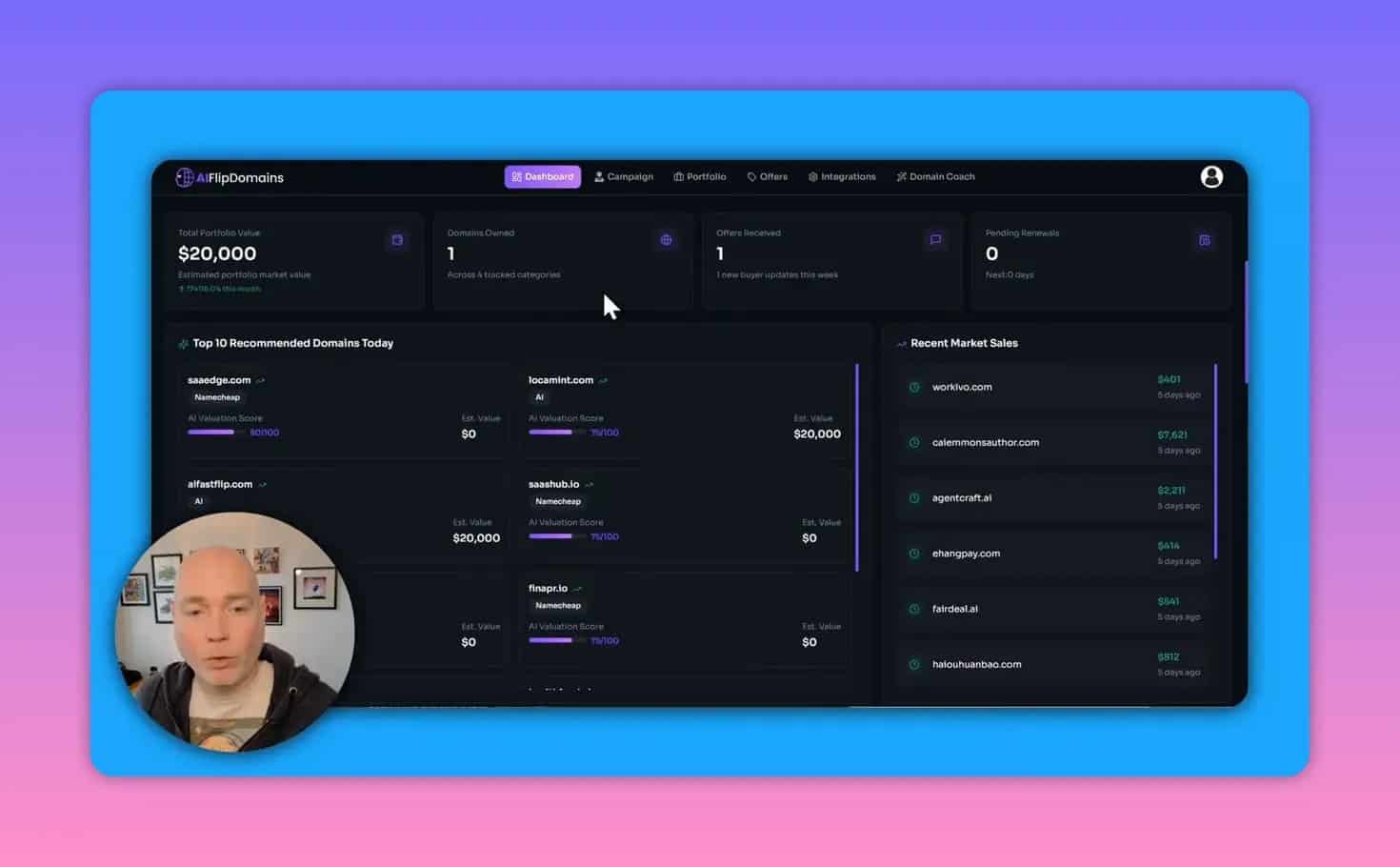
An AI domain flipping tool aims to reduce that manual work by helping with:
- Opportunity discovery based on budget, timeline, and niche
- Evaluation scores to rank candidate domains
- Estimated resale ranges
- Sales probability estimates
- Comparable sale references
- Automated landing pages for incoming offers
- AI-generated negotiation replies
That does not guarantee profitable flips, but it can give beginners a more structured process.
How an AI domain flipping workflow usually works
Most tools in this category follow the same broad sequence:
1. Set an investment goal
You typically choose a strategy such as:
- Fast flip for quicker, lower-priced sales
- Side income for a balanced approach
- Long-term portfolio for names that may need more time to appreciate
2. Define your time horizon and budget
This includes your total budget and your maximum spend per domain. Keeping a cap is important because domain flipping can become expensive if you buy too many names without clear demand.
3. Choose extensions
Common options include:
- .com
- .ai
- .io
- .co
- .dev
Some tools also let you add custom extensions, including country-code domains.
4. Select niches or tags
You may be able to choose broad sectors or add custom niches. This helps the tool surface domains in categories where buyer demand may be stronger.
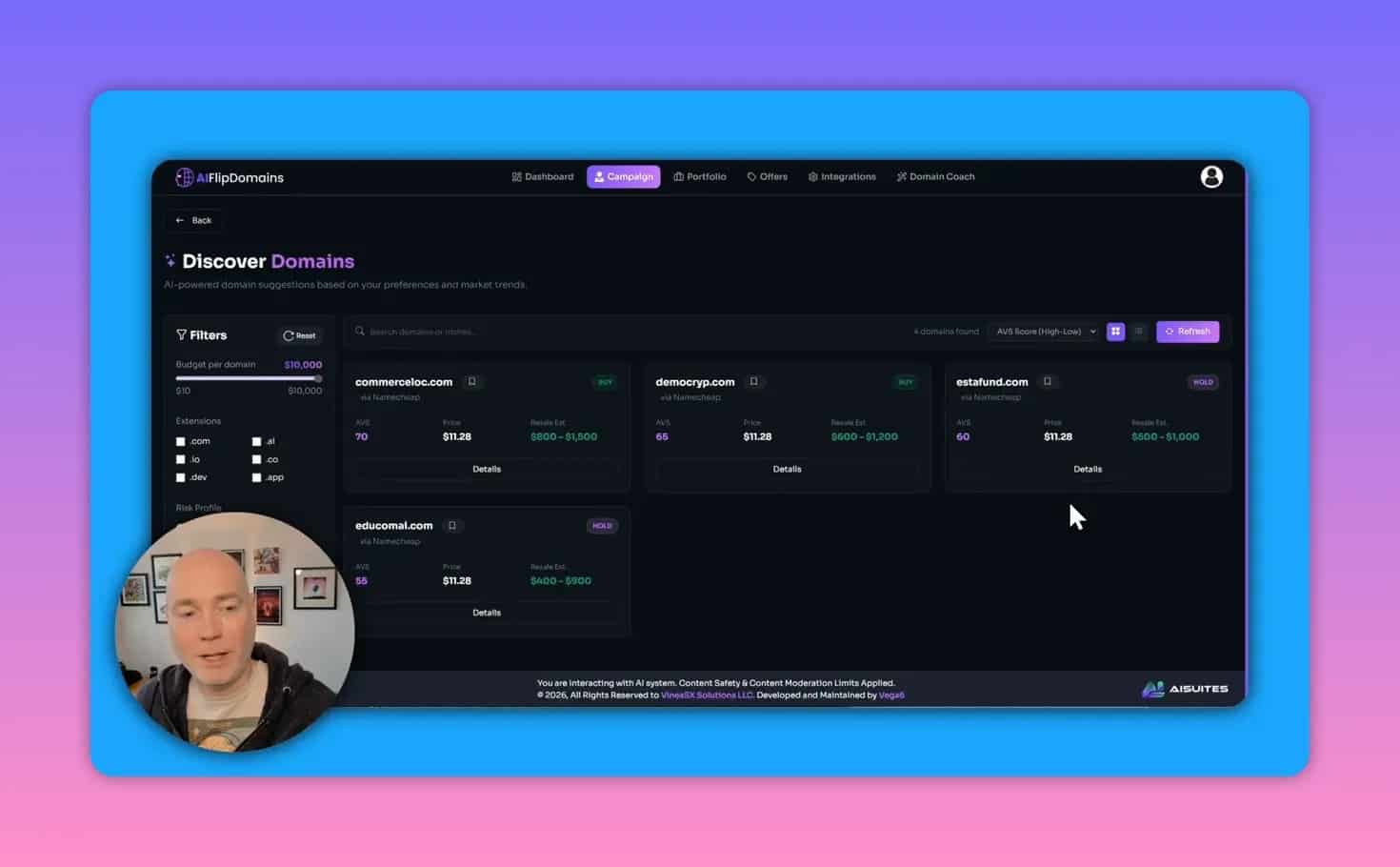
5. Review AI-generated opportunities
Once the system generates results, you can compare suggested domains by price, extension, risk profile, and expected flip potential.
Fast flip vs long-term portfolio: which strategy fits better?
One of the most useful features in an AI-assisted workflow is choosing your intended strategy upfront.
Fast flip domains
These are usually positioned as easier to sell within a shorter window. The tradeoff is that expected sale prices may be lower than names intended for a longer hold.
Best for:
- Beginners who want quicker feedback
- Smaller budgets
- People testing whether domain flipping suits them
Long-term portfolio domains
These names may be better suited to patient investors willing to wait for a stronger buyer match. In theory, that can lead to larger sale values, but holding costs and uncertainty increase.
Best for:
- People building a portfolio over time
- Buyers comfortable with annual renewals
- Those targeting broader upside instead of faster exits
If you are new, starting with a small test budget and a few lower-cost names is usually more sensible than building a large portfolio immediately.
How to evaluate AI-generated domain suggestions
AI scoring can help narrow the list, but it should not replace judgment. When reviewing suggestions, look at a few things together rather than trusting a single number.
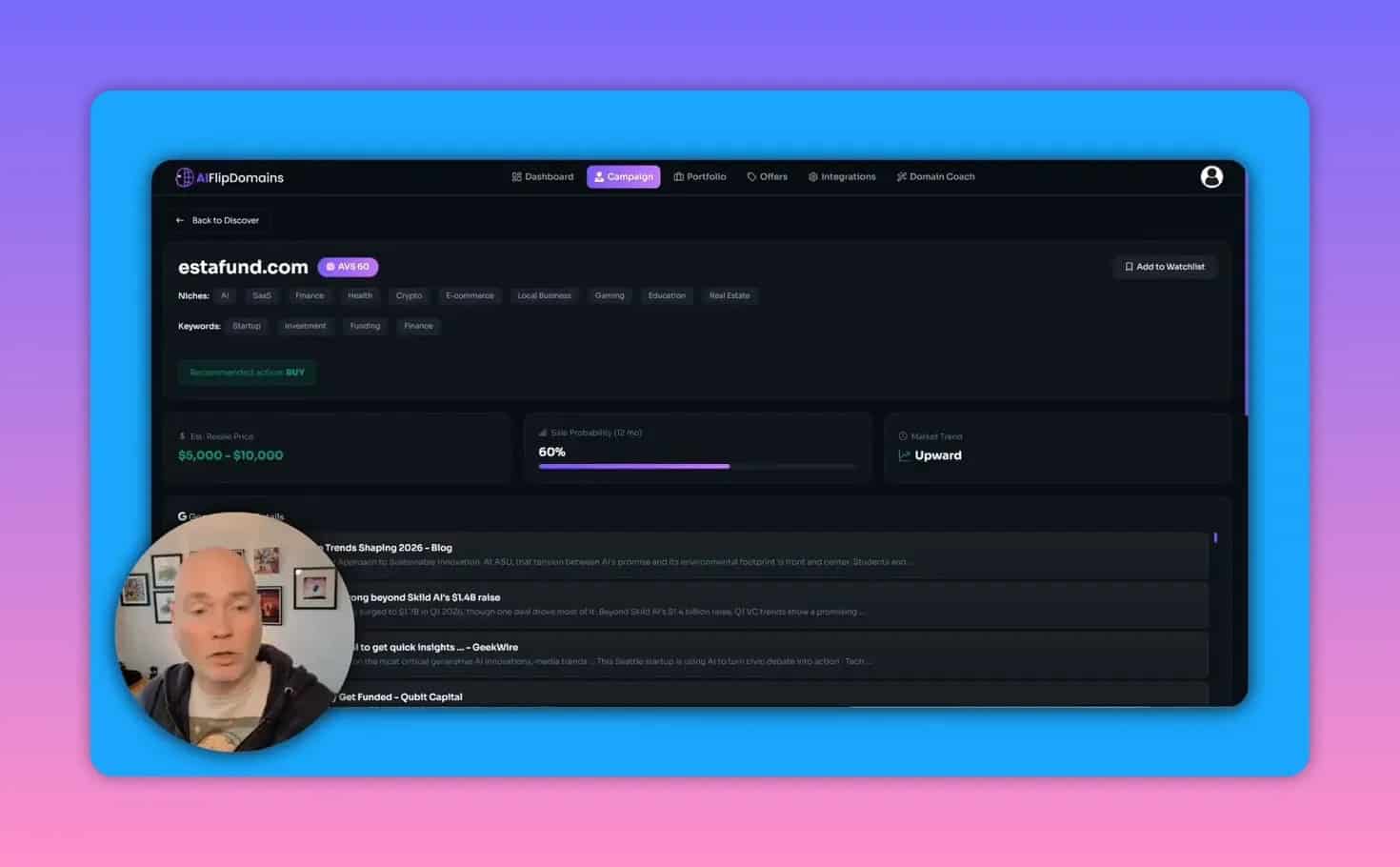
AI evaluation score
Some tools assign a score where a higher number means a stronger opportunity. Use it as a filter, not a final answer.
Estimated resale value
You may see a projected range such as several thousand dollars. Treat this as directional guidance, not a promise. Valuation is only meaningful if a real buyer agrees with it.
Sale probability
A probability estimate within a 12-month window can be useful for comparing one domain to another. It should not be read as certainty.
Brandability
Even when a tool recommends a name, ask basic questions:
- Is it easy to say?
- Is it easy to spell?
- Does it sound like a business name?
- Could a startup or niche brand realistically use it?
Comparable sales
If the platform shows similar historical sales, that is useful context. Comparable sales help you see whether a naming pattern, keyword category, or extension has attracted buyers before.
Which domain extensions are commonly favored?
Extension choice matters because buyers often have clear preferences.
.com
The broadest and most universally recognized option. It is often seen as the safest extension for general business branding.
.ai
Strongly associated with artificial intelligence businesses and projects. Demand can rise when AI-related startups and products are expanding quickly.
.io
Often used by software, SaaS, and tech companies. It has a startup-friendly feel, especially in developer and app markets.
Other extensions
Options like .co, .dev, or regional extensions can still work, but buyer demand may be narrower depending on the niche.
For additional context on domain registration and management, registrar platforms such as Namecheap and GoDaddy are commonly used in this space.
What integrations do you need to run a domain flipping setup?
AI tools can simplify research, but they usually rely on a few connected services to complete the workflow.
- Email account for buyer communication and offer handling
- Registrar account such as GoDaddy or Namecheap to purchase domains
- Payment processor such as Stripe for direct checkout on domain landing pages
Without these, a tool may still help with analysis, but the buying and selling process will be less automated.
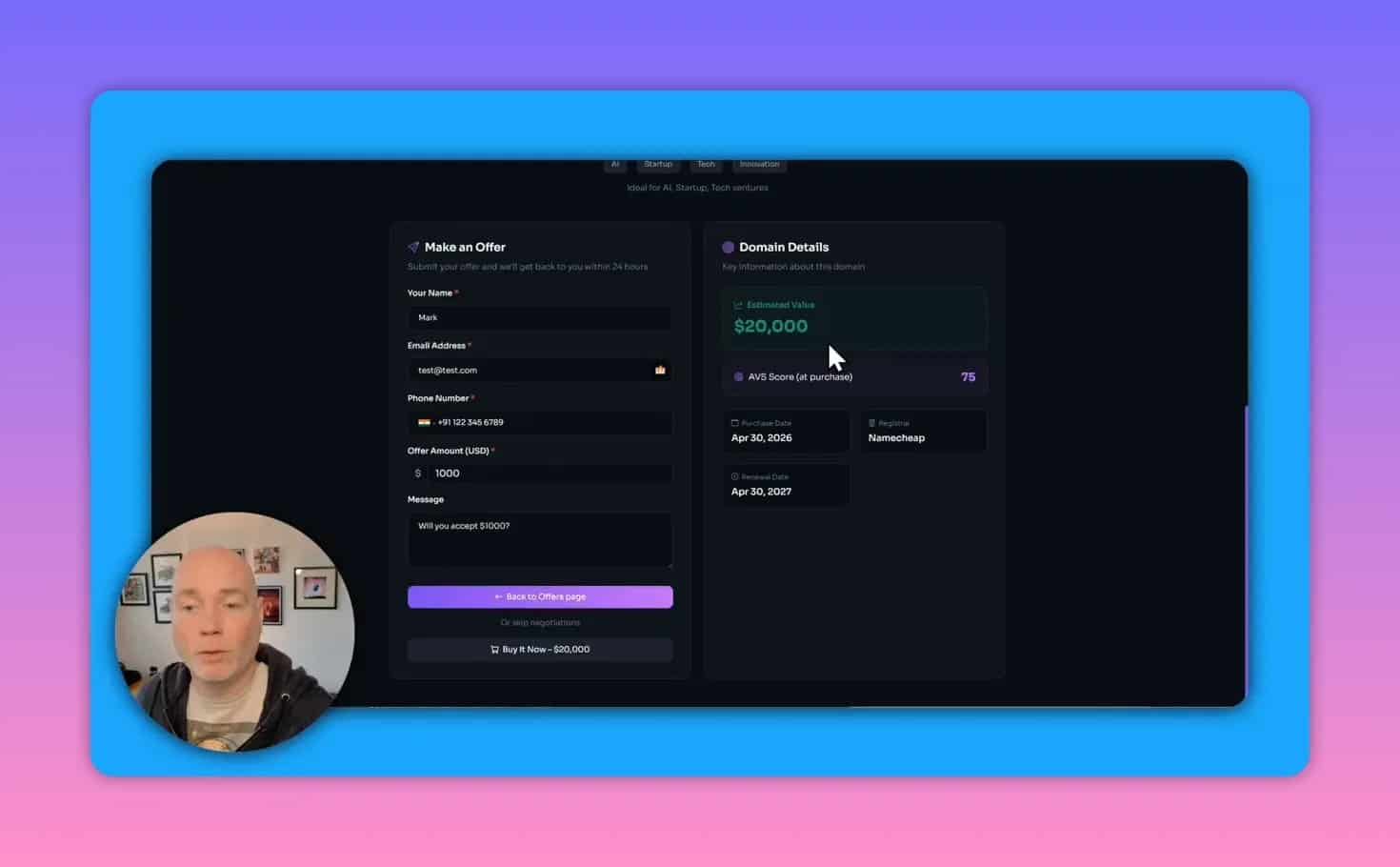
Why landing pages matter when selling domains
Once you own a domain, you need a way for interested buyers to contact you or buy it instantly.
An automated domain landing page usually includes:
- The domain name
- An estimated value or score
- Purchase and renewal details
- A form to submit an offer
- Sometimes a buy-now option
This matters because many domain buyers arrive directly by typing the domain into a browser. If they see a clean sales page instead of a blank screen, your chance of conversion improves.
How AI can help with offer negotiation
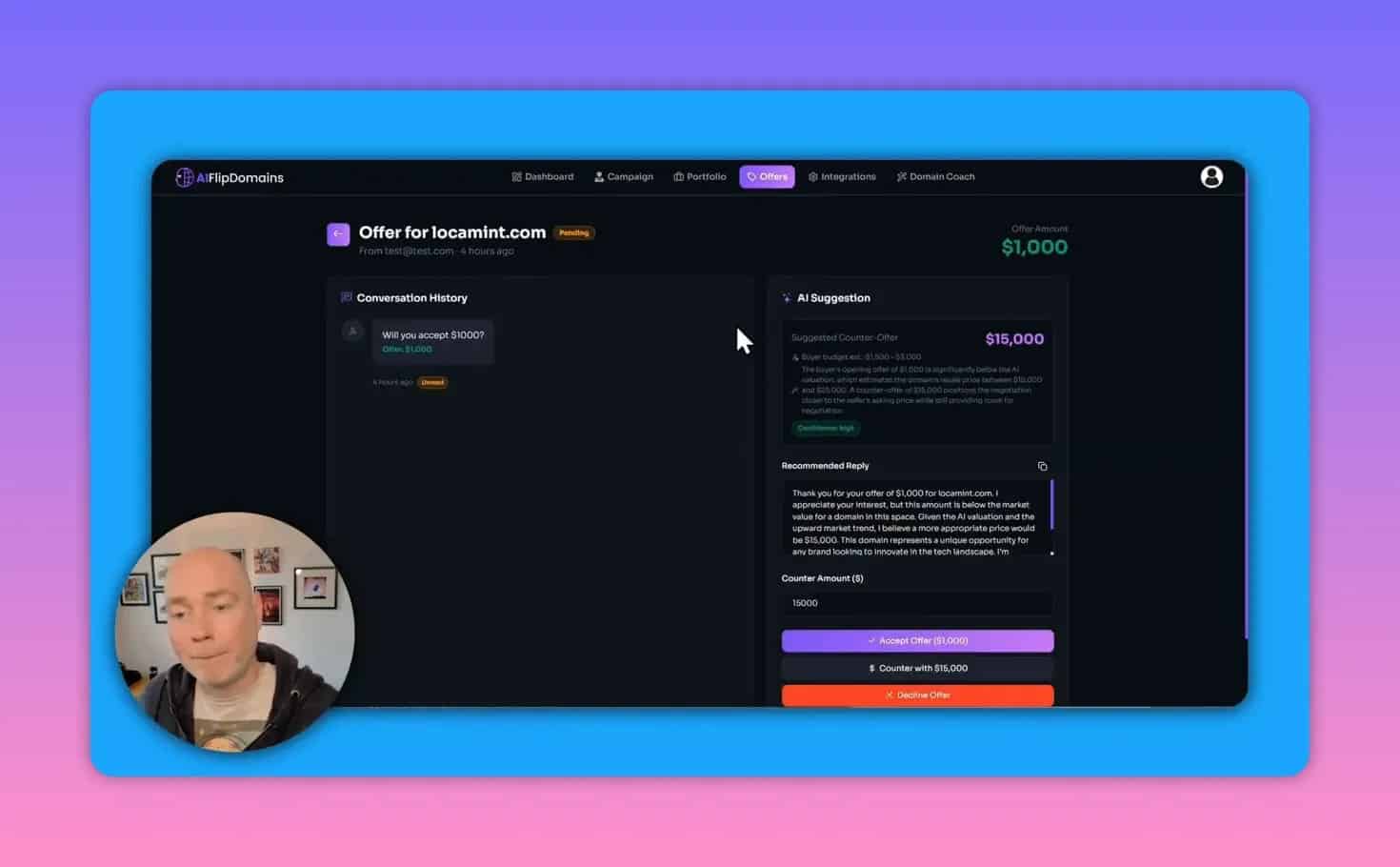
Negotiation is where many beginners get stuck. They do not know whether an offer is fair, too low, or worth countering.
Some AI domain flipping platforms can generate reply drafts for you. Typical actions include:
- Accept the offer
- Counter with a higher price and rationale
- Decline if the offer is too far from your target
This can be useful when you need a starting point for negotiations. Still, automated replies should be reviewed before sending, especially for high-value names.
A simple beginner framework for choosing domains
If you want to use an AI assistant without becoming overly dependent on it, use this checklist when reviewing any recommendation.
Quick filter checklist
- Keep it pronounceable
- Avoid awkward spellings
- Prefer names with clear business use
- Stick to extensions buyers already want
- Respect your per-domain spending cap
- Check whether the name feels memorable
- Review the estimated sale probability and comps
If a domain scores well in the software but feels clunky, confusing, or hard to read, it may be best to pass.
Common mistakes in domain flipping
AI can speed up research, but it cannot eliminate poor decisions. These are the most common mistakes to avoid:
Buying too many domains too early
It is easy to get excited by valuation estimates and fill a portfolio quickly. That creates renewal costs and ties up capital.
Treating estimated value as guaranteed value
A projected sale range is only an estimate. The market decides what a domain is worth.
Ignoring readability
If a domain is hard to pronounce or easy to misunderstand, buyer interest may be weaker even if the niche is strong.
Choosing the wrong strategy
Fast-flip expectations applied to long-hold names can lead to frustration. Match your budget and patience level to the strategy.
Skipping a sales page
If there is no landing page or offer form, potential buyers may have no easy path to contact you.
Overpaying per domain
A strict maximum spend per name helps control risk, especially at the beginning.
Can domain flipping also help with picking a domain for your own website?
Yes. A domain discovery tool is not only useful for flipping.
If you are planning to build a blog, niche site, or online business, the same research process can help you find a stronger domain name with potential future value. A memorable domain paired with a developed website may become more attractive over time than the domain alone.
That said, building a site is a different strategy from pure flipping. If your goal is resale, focus on names with clear buyer appeal. If your goal is site building, brand fit and long-term usability matter even more.
Is an AI domain flipping tool worth it?
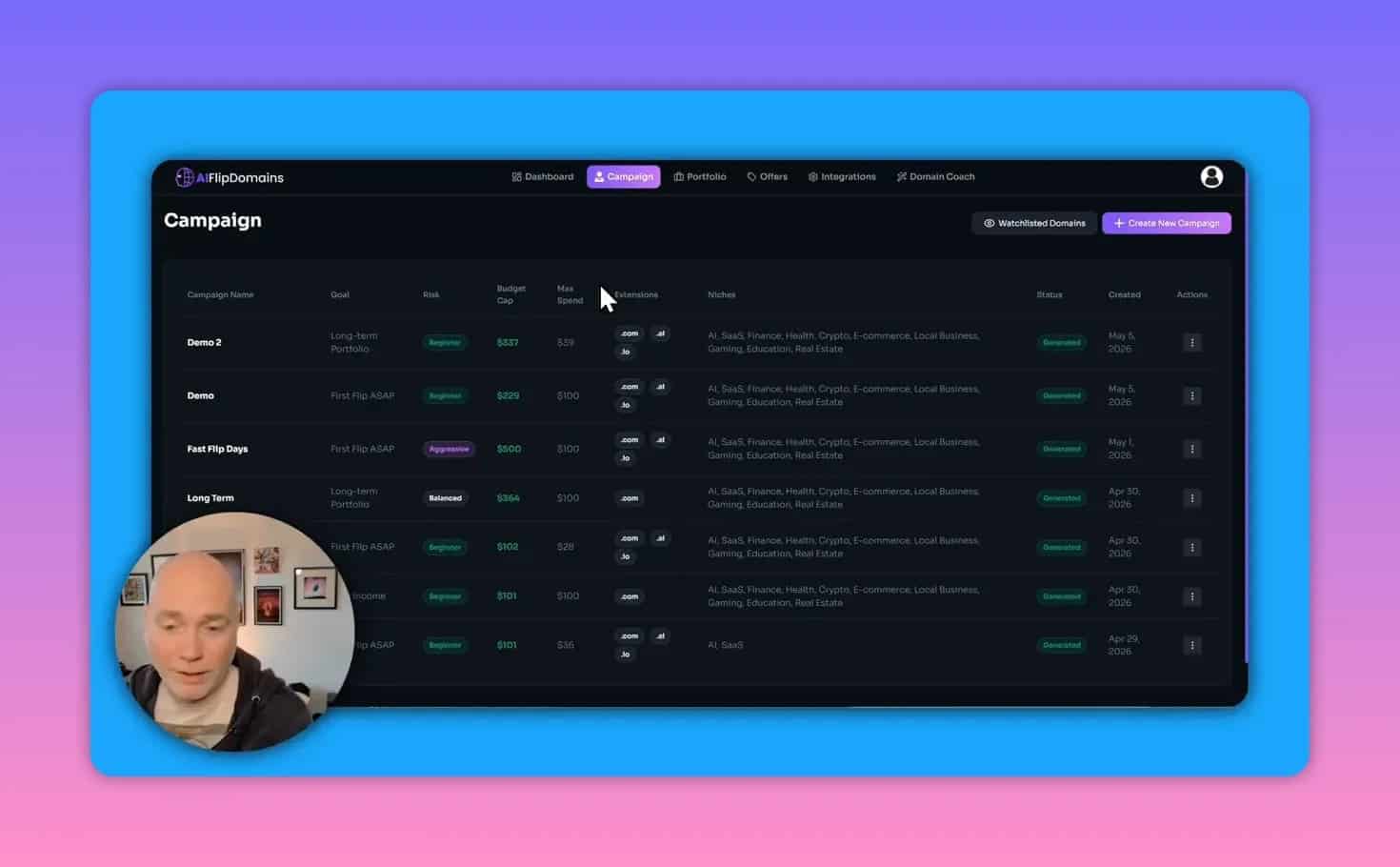
It can be worthwhile if you want a guided system for:
- Generating domain ideas
- Comparing fast-flip and long-hold opportunities
- Viewing basic scoring and valuation signals
- Buying names through connected registrar accounts
- Creating landing pages automatically
- Managing incoming offers and negotiation drafts
It is less useful if you expect guaranteed profits or want a replacement for market judgment. The best use case is as a decision-support tool, not an autopilot business model.
If you want to explore the platform mentioned here, the official product page is available through this AIFlipDomains link.
Frequently asked questions
Is domain flipping profitable?
It can be, but outcomes vary widely. Some domains may sell for much more than their purchase price, while others may never attract a buyer. Profit depends on selection, timing, pricing, and demand.
Can beginners use AI for domain flipping?
Yes. Tools that guide you through budget, risk level, extensions, and strategy can make the process more approachable for beginners.
What is the best extension for domain flipping?
.com is usually the most broadly appealing. .ai and .io can also be attractive in technology-focused niches.
Should you choose fast flip or long-term hold?
Fast flip is typically better for testing the model with lower commitment. Long-term hold may suit people comfortable waiting longer for a potentially bigger sale.
Do you need a landing page to sell domains?
It is highly recommended. A landing page gives buyers a direct way to make an offer or purchase immediately.
Can AI negotiate domain offers for you?
Some tools can draft counteroffers and responses. That can save time, but final pricing decisions should still be reviewed carefully.
Final takeaway
AI domain flipping tools can make the process far more structured by helping you discover names, evaluate opportunities, automate sales pages, and respond to offers. For beginners, that removes much of the guesswork.
The key is to stay realistic. Use AI recommendations as a filter, not a guarantee. Keep your budget controlled, choose extensions with real buyer demand, and focus on domain names that are clear, brandable, and easy to remember.
That approach gives you a better chance of building a domain flipping side hustle without taking on unnecessary risk.