iCanpreneur is an AI-powered business builder designed to help entrepreneurs move from an idea to actionable go-to-market assets. The platform focuses on three areas: building a structured business canvas, validating customer problems using AI-assisted research, and generating marketing and sales materials such as positioning guides, landing page copy, and pitch decks.
This review explains what iCanpreneur does, how its workflows tend to work in practice, where the credit system matters, and who is most likely to benefit from it.
What iCanpreneur is (and what it is for)
iCanpreneur aims to help you find an idea, develop an idea, and grow a business through a guided AI workflow. Instead of starting from a blank document, you interact with a virtual assistant that collects inputs and produces structured outputs.
In practical terms, the platform supports a typical process like:
- Clarifying customer and market assumptions (customer problems, value propositions, advantages)
- Validating problem hypotheses using AI-generated “synthetic interviews”
- Defining target personas and messaging for a specific buyer type
- Creating assets you can use immediately (positioning and messaging, landing page copy, and sales pitch decks)
How the AI workflow is structured
iCanpreneur is organized like a guided builder. Many steps involve back-and-forth prompts with AI to complete parts of a larger framework. The platform also includes a glossary, so definitions and terms can be clarified while you build.
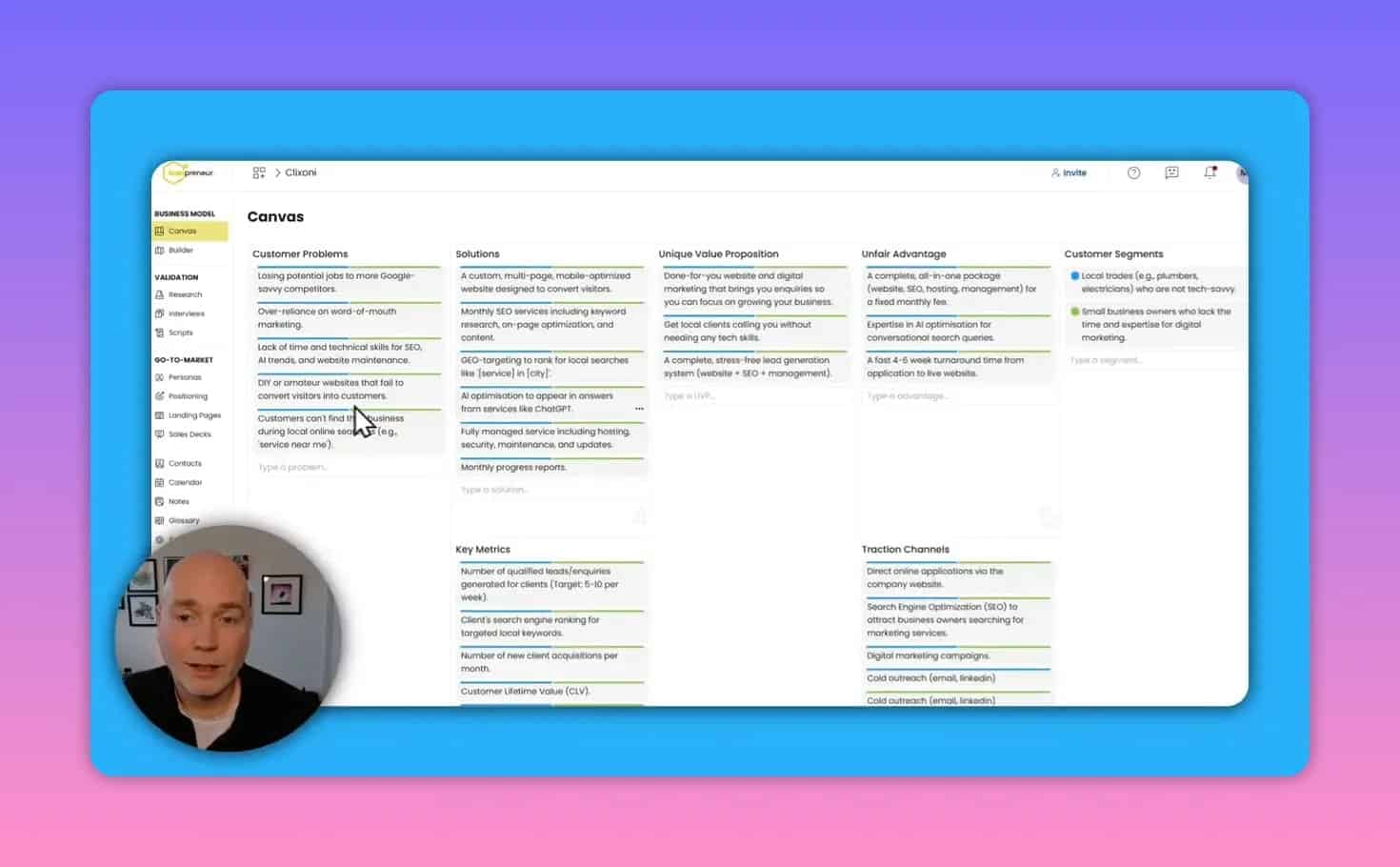
Step 1: Generate a business canvas (ideas, customers, and value)
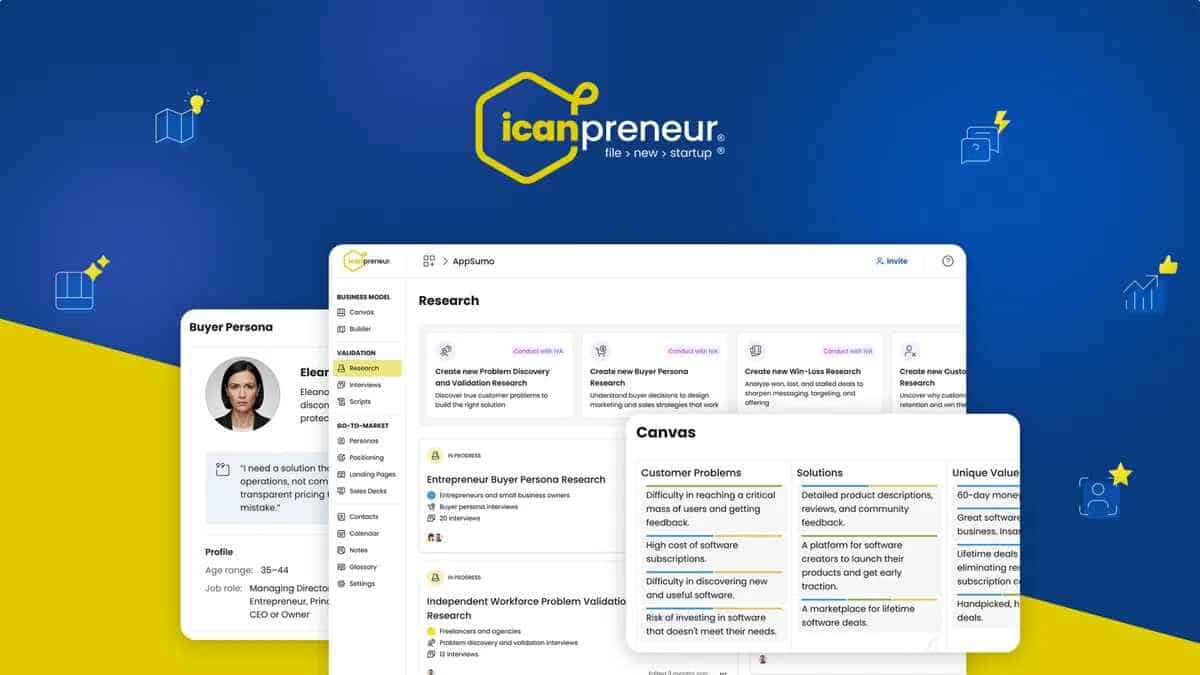
The process begins with a business canvas that aims to capture key elements of your offering. Depending on your selected path, the canvas output includes things like:
- Customer problems
- Solutions and value propositions
- Advantages
iCanpreneur can also help you jump into different workflow modes. For example, you can provide an input such as a website, and the platform uses AI to produce relevant information to seed the build.
Step 2: Validate customer problems with synthetic interviews
A standout feature of iCanpreneur is its synthetic interview system. Rather than coordinating real-world interviews, the platform generates an interview script and uses AI to create simulated respondents.
At a high level, the workflow is:
- Choose your market segment (for example, medium-sized businesses)
- Create or import an interview script
- Set parameters such as interview length and country/language context
- Select how many synthetic respondents to run
- Run the interviews to extract insights and validate whether the identified problems hold up
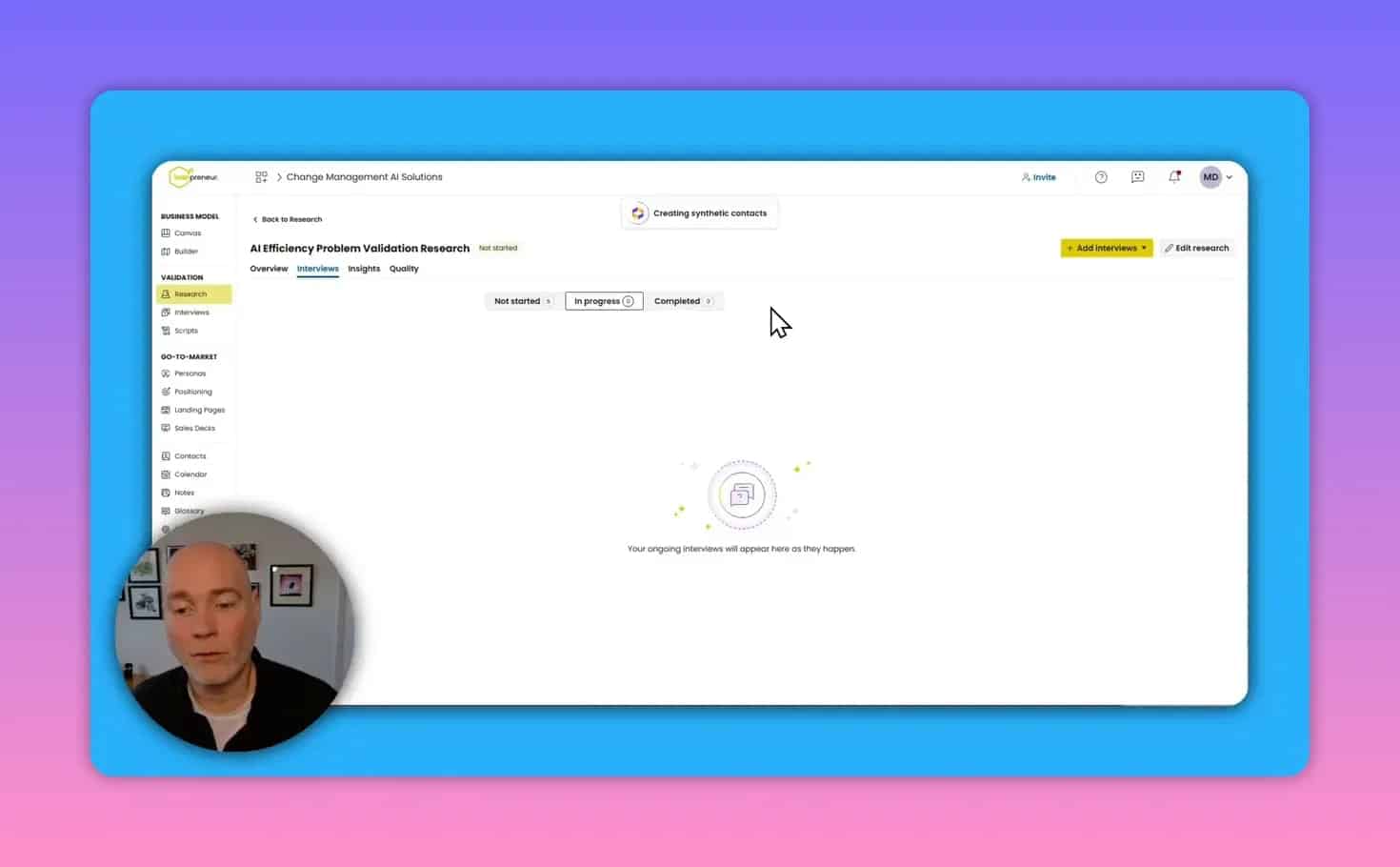
What you get from synthetic interviews
After the run completes, you receive structured research outputs, including:
- Summaries and specific insights derived from the simulated interviews
- Quality information for the interviews
- Ability to drill down into interview-level details
The platform also includes an AI overview step that consolidates research generated across multiple interview runs.
Step 3: Create personas and build positioning
Once problem research is in place, iCanpreneur can generate a buyer persona aligned with the offering and research results. The persona output includes details such as a role description and additional persona attributes, then links back to the supporting research.
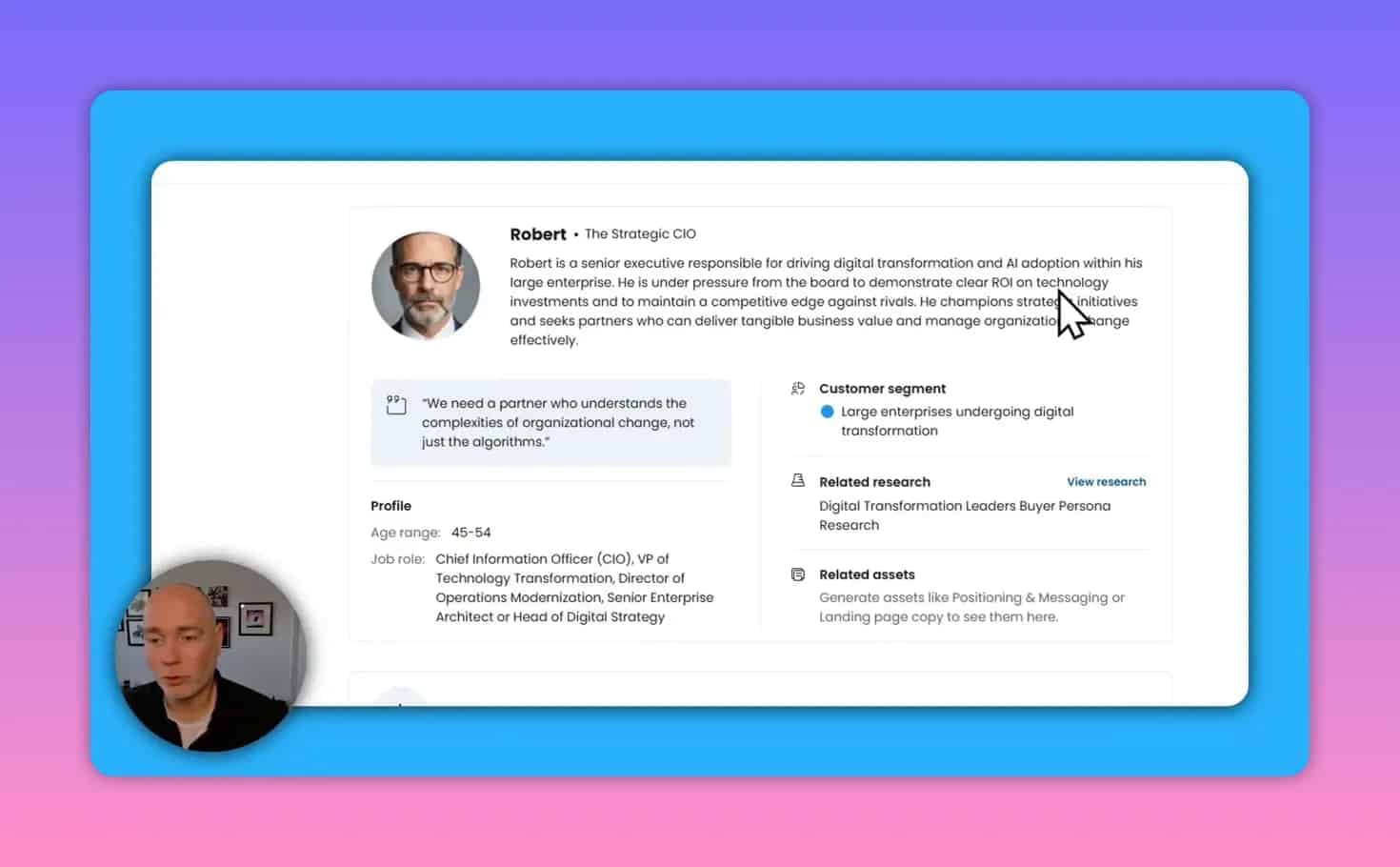
From there, the next outputs focus on turning your research into messaging that fits a target audience. The platform can generate:
- Positioning and message guide
- Landing page copy drafted around the positioning
Step 4: Generate landing page drafts
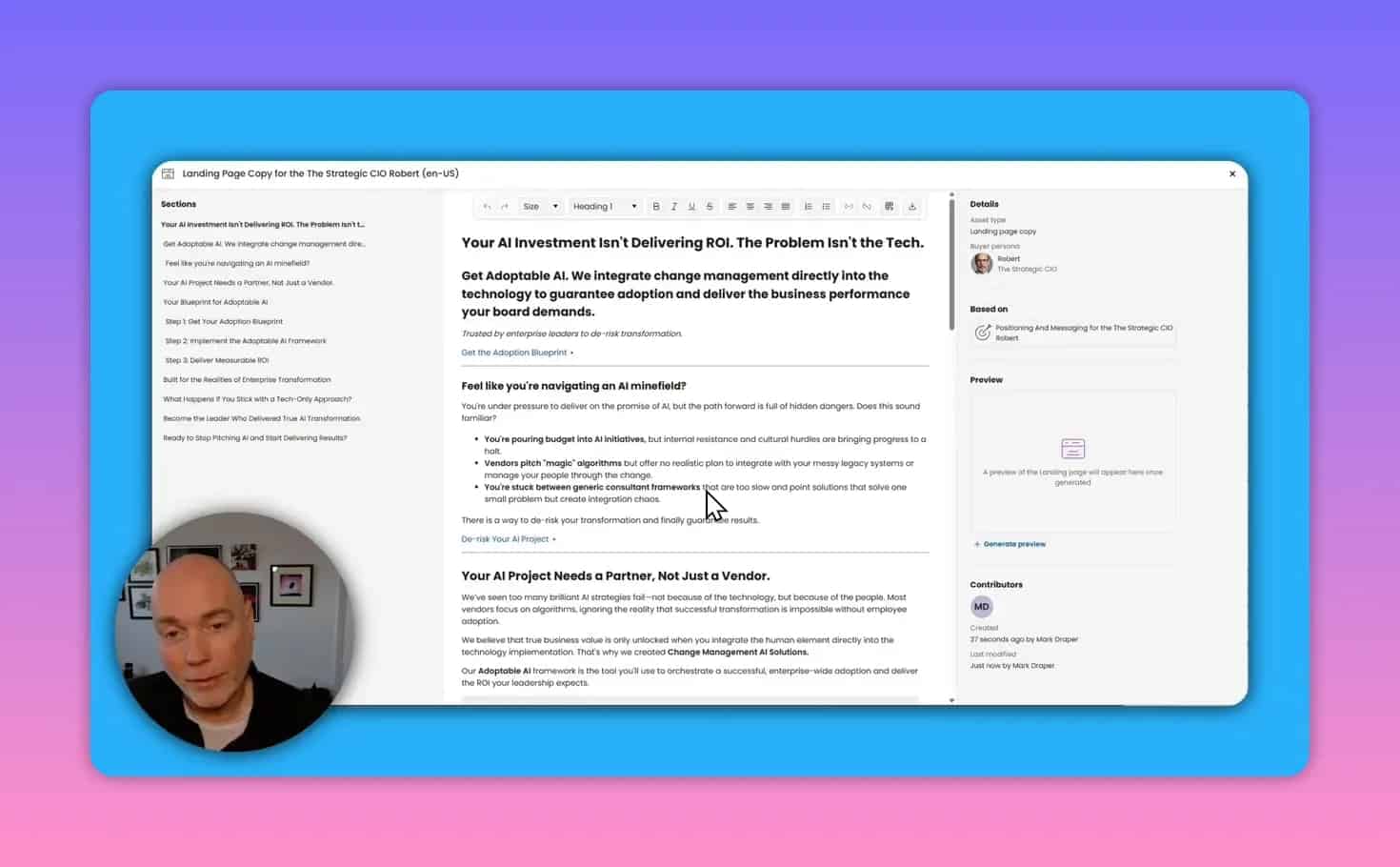
iCanpreneur can produce landing page copy intended to convert visitors into leads. This generally depends on matching the generated copy to your existing branding and positioning.
In the landing page workflow, the platform can:
- Generate landing page text with supporting sections and subheadings
- Create a visual preview and a draft landing page based on the copy
- Include common conversion elements such as calls to action
Step 5: Generate a sales pitch deck (exportable)
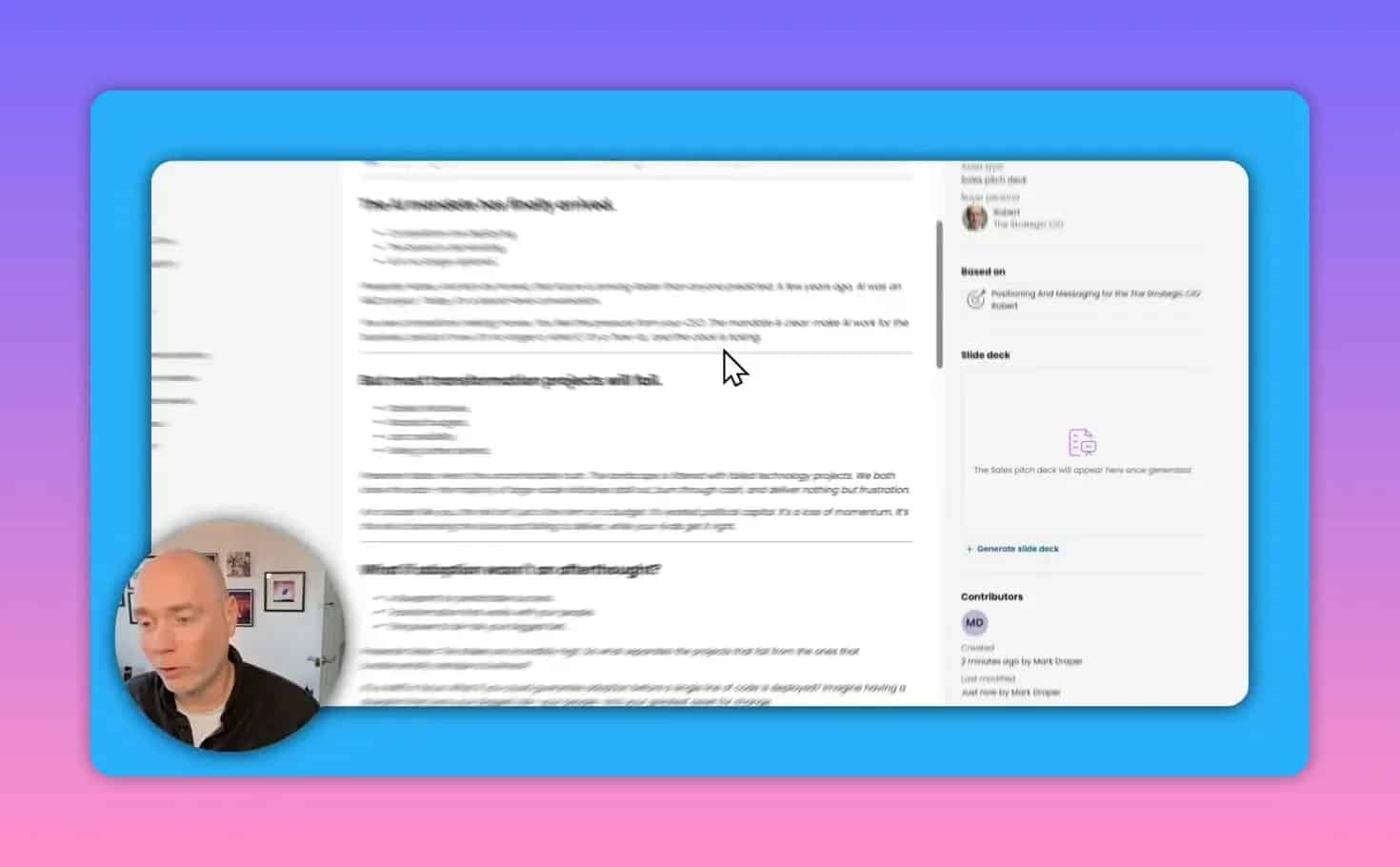
After landing page and messaging assets, iCanpreneur can also create a pitch deck. The pitch deck generation typically uses your selected buyer persona and messaging.
Key capabilities include:
- Generating deck structure and slide content from the positioning and messaging inputs
- Allowing edits to add your own details such as stats or testimonials
- Providing options to export as Google Slides, PowerPoint, or PDF
- Including a presentation mode for full-screen slide navigation
Credit system: the part that impacts whether the tool fits your workflow
iCanpreneur uses a credit-based system. Many of the most valuable steps such as synthetic interviews and generating multiple assets can consume credits quickly.
In an AppSumo lifetime deal context, the platform includes tiers with different credit balances and additional features like seats and project limits (for example, one tier includes 40,000 credits and multiple seats). The practical takeaway is that the “right” tier depends on how many research and asset-generation runs you plan to do.
General guidance based on how credit usage behaves:
- Running many synthetic interviews increases credit consumption.
- Generating multiple assets (for example, landing pages and pitch decks for different concepts) also uses credits.
- If you run out of credits, you may need to wait for a monthly refresh or buy top-up credits to continue immediately.
Tips to control credit usage
- Start with one core idea and validate it before scaling to additional projects.
- Use the platform’s pre-populated outputs when they match your direction, instead of rebuilding everything from scratch.
- Plan your asset generation after the research step, so you avoid generating multiple drafts that you later abandon.
Pitfalls and common misconceptions
AI business builders can be powerful, but it is easy to misapply them. Here are the main things to watch for.
1) Treating outputs as market truth without review
Even when synthetic interviews provide strong structured insights, you still need to sanity-check the results and ensure they align with your offer and target market.
2) Not matching positioning to branding
Generated landing page copy and messaging should be reviewed so it matches your real value proposition, tone, and brand requirements.
3) Underestimating credit usage
Research steps and multiple interview runs can consume credits rapidly. If you expect to validate several ideas in parallel, selecting a higher credit tier or planning top-ups can be critical.
4) Confusing “synthetic” with “no validation needed”
Synthetic interviews can help you move faster, but they are still a form of modeling and simulation. Use the results to refine your hypotheses, then consider additional real-world validation when possible.
Who iCanpreneur is best for
iCanpreneur is most likely to help if you want an AI-assisted workflow that covers both strategy and sales assets. It may be a strong fit for:
- Entrepreneurs who need a structured way to define a business canvas and messaging
- Teams that want faster idea validation than traditional interview scheduling
- Founders who want pitch decks and landing page drafts produced from the same research inputs
- People who can benefit from a credit-based plan and are willing to manage usage
If your goal is only quick marketing copy, you may not need the full research depth. If your goal is extensive multi-market validation across many ideas, you should pay close attention to credit allocation.
Next steps: how to decide if it is worth it for your situation
To evaluate iCanpreneur for your needs, consider:
- How many ideas you plan to validate over the next month
- How many research runs you expect to run (synthetic interviews and related outputs)
- How many assets you want to produce from the validated positioning (landing page and pitch deck, for example)
- Whether you can work within a credit refresh cycle or whether you need top-up credits
If you are looking for an AI business builder that can help connect research to usable sales and marketing materials, iCanpreneur’s structured workflow and exportable assets can be a practical advantage.
Takeaway
iCanpreneur combines a guided AI business canvas, synthetic-interview style research to validate customer problems, and generated go-to-market assets including positioning, landing page drafts, and pitch decks exportable to common formats. The biggest constraint to plan around is its credit system, especially if you intend to run multiple interview sets and generate multiple sales assets.